France's 143-Year-Old City Hall Burned. Why Did Protesters Take to the Streets?
More than 500,000 people marched, a historic building burned and shops were looted. The anger over schools, living costs and public services built up well before the violence.
1. A 143-year-old city hall burned
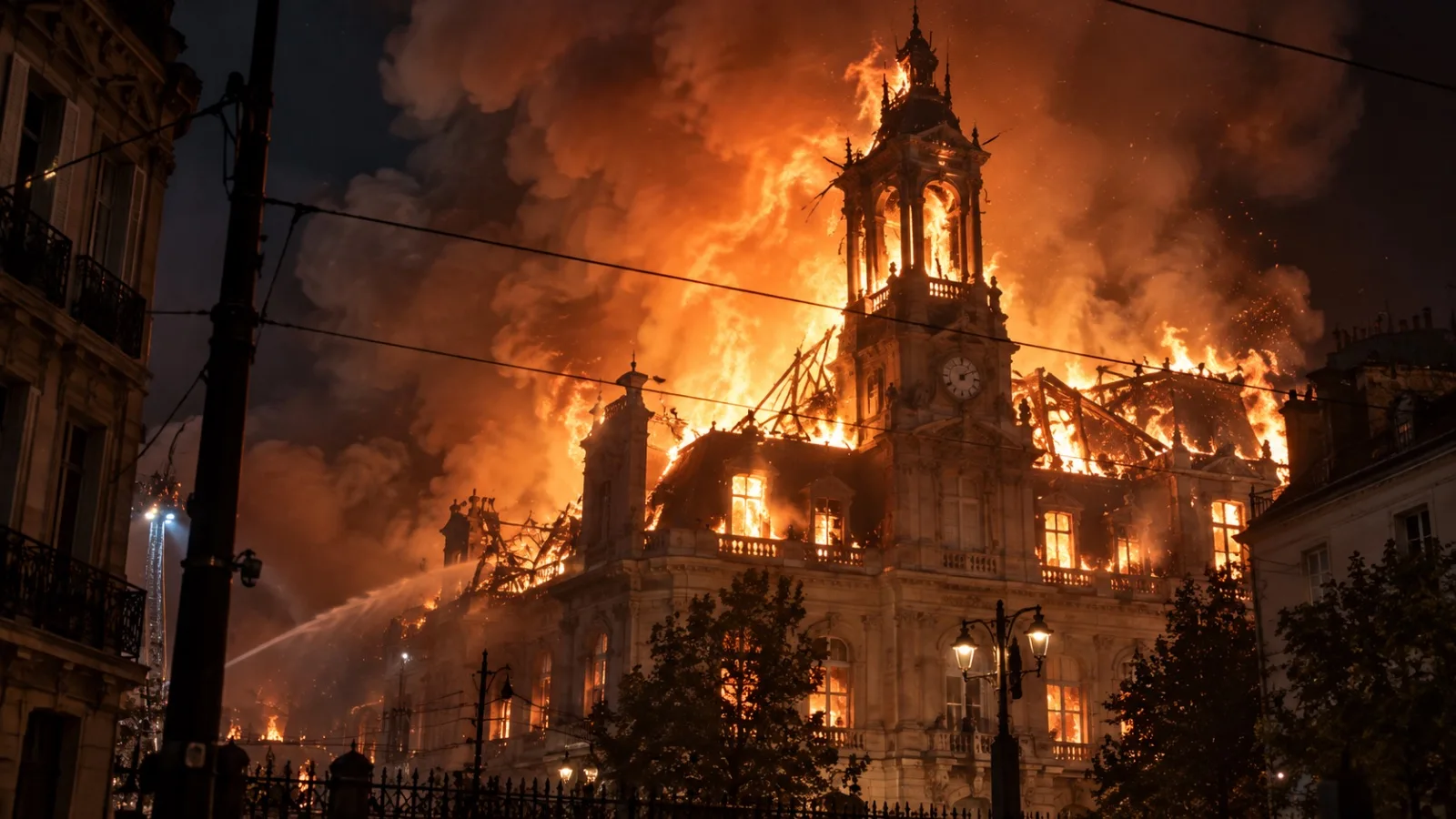
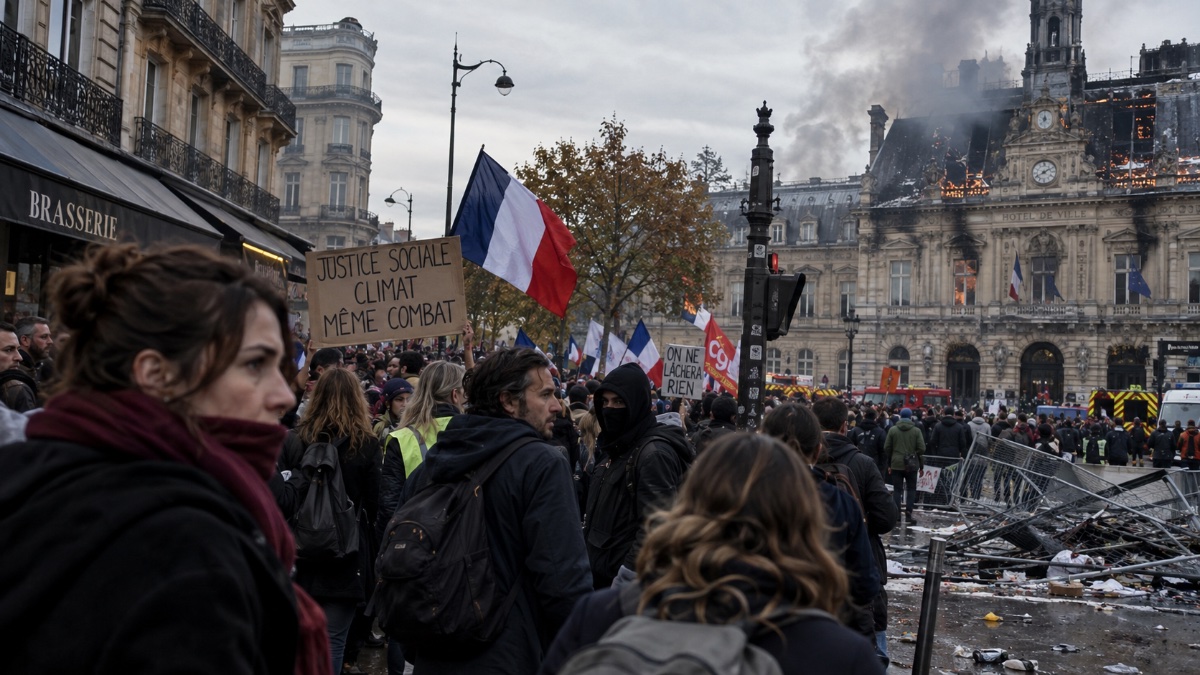
On Oct. 17 in Limoges, France, a group of masked people broke into the city hall and set it on fire. The building, which opened in 1883, lost part of its roof. A public space that residents had used for generations was destroyed in an instant.
Clashes, looting and property damage also occurred the same day in Paris, Lyon, Bordeaux and Marseille. But the acts should not be attributed to all protesters. Across the country, large numbers of people marched peacefully. Arson and looting are separate crimes.
Limoges announced temporary measures to keep public services running after the fire. The damage goes beyond the cost of rebuilding. It also affects residents who rely on municipal services.
2. There was more than one reason
One starting point was frustration in the schools. Students raised concerns about scarce educational resources and conditions on campus. Cost-of-living pressure, demands on wages and pensions, and distrust of public services then widened the crowd.
It matters that several generations and occupations joined. For students, the issue is the conditions for learning. For workers, it is living costs and pay. For citizens, it is the quality of tax-funded public services.
Fuel prices and school conditions vary by region. Still, it is notable that complaints about education and about living costs surfaced at the same time.
3. Legitimate anger and responsibility for violence are different things
Two different scenes played out in the streets that day. There were large marches raising education and livelihood issues, and in some places there was arson and looting. Lumping them together makes it harder to understand either the background of the protests or who is responsible for the violence.
The government condemned the violence and stepped up policing. Who took part and how the damage grew will become clearer as investigations produce findings.
Two tracks are likely to shape what comes next. One is the investigation and policing response to the arson and looting. The other is the government's response on education and living costs.
4. This may not be only a French problem
The episode suggests that social conflict can deepen when citizens do not feel the benefits of economic growth. When prices and housing costs rise and essential services fall short, a gap opens between macro indicators and everyday conditions.
One large protest does not amount to a crisis for the French economy as a whole. Open questions include how long the protests last, whether grievances persist after the government responds, and whether consumption and business activity actually change.
That is also why memories of the 2018 Yellow Vest movement are being raised again. The concern is that public discontent can grow beyond a single policy into a question of representation and trust. There is no basis, however, to assume the makeup or organization of the two movements is the same.
5. Will the conflict spread beyond the French economy?
The protests are a social conflict inside France, centered on school conditions, living costs and public services. If the problem drags on, could it send ripples across borders? For now, possibility and actual impact need to be kept apart.
The first link is consumption. If household cost pressure persists, French spending could weaken. But the number of protesters does not say how large any pullback would be. Data such as retail sales and consumer confidence would need to confirm it.
The second is energy prices. Higher fuel costs are cited as one source of the anger, but it is hard to argue that protests in France move global oil prices. The causation may run the other way: how changes in international energy costs have burdened French households and companies.
The third is politics and public finances. If a prolonged conflict constrains the government's budget and policy agenda, it could affect the French government bond market and the outlook for European growth. But whether the street protests have led to broader financial-market stress needs separate confirmation.
What can be confirmed now is that large-scale social discontent has surfaced. How far it travels, whether to consumption, employment, public finances or financial markets, depends on policies and economic data still to come.
What to watch next
Insight Times Editorial Desk