September or December? The Fed's Next Hike Is About More Than One CPI Print
August payrolls were strong and July's job loss was revised away. The Fed's problem is no longer a hiring collapse but how far to trust the recent slowdown in inflation.
Rate expectations have turned hard to read again. Only days ago, the case for a September hold was gaining ground. Fed Governor Christopher Waller said he leaned toward keeping rates unchanged in September if inflation kept cooling, and market odds of a hike slid to around 50%.
Then the August jobs report, released September 4, shook things up again.
Nonfarm payrolls rose by 162,000, nearly three times the consensus forecast of about 56,000. The unemployment rate held at 4.1%, and the labor force participation rate rose to 61.6%. Average hourly earnings rose 0.3% from the prior month and 3.1% from a year earlier.
On the surface, that is strong hiring without overheated wages. For the Fed, it is the hardest kind of number. There is less reason to avoid a hike out of recession fears, but wages are not strong enough to say wage-driven inflation has exploded.
The headline is not the most important figure.
July payrolls, first reported as a loss of 23,000, were revised to a gain of 21,000. Together, June and July were revised up by 55,000. The story from a month ago, that the labor market had suddenly cracked, has largely disappeared.
That revision changes what the September meeting means. If the Fed holds, the reason is less "hiring is weak" and more "recent inflation cooling is convincing enough to wait a little longer."
Inflation is still far from 2%
July PCE inflation, the Fed's preferred gauge, rose 3.7% from a year earlier. Core PCE, which excludes food and energy, rose 3.3%. On a monthly basis, both headline and core rose 0.2%.
The monthly and annual numbers tell different stories. The last month or two of monthly readings can support an argument that inflation is calming. But on a 12-month basis, inflation remains clearly above the Fed's 2% target. At Jackson Hole, Chair Warsh cited the 3.7% PCE figure directly and called inflation "still too high."
His standard was also clear. The Fed needs confidence that underlying inflation is moving toward target "clearly and quickly enough." If not, the argument goes, the Fed has more work to do.
That is why the next CPI matters a great deal. But saying one CPI report decides everything is too simple. In the same speech, Warsh said policymakers should not rely on isolated data points and that the trend matters most. The September decision will likely weigh August CPI and PPI, the upward revisions to payrolls, energy prices, inflation expectations and financial conditions together.
Why markets leaned back toward a hike
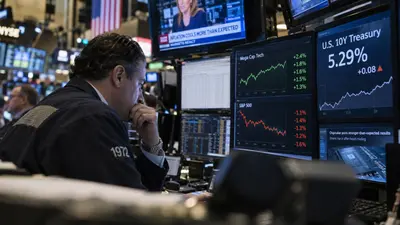
Right after the August jobs report, fed funds futures priced roughly a 60% chance of a 25 bp hike in September. Odds had jumped to the mid-60s after Jackson Hole, fallen to around 50% on Waller's comments, and now rebounded.
The logic is simple. When hiring is weak, the Fed must worry about a downturn even with high inflation. When hiring beats expectations, that constraint eases, and the policy cost of another 25 bp hike looks smaller.
Energy has also returned as a variable. Brent crude posted a large weekly gain on Middle East tensions and settled at $92.68 a barrel on September 4. Ship traffic through the Strait of Hormuz has fallen sharply, so supply disruption risk has not fully cleared.
The combination the Fed likes least is strong demand, high energy prices and underlying inflation above 2%. The US economy is moving closer to it again.
September or December?
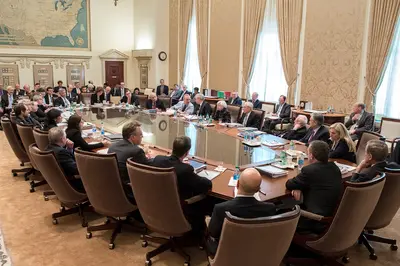
The remaining regular FOMC meetings are September 15-16, October 27-28 and December 8-9.
There are three natural scenarios.
First, a September hike. This would come if August CPI and PPI run hot again, or show that the slowdown in inflation has stalled. Strong hiring and high energy prices have already built much of the case.
Second, a September hold and a hike by year-end. This fits a picture where inflation is not bad but not reassuring enough. The Fed could gather another month or two of data and decide again in October or December.
Third, no more hikes this year. One soft CPI would not be enough. Monthly inflation would need to cool across several measures, energy prices would need to fall, and underlying price pressure and inflation expectations would need to stabilize.
One point needs correcting. The claim that the Fed is likely to avoid the October meeting because it falls just before the midterms is a possible political reading, not a confirmed fact.
The 2026 midterm elections are on November 3, and the October FOMC ends on the 27th to 28th, six days before the vote. Political controversy could grow. But once a central bank is seen as delaying a rate decision because of an election, bigger questions arise about its independence.
The same goes for President Trump. On September 4, he applied strong pressure, suggesting he could cut off trade with some partners if the Fed did not lower rates. That does not mean the Fed will hold.
If anything, Warsh may face the opposite incentive. Because Trump appointed him, a policy decision risks being read politically. The Fed may then try to present the economic case for its decision more forcefully, rather than avoid a particular date.
What to watch
- Monthly core inflation. If it climbs back to 0.3% to 0.4%, the case for a September hike strengthens. If it stays near 0.2%, the case for a hold revives.
- Producer prices. Check whether higher energy and shipping costs are feeding into PPI. A renewed jump could be an early warning for consumer prices.
- Oil and shipping. Watch whether crude moves higher from the $90s and whether ship traffic normalizes. The longer the energy shock lasts, the harder it is for the Fed to dismiss it as temporary.
- The dot plot. In the June projections, 9 of 18 officials put the year-end policy rate at 3.875% or higher, above the current level. How much more hawkish the September dots look will show the path through year-end.
- Two-year yields and year-end futures. These are the market gauges that react fastest to the Fed outlook. If both rise together, the market is starting to price not one but two more hikes.
FAQ
Does strong hiring make a September hike a done deal?
No. Hiring only removed an obstacle to a hike. Wage growth of 0.3% on the month and 3.1% on the year was not overheated, and the inflation data released before the September meeting is still the decisive input.
Is the "labor market collapse" story still alive?
Not anymore. July payrolls, first reported at -23,000, were revised to +21,000. The argument that the Fed must wait because of a hiring plunge is weaker than it was a month ago.
Will the Fed skip October because of the midterms?
It is possible, but it cannot be stated as fact. A decision just before the election could heighten political controversy. But there is also little evidence that the Fed would delay a decision because of the political calendar. If the data are strong enough, October is a live option.
Is a hike itself the biggest risk for stocks?
Not necessarily. More important is any signal that the Fed will keep rates high well beyond year-end. If long-term and real yields rise together, valuations of AI and big tech stocks, where far-off cash flows carry more weight, face more pressure.
Bottom line: Jobs have moved a step toward a hike, and inflation is still far from 2%. The next CPI matters but is not the sole decider. A September hike is realistic, and even a hold would leave the possibility of more tightening by year-end.
Insight Times Editorial Desk