Musk's G20 message: AI's real bottleneck is not GPUs, it is electricity
A billion humanoids and a 20 to 30 percent bigger world economy make headlines. The line investors should read first is duller: AI chips are multiplying faster than the power and physical infrastructure needed to switch them on.
Before the flashy numbers, look at 15GW
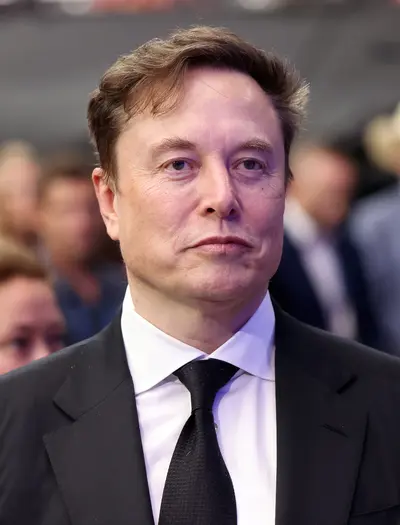
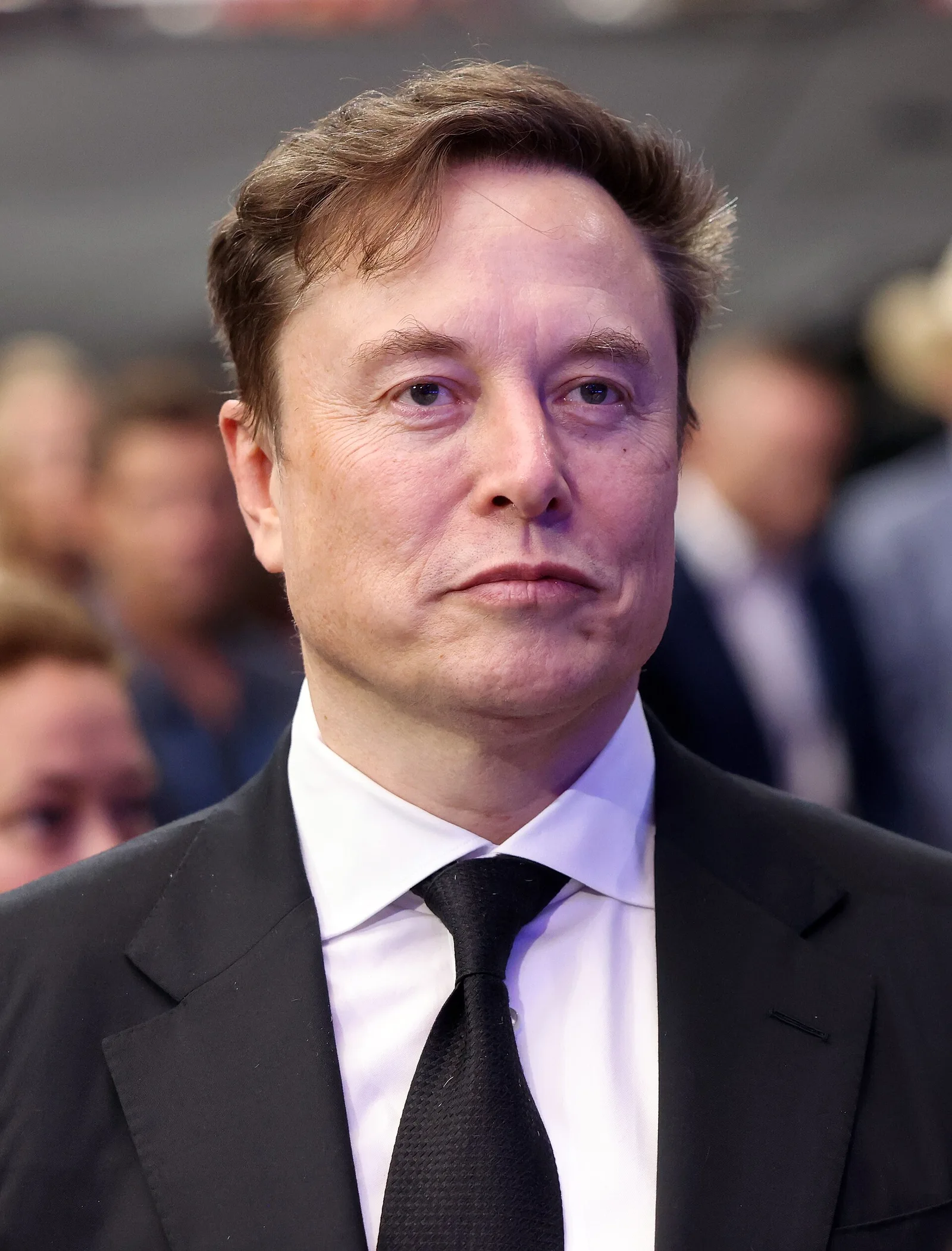
Musk joined a session of the G20 innovation ministerial meeting in North Carolina by video on September 1. The most investor-relevant thing he said there was not about a billion humanoids. It was this: "The consensus among analysts who follow the AI industry closely is that there will be a shortfall of at least 15GW of power for AI chips in 2027."
One caveat matters. The 15GW figure is not an official forecast from the US government or the IEA. Musk presented it as an estimate from market analysts. It should not be treated as a confirmed supply gap.
The direction, though, lines up with official data. The IEA expects data centers to account for roughly half of the growth in US electricity demand between 2026 and 2030. The US Department of Energy, in its 2026 transmission needs study, named AI data centers and large industrial loads as central drivers of grid expansion.
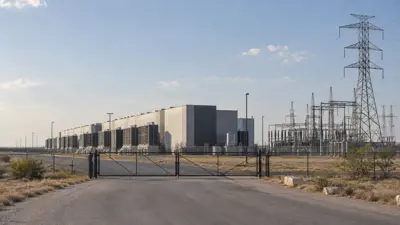
That gap between chips and power matters for investing. GPU orders can be scaled up within a few quarters. Power plants, transmission lines, substations, large transformers and grid interconnection take far longer. The IEA makes the same point: a data center can be built in two to three years, but the wider power system needs more time because of planning, permitting and heavy capital investment.
The second act of the AI capex cycle is the business of delivering electricity
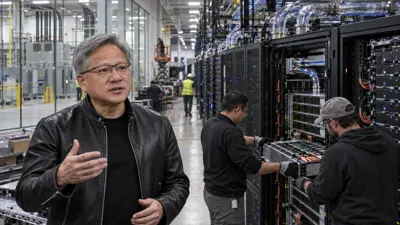
Seen this way, the set of industries exposed to AI is much wider than semiconductors. On the generation side it takes combined-cycle gas, gas turbines, nuclear, renewables and storage. On the transmission side it takes extra-high-voltage lines, substations, transformers, breakers and power cable. Inside the data center it takes UPS systems, switchgear, distribution boards, backup generators and power conversion equipment, and cooling technologies such as direct liquid cooling and immersion cooling grow in importance as AI servers get denser.
So the better question for an investor is not "is this an AI stock" but which bottleneck is this company actually clearing. Orders can rise while capacity constraints delay the conversion into revenue. A large backlog still produces weak margins if cost increases cannot be passed through in price. And if data center customers cannot secure power, equipment orders themselves get pushed back.
On regulation, the message was "legal by default"
Musk argued that when a new technology appears, the starting point should be "legal by default" rather than "illegal by default." He was particularly critical of Europe's regulatory intensity, which he said slows technological progress.
His remarks and the Carolina Principles for Emerging Technologies, agreed by G20 ministers the next day, point in a similar direction but are not the same thing. The Carolina Principles are a policy framework: consider new regulation only for novel risks that existing sector rules fail to address, and promote basic research, commercialization, demonstration and adoption. They are not a legally binding international norm.
For investors, regulation is not an abstract political variable. If a data center permit slips by a year, compute revenue slips with it. If autonomous driving pilots and robot deployments are delayed, the technology exists but the cash flow does not. In the AI era, technical performance and regulatory speed jointly determine when revenue arrives.
A billion humanoids: the biggest opportunity and the biggest scope for hype
Musk predicted that humanoid robots will exceed one billion units within a decade, with each unit reaching roughly five times human productivity. The logic is recursive: robots go into building robots, so production capacity compounds.
This is not an industry consensus number. It is Musk's own long-range scenario. Investors should focus less on the figure and more on what conditions have to hold for that curve to be possible at all.
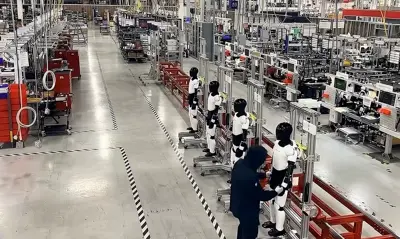
The economics of humanoids are decided by total cost per hour, not units sold. Task success rate, daily uptime, maintenance cost, accident rate, battery endurance, dexterity of the hands and changeover time between processes all feed into the cost. Mass orders only appear when the robot works more cheaply and more reliably than a person on the factory floor.
So for a Tesla investor assessing Optimus, the most important number is not "how many we will eventually sell." It is how many are actually working inside Tesla's own plants, how many hours a day they run, which tasks they complete repeatedly and successfully, and how much human labor cost each robot displaces.
A world economy 20 to 30 percent larger? Separate the direction from the timeline
Musk said digital AI alone could make the world economy 20 to 30 percent larger, or roughly 20 to 30 trillion dollars more per year. He also floated the possibility that adding humanoids could expand the economy more than tenfold over the long run.
This is also a forecast, not a fact. That AI can sharply raise productivity in coding, design, customer support, research, advertising, document processing and analysis is one question. When that effect converts into GDP and corporate profit is another. Companies have to clean up their data and redesign workflows, and absorb the costs of security, legal work and redeploying staff.
Higher productivity also does not widen every company's margin. If AI lowers the cost of entry for competitors too, price competition intensifies, and margins in parts of software and services can come under pressure instead. Growth in the whole economy and excess returns in an individual stock are not the same sentence.
The point is not Musk's forecast, it is the physicalization of AI
Reading these remarks as "Musk predicted a billion robots" is of little use to an investor. The bigger change is that the AI industry is moving beyond a story about software and semiconductors.
The first stage was models and GPUs. The second stage is the data centers and the electricity to run them. The third stage is physical AI, where the technology moves down into real factories, vehicles, warehouses and robots.
Along that path, returns are likely to concentrate wherever scarcity appears. Right now that means not only leading-edge GPUs and HBM but grid connection rights, generation assets, transformers, cooling capacity and, later, reliable robot manufacturing capacity.
But a scarce industry and a good stock are not the same thing. How much of the order growth is already in the price, whether capacity can genuinely be expanded, and whether cash flow follows all have to be checked together.
What to Watch
Announced gigawatts matter less than actual grid interconnection and commercial operation dates. When the power connection slips, AI server revenue slips with it.
If backlogs and lead times for transformers, switchgear and gas turbines stay long, the power bottleneck thesis gets stronger.
Watch how much capital Microsoft, Alphabet, Amazon and Meta put not only into compute but into long-term power purchase agreements and their own generation.
For humanoids, operating hours, success rates, productivity gains, manufacturing cost and maintenance cost prove commercial viability, not unit counts.
Declarations like the Carolina Principles matter less than what actually changes in data center permitting, autonomous driving approvals and robot safety rules.
FAQ
No. It is a figure Musk described as the consensus of AI industry analysts, and it should be distinguished from official government projections. That said, IEA and US Department of Energy material supports the broader direction: data centers are sharply increasing US power demand and the pressure to invest in transmission.
It cannot be simplified that way. GPUs remain the core scarce asset in the AI value chain. The point is that as AI capex grows, the profit pool is more likely to widen from semiconductors into generation, transmission, cooling and power management equipment.
At this stage it is more reasonable to treat it as long-dated option value than as core value. Until large-scale external sales and stable unit economics are confirmed, a high discount rate is warranted.
No. Musk gave his personal views in the September 1 session. The Carolina Principles and the G20 Innovation Ministerial Statement are separate documents agreed by ministers on September 2.
Insight Times Editorial Desk