What Gives Bitcoin Its Value? Scarcity Is Necessary, Demand Decides the Price
A fixed supply of 21 million coins does not guarantee a price. Future demand matters more than scarcity, from AI capital spending to the 2028 halving.

The 20-second read
Why do people hold a bitcoin that pays no interest?
Stock investors buy the earnings a company will produce. Bond investors buy promised payments of interest and principal. What does a bitcoin investor buy?
The answer is the chance to own an asset designed so that no one can expand its supply at will. The supply of fiat currency shifts with a government's monetary policy. Bitcoin's total issuance is capped at 21 million coins. Open network operation and mining competition uphold that rule.
But the number 21 million does not by itself guarantee value. A very rare object is not worth much if nobody wants it. Bitcoin's price is set where scarcity meets the willingness to pay for that scarcity.
The argument that investors may turn to bitcoin as US federal debt grows and worries about currency credibility rise is persuasive. But rising national debt does not mean bitcoin necessarily rises. What matters is what a person with that anxiety wants more: dollar cash, Treasuries, gold, real estate or shares in productive companies.
Two faces: digital gold and risk asset
At some times bitcoin moves like gold. At others it falls in step with tech stocks. That is why "digital gold" and "high-risk asset" descriptions coexist. The expectation that bitcoin will be adopted as a long-term store of value is separate from the leverage and risk appetite of investors actually trading it today.
When markets scramble for cash, investors sell good assets too. The rise in real yields and the ETF outflows of 2026 showed that bitcoin is not fully independent of the current financial environment. Its issuance policy may be independent of central banks, but its price is not independent of capital-market liquidity.
Treating bitcoin as a safe asset identical to gold, or as a growth stock identical to the Nasdaq, is therefore inaccurate. Investors should also drop the assumption that its correlation with other assets is fixed.
If AI keeps growing, does bitcoin lose its money?
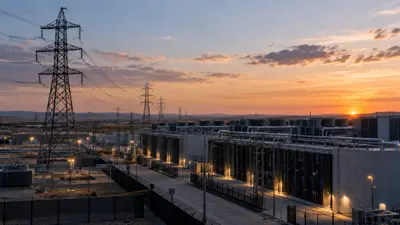
Hyperscaler spending on AI infrastructure expanded to a very large scale in 2026. The source piece cites combined annual capital-spending guidance of $720 billion to $745 billion from four major big-tech companies. Investors have more reason to put money into AI, semiconductor and automation companies whose revenue and cash flow can be verified.
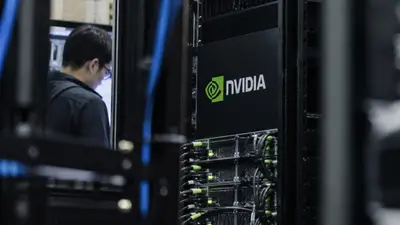
Concluding that "money is flowing to AI, so bitcoin is finished" moves too fast. Nvidia's and Micron's share prices reflect customer orders, shipments, margins and long-term competitiveness. Bitcoin pays no corporate earnings. Conversely, which company loses a competitive race tomorrow has no direct effect on bitcoin's supply rules.
The two are different investment cases: a claim on economic productivity and an option to own a non-sovereign scarce asset. The same capital can move toward a more attractive expected return, but growth in one industry does not automatically remove the reason for the other's value to exist.
AI has counter-evidence of its own. What matters is how fast huge capital spending is recovered through revenue and free cash flow, and higher rates lower the present value of future profits. Even a profitable company can be a bad investment if bought at too high a price. The same goes for bitcoin: even if the long-term scarcity case is right, the wrong purchase price and position size can produce a poor result.
What the history of crashes says
Bitcoin has suffered deep declines repeatedly after the peaks of 2013, 2017 and 2021. By the source's tally, the maximum drawdown in the 2017 cycle was about 84%, and the fall from the November 2021 peak to the November 2022 low was about 76.6%. The market later set new price highs.
The lesson is not that "it will necessarily recover this time." It is that a 50% decline has not marked the final bottom in bitcoin's history. Some things have changed. US spot ETFs and corporate holdings have grown, advancing access and institutionalization. But new pressures have also appeared: ETF redemptions and closer alignment with financial markets. Mechanically transplanting historical drawdowns into a price target for today is risky.
The on-chain realized price cited in the source is roughly in the $53,000 to $56,000 range. Realized price is a statistic close to the average acquisition cost, calculated from the price at which each coin on the network last moved. Long-term-holder net unrealized profit/loss (LTH NUPL) shows how large the paper gains or losses of holders are. In past major bear markets, price has approached realized price or long-term holders have capitulated, but there is no rule that this time must visit the same level.
The $57,700 to $59,291 and $53,000 to $56,000 zones in the source are therefore not buy-order prices. They are conditional risk zones to review if prices fall further. A rebound may come first, or a deeper downturn may break below the range. Both possibilities need to stay open.
The 2028 halving: demand validation matters more than shrinking supply
Bitcoin's mining reward is cut in half roughly every 210,000 blocks. The next halving occurs at block height 1,050,000, when the block reward drops from 3.125 BTC to 1.5625 BTC. Assuming blocks arrive about every 10 minutes, daily new issuance falls from about 450 BTC to about 225 BTC. The actual timing depends on mining speed, so "spring 2028" is an estimate.
It is true that the halving changes the pace of supply growth. But the cut in issuance is also a small flow relative to all the bitcoin already issued. Even if daily new supply falls, a large net outflow from ETFs or selling by long-term holders can still push the price down.
The observation that prices rose after past halvings is useful for forming an investment hypothesis. But in a market where ETFs have grown so large, the case for assuming the four-year cycle will work with the same amplitude and timing as before is weak. Rather than the halving calendar, investors should watch rates, net ETF demand, spot demand and long-term-holder selling in the year before and after.
Why Wall Street price targets are not an investment plan
The source cites a range of bitcoin price forecasts from institutions and research shops, including Citi, Bernstein and Prime XBT. Some set very high targets for 2027 to 2029. But a price forecast should come with the assumptions behind it: what demand growth, what portfolio allocation, what monetary environment.
An institution's forecast is a scenario, not a fact. If a target badly misses, the forecaster does not absorb an investor's forced liquidation or losses. The question an investment decision needs answered is not someone else's target but whether you can financially withstand it if that forecast is wrong.
- BlackRock, research on sizing Bitcoin in portfolios: https://www.blackrock.com/institutions/en-us/insights/thought-leadership/portfolio-design/sizing-bitcoin-in-portfolios
- Bitcoin.org, halving explainer: https://bitcoin.org/en/halving
- Glassnode, BTC realized price data tool: https://studio.glassnode.com/charts/market.PriceRealizedUsd?a=BTC
- CryptoQuant, on-chain research: https://cryptoquant.com/insights/research
What to watch
Insight Times Editorial Desk