SK hynix Posts Record Profit, but Its Shares Are Half Their Peak
How long will AI memory's excess profit last, and how much of it will reach shareholders? The market doubts the duration, not the earnings.
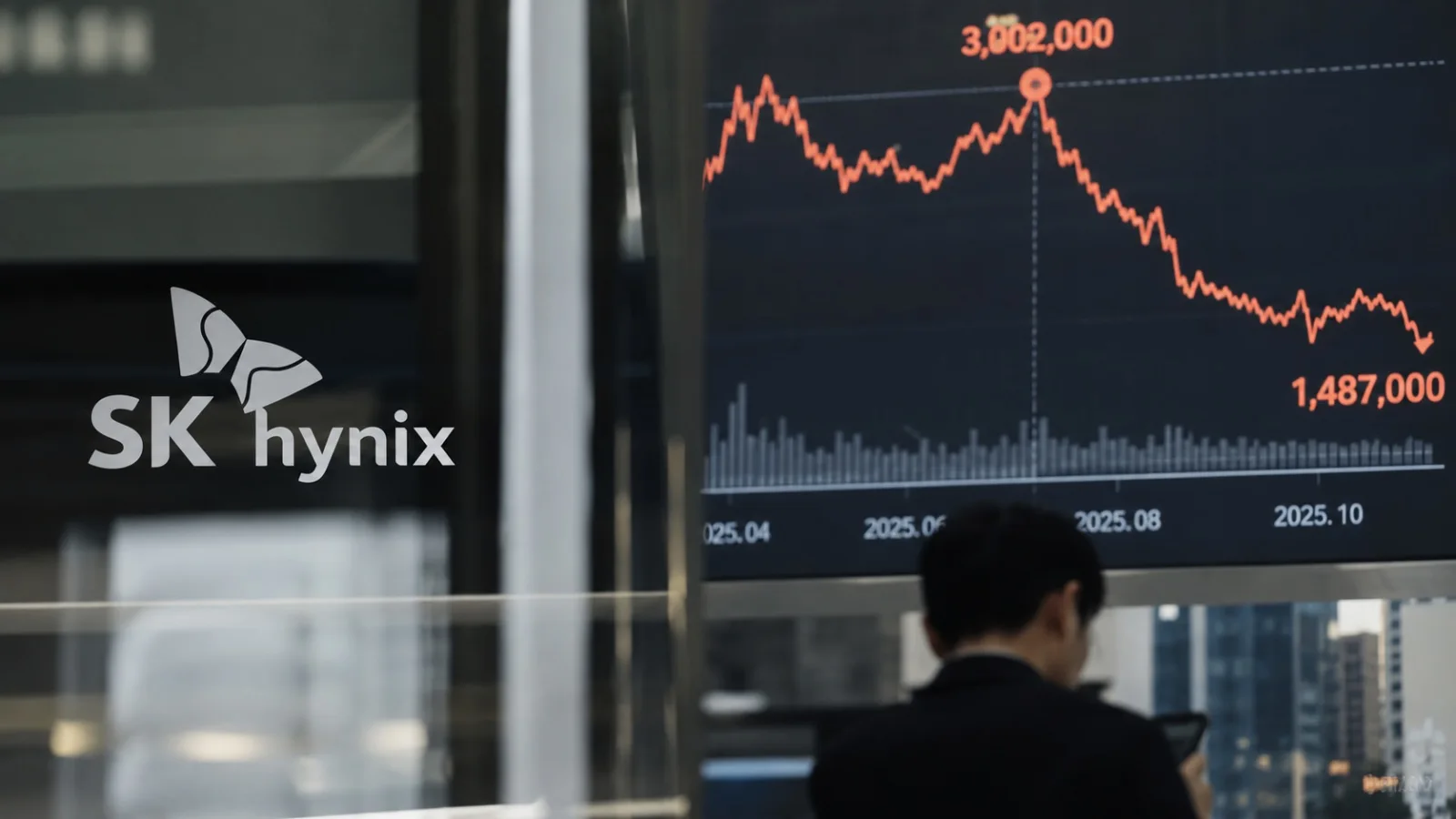
Record earnings, but the stock is down by half
SK hynix's quarterly results, announced Oct. 28, are striking. Revenue was 104.6155 trillion won and operating profit was 83.3338 trillion won. Those figures are up 328% and 632% from a year earlier.
Yet the shares trade at 1,487,000 won. They jumped 10.89% on the day of the report, but that is still about half the intraday high of 3,002,000 won reached in June.
To understand the gap, it helps to look at what the market doubts.
The market doubts not SK hynix's ability to make money, but how long it can sustain profit this high.
Revenue rose 25 trillion won, profit rose 23 trillion won
- Q3 2026 revenue: 104.6 trillion won, up 32% from the prior quarter
- Q3 2026 operating profit: 83.3 trillion won, up 38% from the prior quarter
- Operating margin: 79.7%
- Net cash: 98.7 trillion won
- Incremental operating profit on added revenue: about 90.1%
Of the roughly 25.3 trillion won rise in revenue from the prior quarter, about 22.8 trillion won flowed through to higher operating profit. This is the company-wide incremental margin, not the margin on any single product.
This profitability reflects AI memory demand overwhelming supply. Pricing and sales mix also improved, not only for HBM4 but for server DDR5 and enterprise SSDs.
An incremental margin near 90% also points to risk in the other direction. If price gains stall or the share of high-value products falls, profit growth could slow faster than revenue.
Can HBM4 and long-term contracts extend the boom?
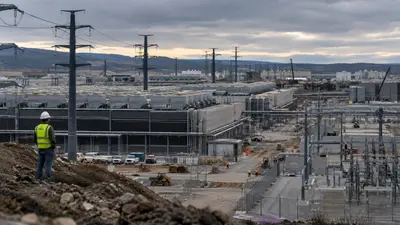
The company expects fourth-quarter HBM4 shipments and revenue both to exceed those of HBM3E. It is also pursuing added capacity at its M15X fab in Cheongju.
Long-term supply agreements have been added as well. The company has signed with 14 major customers, and secured volume covers more than half of its total 2027 to 2028 capacity.
That is an important shift for the chip industry. In the past, makers built capacity and hoped demand would follow. Now they can decide on investment with a substantial amount of demand already locked in.
But long-term contracts do not abolish the memory cycle. Contract prices reflect market conditions within agreed ranges. Even with volume secured, a margin near today's 80% is not fixed.
The company's forecast of supply shortages through 2030 is likewise not a settled future.
What a 100 trillion won payout really means
The other key item in the report is shareholder returns.
The company outlined a plan to return about 100 trillion won for fiscal 2026. The base structure is more than 30 trillion won in cash dividends and more than 60 trillion won in share buybacks and cancellations.
| Item | Key detail |
|---|---|
| Existing buyback | 40 trillion won repurchased, to be canceled |
| New return-related buyback | 10 trillion won, all to be canceled |
| Buyback for employee compensation | About 10 trillion won, excluded from the return total |
| Q3 dividend per share | 20,000 won, including a 10,000 won special dividend |
Half of the 20,000 won Q3 dividend is a special payout tied to gains on the company's investment in Kioxia. Treating it as a recurring quarterly dividend would overstate true dividend capacity.
The number to watch is less the 100 trillion won headline than the recurring cash dividend, the share count shrinking through cancellations, and the free cash flow left after future capital spending.
Four things to watch
- 2027 operating profit forecasts. Whether brokerage estimates keep rising.
- HBM4 shipments and profitability. Whether higher output turns into actual profit.
- Cash-flow effect of long-term contracts. Whether operating cash flow becomes more predictable, not just revenue more stable.
- Free cash flow versus capital spending. Whether dividends and cancellations can continue after the large capacity expansion.
SK hynix has proven its current earning power. Next it must show how long those profits last and how durable the cash returned to shareholders is. For long-term investors, the wait is not for a simple price rebound but for the next evidence that earnings can last.
Insight Times Editorial Desk