Binance's $6.3 Billion Hack Met $4.7 Billion in Net Customer Outflows. Here Is the Bitcoin Risk

Bitcoin's technology did not fail. The security of the world's largest crypto exchange did. The market is now testing whether Binance can return customer assets safely.
1. $6.3 billion gone in 20 minutes

A bank analogy helps.

Hackers took control of the approval system that moves money out of the vault. The bank halted withdrawals and promised to cover the losses with its own money. When withdrawals reopened, customers began pulling their assets out.

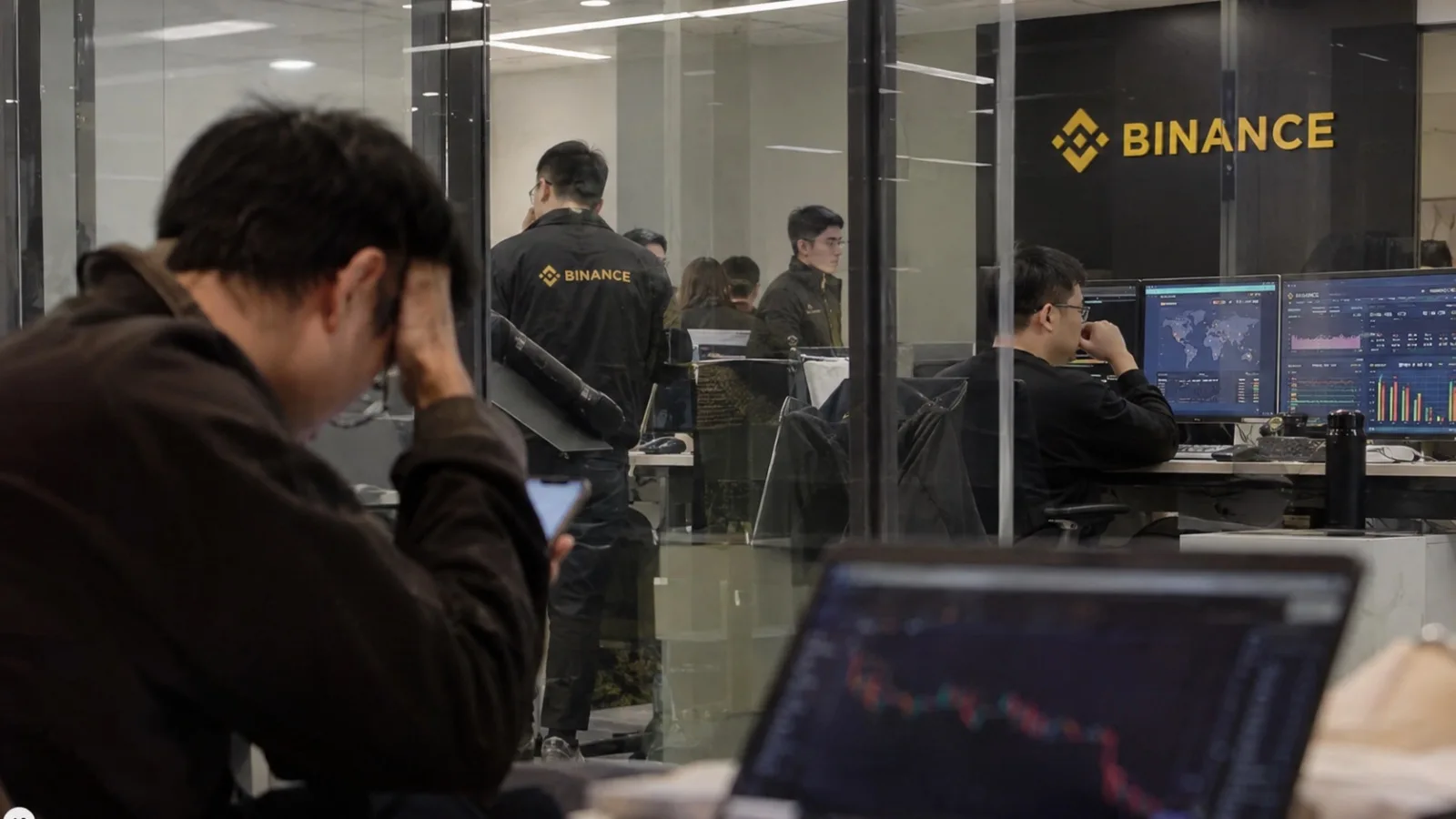
That is what happened at Binance on Oct. 29.

The target was the exchange's hot wallets and its transfer-approval infrastructure. According to blockchain analytics firm TRM Labs, the attackers disguised the transfers as legitimate withdrawal orders.

Binance suspended withdrawals for about 48 hours. It then used its customer protection fund, SAFU, along with company assets to make up the losses, and resumed withdrawals in stages from Nov. 1.

MetricFigureNote
Hack losses$6.3 billionCrypto taken from the exchange without authorization
Total customer withdrawals$7.4 billionCumulative since withdrawals resumed
Net customer outflow$4.72 billionAfter subtracting $2.7 billion in deposits

Cumulative figures reported Nov. 2. Total withdrawals and deposits are rounded in press reports.

The key point is that theft and withdrawals are entirely different events.

The $6.3 billion is money the hackers took. The $7.4 billion is what customers withdrew of their own assets. A customer who moves coins to another wallet has not sold bitcoin.

2. Does 95% compensation mean the crisis is over?

Binance said it had recovered or made up about 95% of the stolen assets.

But actually recovering stolen assets is not the same as filling customer balances with company funds. Frozen assets also need to be separated from those finally returned.

Net customer outflows come to about 2.8% of the exchange's total assets. That the ratio is lower than many might expect is a positive. Still, the customer assets an exchange holds should not be read as equity the company can use to cover losses.

The key question is not the size of the vault. It is whether Binance has secured the assets owed to customers and has closed the route the hackers used to get in.

3. Binance users, BNB holders and bitcoin investors should read this differently

  • Binance users: whether they can actually withdraw, whether customer balances are restored, and what security measures are in place.
  • BNB investors: user departures, changes in trading volume, and confidence in the ecosystem.
  • Bitcoin investors: whether net exchange outflows turn into actual selling.

Users who keep long-term assets on Binance may consider spreading them across custodians. Moving to a personal wallet also moves the responsibility for private keys and recovery phrases.

BNB investors should note that even if customers are made whole, losses in the token's price do not recover automatically. Lower exchange usage could weigh on BNB demand.

Bitcoin investors need a more basic distinction. The exchange was hacked, not bitcoin's consensus algorithm.

Even so, a technically secure asset can come under selling pressure in the market. On Oct. 30, U.S. spot bitcoin ETFs saw net outflows of $643 million, and more than $1.3 billion in leveraged crypto positions was reported liquidated.

4. Four things to watch

  • Withdrawals returning to normal: whether restrictions on some tokens are lifted and processing stays stable.
  • Customer asset restoration: whether the announced 95% becomes full restoration.
  • Net exchange outflows and stablecoin supply: whether this is simple wallet transfers or capital leaving the crypto market as a whole.
  • ETF flows and leveraged liquidations: whether the exchange incident leads to weaker institutional demand and further selling pressure.
The $6.3 billion stolen and the $7.4 billion withdrawn by customers are different numbers; what matters for bitcoin is whether exchange outflows become real selling.

Insight Times Editorial Desk

More by topic

Starting with this story's topics, then what readers are following now

Investor psychology, decision-making and books on investing

BTC

This story's topic6 storiesSee all →

HBM

75 storiesSee all →

Memory stacked next to the GPU.

Has Memory Peaked? Prices Are Cooling, but the Shortage Looks Set to Run to 2028

Price growth has slowed and consumer demand is already breaking. Server and HBM supply remains short, and Micron says more than 75% of its 2027 volume is already committed to customers.

Tech

AI Chip Peak Check: Demand Still Rising, Risk Building in 2027-2029 Supply and Funding

DRAM and NAND contract prices are still climbing and HBM suppliers hold the edge. Power shortages, AI financing costs and simultaneous memory expansion are the risks for later years.

Investing

US AI Data Centers Are Headed for 90GW. Gigawatts Now Matter More Than Dollars

Goldman Sachs expects US data center capacity to grow from 64GW at the end of 2026 to 90GW at the end of 2027. The AI race is moving from buying GPUs to building power plants and transmission lines alongside them.

Tech

2027 Isn't the End: Citi's Case for a Memory Supercycle Running to 2031

Citi says the memory shortage timeline is stretching again. If AI shifts from "train once" models to continual learning, HBM, server DRAM and enterprise SSDs could all fall short at the same time.

Tech

AI Chips Haven't Peaked. The Real Risk Sits in 2028 Supply

HBM and server DRAM shortages are now spreading into enterprise SSDs. The question isn't today's strength, it's how much new capacity these prices are pulling in and when it lands.

Investing

Memory Chip Supercycle: Not at Peak Yet, But 5 of 6 Warning Signs Are Flashing

Memory prices are still climbing, but the pace is slowing and PC and smartphone demand is starting to crack under the weight of higher chip costs. This looks less like a price peak and more like a profit plateau building toward the next supply cycle.

Investing

2027 Investing Needs Alignment, Not Prediction

A new investing book argues the hard part was never picking the next winner. It's staying aligned with where value and bottlenecks are moving while keeping old human weaknesses in check.

Investor Mind

A building that houses servers and networking gear and supplies them with powe…

Why the White House Swapped "AI" for "Super Intelligence"

Executive Order 14434 renames AI across the federal government without defining a new technology. The real story is about roughly $700 billion in capex, free cash flow and electricity.

Tech

Nvidia's Next Target After GPUs: Controlling What AI Agents Are Allowed to Do

OpenShell and Sentry are not about policing what an AI says. They are about controlling, at the server infrastructure level, which files and APIs an AI can touch, what it can execute, and who can actually pull the plug when something goes wrong.

Tech

AMD Crossed $1 Trillion, and the Market Started Looking at CPUs Again

AMD's stock topped a $1 trillion market cap for the first time. The rally isn't just about being an Nvidia alternative. It reflects a reassessment of AMD as a full-stack AI infrastructure vendor, one that bundles CPUs, GPUs and networking, as AI shifts from chatbots to agents and reignites data center demand for CPUs.</deck> <parameter name="oneline">As AI moves from chatbots to agents, the market has started counting the CPU sitting next to the GPU again.

Tech

Why Nebius Is Keeping Some 2027 AI Capacity Off the Shelf

Nebius mixes long-term contracts, short-term premiums and auctions. Holding back capacity pays only if the servers stay busy, and it is not yet clear the pricing will last.

Tech

DeepSeek's $15 Billion Raise: Model Makers May Feel It Before Nvidia Does

China's DeepSeek is closing a round about twice its original target. For US investors, the question is less the size of the check than where the money goes and whose profits it could erode.

Tech

Tesla Energy's 13.7GWh Paradox: Expectations Ran Faster Than Deployments

Q2 deployments recovered but margins collapsed. Q3 set a record for deployments and still missed estimates. The issue is not the size of AI power demand but how fast it converts into Tesla revenue and profit.

Tech

Why Nvidia Is Happy to Help Make AI Models Nearly Free

Falling model prices can squeeze model makers. For Nvidia, the number that matters is the total volume of tokens generated worldwide and the compute that produces them.

Tech

NVDA

85 storiesSee all →

Amazon Goes After Nvidia's Strongest Moat, and It Is Software, Not GPUs

Amazon's open-source TorchNeuron aims to let existing AI code run on its Trainium chips. The contest comes down to the total cost of AI compute and the return on Amazon's $220 billion in annual capital spending.

Tech

The US-China Summit Didn't Erase Taiwan Risk for Chip Stocks

Washington's Taiwan policy held, but roughly $14 billion in arms sales is still on hold. For AI chip investors, the summit reads less like risk removed and more like a fragile balance extended.

Macro

AI's Next Bottleneck Is Money, Not Chips

Broadcom is lending Anthropic up to $42 billion, and Nvidia wants to build a $500 billion market for loans backed by GPUs. The AI race may turn on what rate buyers pay to borrow.

Tech

ASML Is Discussing 2030 Orders. How Long Can the AI Chip Supercycle Last?

Despite bubble worries, ASML sees equipment shortages through 2028. Investors should watch future production capacity, not just today's orders.

Tech

The Number That Matters More Than How Smart AI Gets

This week's AI models got stronger and cheaper at the same time. The chart long-term investors should watch isn't the weekly benchmark leader, it's the falling cost of finishing a task successfully.

Tech

AI Data Centers' Next Bottleneck: Getting Power From the Grid to the GPU

Securing a gigawatt of power does not mean a gigawatt reaches GPU compute. The next fight in AI infrastructure is happening inside the data center, over how little electricity gets wasted before it reaches the chip.

Tech

The AI Bubble Question Has Changed: By Late 2026, It's ROIC Over GPUs

There is no sign yet that AI investment is slowing. If anything, hyperscaler spending forecasts keep climbing. But as the scale of that capital has grown, the market's question has shifted from "is AI growing" to "when, and how much, does this capital come back as cash."

Tech