SK hynix Slides as AI Spending and a Solidigm Listing Raise Doubts

Memory prices keep rising, yet SK hynix shares fell 4.23% on Oct. 20. Investors are questioning how long AI spending lasts and who benefits if Solidigm lists in the US.
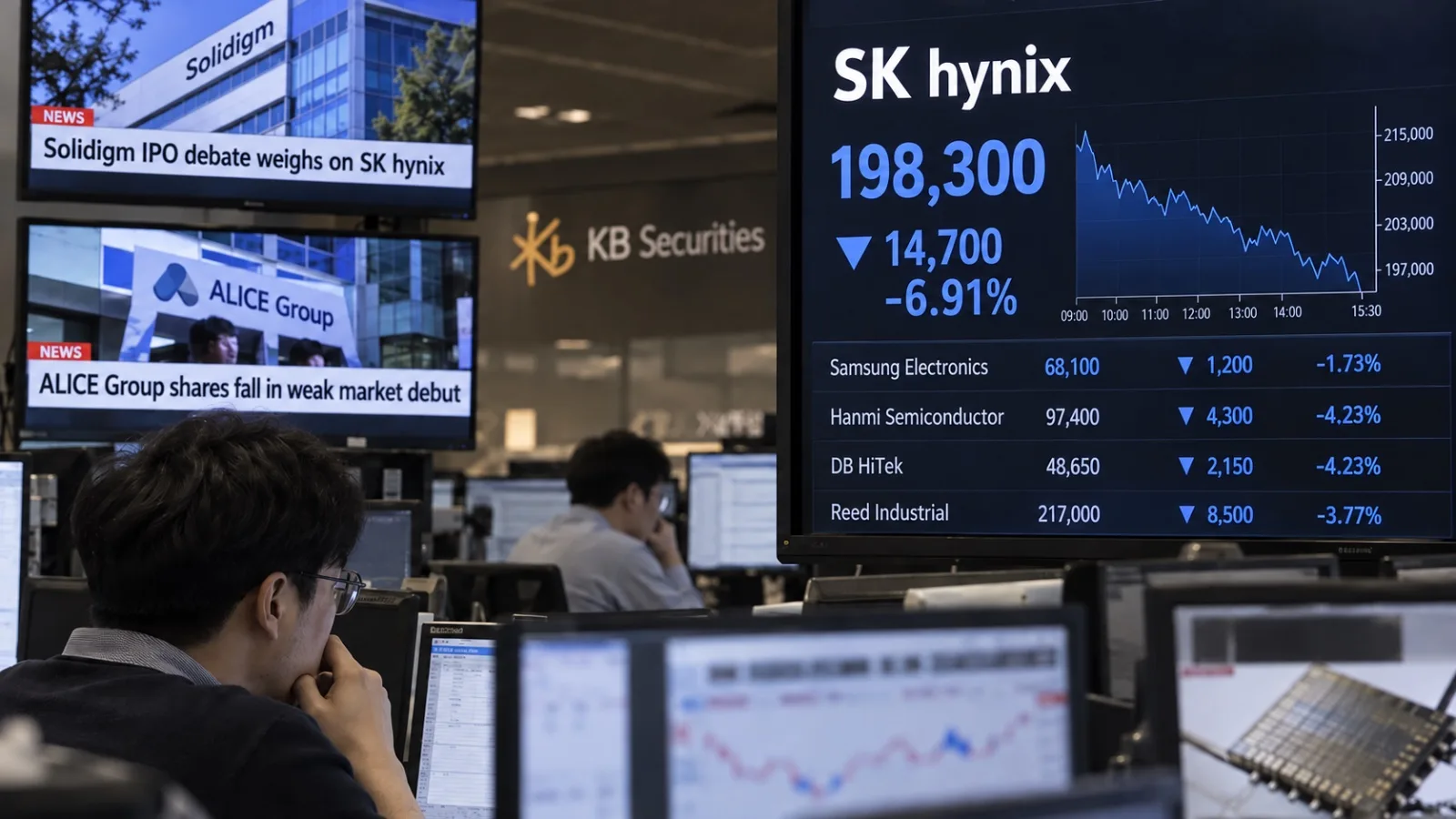
SK hynix looks odd right now.

Its chips are selling so fast that supply is tight. Prices keep climbing. Brokerages expect big profits to continue.

Yet the stock is moving the other way.

On Oct. 20, SK hynix closed at about 1.223 million won, down roughly 4.23% on the day. For many investors, that is hard to square with the business.

What happened?

The company has not hit a sudden crisis. Rather, investors are changing how they look at the future. They are asking how long the money pouring into AI will keep flowing, and how much of the profit from subsidiary growth will reach existing shareholders.

1. Is the chip business really doing well?

Yes. For now, the memory market remains strong.

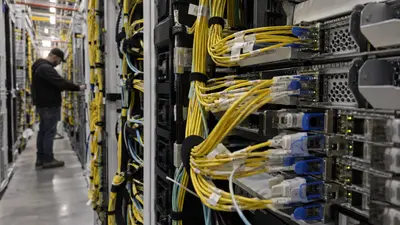
Running AI services such as ChatGPT takes giant data centers. They hold Nvidia's AI chips, but also vast amounts of memory and storage.

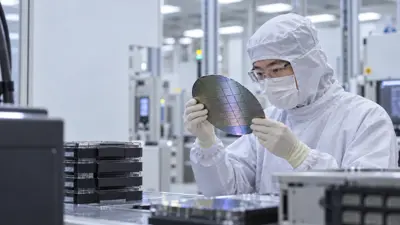
The catch is that chip fabs cannot be built overnight just because orders rise. When a product is scarce, its price goes up. That is a favorable setup for SK hynix.

  • Q4 conventional DRAM contract price forecast: +10% to 15% from the prior quarter
  • Q4 NAND contract price forecast: +15% to 20% from the prior quarter

These are market research firm forecasts. They may differ from final contract prices and from SK hynix's realized selling prices.

Not every chip sells equally well. Smartphone and PC makers are wary of higher memory costs. Still, the latest drop is hard to explain as a sudden failure of chip demand.

2. The real worry is the money going into AI

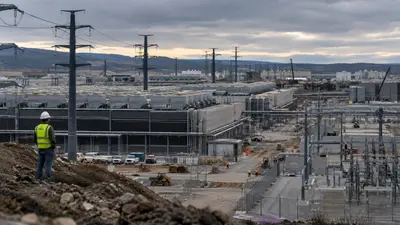
Microsoft, Amazon, Google and Meta are spending heavily on AI data centers. That is a key reason SK hynix's memory sells so well.

But the question on Wall Street has shifted.

"We get that AI is impressive. But when, and how much, will the money invested come back?"

What if companies spend heavily on data centers and AI service revenue falls short of expectations? They could slow new construction. Over time, chip orders could shrink too.

An AI firm drew about 10 trillion won in subscription deposits, then fell on day one

A Korean AI company, Elice Group, is an instructive case.

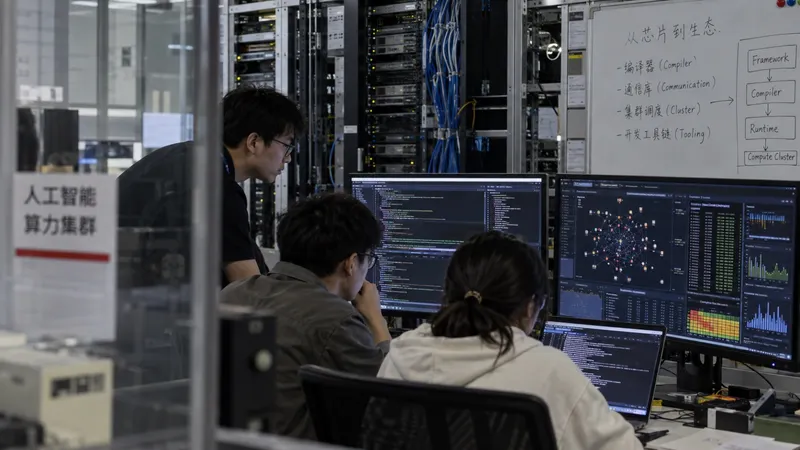
Elice provides GPU servers and cloud environments so companies can build and run AI. In plain terms, it rents out the computing resources AI needs.

Interest was intense before the listing. Deposits placed for the retail subscription reached about 10.26 trillion won. On Oct. 20, its first trading day, the stock closed about 32% below its offering price.

  • Subscription deposits: 10.26 trillion won (money put up to apply, not confirmed investment)
  • First-day move versus offering price: about -32% (at the close)

Elice's business did not worsen in a day. The gap was between the enthusiasm of the subscription and the price investors accepted in actual trading.

That does not prove the AI industry is collapsing. Selling pressure may have piled up early after the listing, or the offering price may have been too high. But it is an example of a mood shift, in which the AI label alone no longer earns a high price.

What does that have to do with SK hynix?

In the AI industry, money and orders are linked.

  • AI service companies such as Microsoft and Google: invest in data centers for AI services.
  • AI infrastructure operators such as Elice and CoreWeave: build servers and computing capacity and provide the service.
  • Chip companies such as Nvidia and SK hynix: benefit from demand for GPUs and memory.

This is a simplified map of the industry. Actual contracts and purchasing paths differ by company.

If the companies at the front of the chain slow their spending, the effect can pass in turn to servers, GPUs and memory makers. That is why shifts in sentiment toward AI infrastructure firms like Elice matter for SK hynix.

Still, a worry that AI spending may slow someday is very different from SK hynix orders actually plunging today. The share price may be pricing in future anxiety early.

3. Why is Solidigm a problem again?

SK hynix owns a US subsidiary, Solidigm. Its main business is enterprise SSDs, which store large volumes of data in data centers.

Reports have said SK hynix is weighing a separate listing of the company on a US exchange. Selling shares to outside investors would raise funds for more production capacity and R&D.

But existing SK hynix shareholders face a different question.

"If a fast-growing subsidiary is shared with other investors, does the original shareholders' slice of that growth shrink?"

Consider a profitable division inside a company you own. If it takes on new shareholders, the company gets cash, but more people share its future profits.

A listing is not necessarily a loss. If the new money lifts the business and its earnings far higher, existing shareholders can benefit too.

Good case: The unit wins a high valuation and invests the proceeds well. The value reaching existing shareholders can grow.

Bad case: Too large a stake is given up, or the investment underdelivers. Existing shareholders' share of profit falls, and the parent can trade at a discount.

Regulation complicates things further. On Oct. 19, the head of South Korea's Financial Supervisory Service raised the possibility that a US listing of Solidigm could run afoul of rules on double listings of subsidiaries.

What matters is not whether it lists, but at what valuation, how large a stake is sold and where the proceeds go. With terms unsettled, the market dislikes the uncertainty.

4. How should the 1.22 million won stock be read now?

SK hynix shares have dropped sharply. That does not mean its competitiveness has weakened by the same amount.

Memory prices are still rising, and SK hynix remains strong in HBM, the high-bandwidth memory used in AI servers.

The stock and the underlying business are moving in different directions.

That can create an opportunity for long-term investors. There are open questions, though. Whether AI data center spending continues, and how a US Solidigm listing would affect existing shareholders, are both unclear.

Neither uncertainty means SK hynix's chip competitiveness has faded.

The market's worries and the company's actual earning power are worth separating.

If the earnings report due at the end of October confirms that memory demand and profitability remain strong, investors could reassess the recent decline.

The point is neither to be rattled by a short-term drop nor to assume a quick rebound. The most useful test for shareholders is to calmly check how well expectations for SK hynix's future earnings are holding up.

5. What could happen to the stock?

Near term, 1 to 4 weeks: volatile. The earnings report, easing of foreign selling and further explanation on Solidigm could spark a rebound. If uncertainty lingers, the stock could stay shaky even on good results.

Medium term, 1 to 6 months: room to recover if the cycle holds. If memory prices and AI spending stay solid, earnings expectations could support the shares. A slowdown in AI investment or a prolonged shareholder-value dispute could delay recovery.

Three things to watch

  1. SK hynix's earnings report. Not only profit already earned, but the outlook for memory prices and orders.
  2. Follow-up on the Solidigm listing. At what valuation, how many shares, and whether protections exist for existing shareholders.
  3. US Big Tech AI spending plans. Whether Microsoft, Meta, Google and Amazon keep raising data center outlays.

SK hynix is not a company whose stock is falling because it cannot sell chips. The market doubts whether it can keep selling this well, and who will receive the profit it earns.

How long will the chip boom last? And whose share will the money from that boom become?

As answers to those two questions accumulate, the meaning of SK hynix's share price is likely to become clearer.

SK hynix is not struggling to sell chips; the worry is how long AI spending lasts and what a Solidigm listing means for existing shareholders.

Insight Times Editorial Desk

More by topic

Starting with this story's topics, then what readers are following now

HBM

This story's topic60 storiesSee all →

Memory stacked next to the GPU.

Has Memory Peaked? Prices Are Cooling, but the Shortage Looks Set to Run to 2028

Price growth has slowed and consumer demand is already breaking. Server and HBM supply remains short, and Micron says more than 75% of its 2027 volume is already committed to customers.

Tech

US AI Data Centers Are Headed for 90GW. Gigawatts Now Matter More Than Dollars

Goldman Sachs expects US data center capacity to grow from 64GW at the end of 2026 to 90GW at the end of 2027. The AI race is moving from buying GPUs to building power plants and transmission lines alongside them.

Tech

How Far Can China Push DRAM Without EUV

CXMT says it has shrunk DRAM features to 11.95nm using quadruple patterning instead of EUV lithography. The real question is not whether China caught up, but how much more it now costs China to get there.

Tech

AI Chip Peak Check: Demand Still Rising, Risk Building in 2027-2029 Supply and Funding

DRAM and NAND contract prices are still climbing and HBM suppliers hold the edge. Power shortages, AI financing costs and simultaneous memory expansion are the risks for later years.

Investing

Memory Chip Supercycle: Not at Peak Yet, But 5 of 6 Warning Signs Are Flashing

Memory prices are still climbing, but the pace is slowing and PC and smartphone demand is starting to crack under the weight of higher chip costs. This looks less like a price peak and more like a profit plateau building toward the next supply cycle.

Investing

2027 Isn't the End: Citi's Case for a Memory Supercycle Running to 2031

Citi says the memory shortage timeline is stretching again. If AI shifts from "train once" models to continual learning, HBM, server DRAM and enterprise SSDs could all fall short at the same time.

Tech

If TSMC Runs Terafab, Musk's Chip Plan Shifts From Self-Built Fab to Dedicated Foundry

Talks with TSMC are not a contract. But if a deal happens, Terafab may become less about Musk making chips himself and more about tying TSMC's manufacturing to a captive supply chain for his companies.

Tech

A building that houses servers and networking gear and supplies them with powe…

Tesla Energy's 13.7GWh Paradox: Expectations Ran Faster Than Deployments

Q2 deployments recovered but margins collapsed. Q3 set a record for deployments and still missed estimates. The issue is not the size of AI power demand but how fast it converts into Tesla revenue and profit.

Tech

Why Nvidia Is Happy to Help Make AI Models Nearly Free

Falling model prices can squeeze model makers. For Nvidia, the number that matters is the total volume of tokens generated worldwide and the compute that produces them.

Tech

AI Needs to Find $1 Trillion a Year From Somewhere to Pay Back Its Capex

Saying AI capex is big is no longer the point. The harder question is what end users have to pay for the buildout to pencil out, and Goldman Sachs puts that number at roughly $1 trillion a year.

Tech

Nvidia Put $2 Billion Into Lumentum. Optics May Be the Next Bottleneck, but the Stock Has Already Run

Optical networking is emerging as the next constraint on AI data centers. Investors need to separate the industry's growth potential from the price they are already paying for it.

Tech

Why the White House Swapped "AI" for "Super Intelligence"

Executive Order 14434 renames AI across the federal government without defining a new technology. The real story is about roughly $700 billion in capex, free cash flow and electricity.

Tech

Nvidia's Next Target After GPUs: Controlling What AI Agents Are Allowed to Do

OpenShell and Sentry are not about policing what an AI says. They are about controlling, at the server infrastructure level, which files and APIs an AI can touch, what it can execute, and who can actually pull the plug when something goes wrong.

Tech

The AI Correction Is Not a Buy-the-Dip Signal. It's a Profitability Screen

As AI stocks wobble, the question isn't whether the theme survives. It's where bottlenecks still convert into real orders, pricing power and yield. Memory is at the center of that question right now.

Tech

NVDA

71 storiesSee all →

China Is Now Copying Something Harder Than Nvidia's GPUs: CUDA

DeepSeek and Huawei have open-sourced compute, communication and programming tools for Ascend. The contest with Nvidia is moving beyond chip speed to how easily developers can switch.

Tech

AI Has Five Years to Find $4.2 Trillion in New Annual Revenue

The AI infrastructure question is no longer how many more GPUs to buy. It is how quickly the trillions already committed can produce enough cash flow.

Tech

AI's Next Bottleneck Is Money, Not Chips

Broadcom is lending Anthropic up to $42 billion, and Nvidia wants to build a $500 billion market for loans backed by GPUs. The AI race may turn on what rate buyers pay to borrow.

Tech

Nvidia's $500 Billion Experiment: Wall Street Asks Who Backs the GPU, Not Just the Chip

The real issue in Nvidia's financing platform is not chip sales. It is how far Wall Street will trust GPU resale prices and rental income three to four years out.

Tech

Jobs Cooled, Yields Rose, and Only Chip Equipment Stocks Rallied

The S&P 500 slipped 0.17% on Sept. 29 while SOXX gained 1.19%. Investors did not abandon AI. They appear to be picking the AI names that can live with high rates.

Tech

Samsung's HBM4 Yield Hits 80% - Now the Real Fight Is Production Volume

Reports confirm Samsung's HBM4 yield has climbed to roughly 80 percent, but the bigger number is capacity: HBM wafer input is projected to jump nearly 40 percent next year, from about 180,000 to 250,000 wafers a month.

Tech

The US-China Summit Didn't Erase Taiwan Risk for Chip Stocks

Washington's Taiwan policy held, but roughly $14 billion in arms sales is still on hold. For AI chip investors, the summit reads less like risk removed and more like a fragile balance extended.

Macro

GPU

45 storiesSee all →

A chip built to draw graphics, whose ability to run thousands of identical cal…

If GPUs Are the Muscle, the Network Is the Nervous System

AI data centers do not get faster just by buying more GPUs. When thousands of accelerators cannot exchange data on time, the most expensive asset in the building sits idle. That is the whole investment case for Arista.

Investing

SpaceX Jumps 7.35%: Investors Are Pricing Three Cash Engines, Not Rockets

SpaceX shares rose 7.35% to $158.96 on Oct. 2 after three launches in 13 hours. The bigger driver is Falcon, Starlink and AI compute growing inside one company.

Tech

The Next AI Data Center Bottleneck May Be Local Consent, Not Power

Amazon is adding $1 billion for communities near its data centers. It signals that scarce AI inputs are shifting from GPUs and power to permits, grid access and local acceptance.

Tech

The AI Bubble Question Has Changed: By Late 2026, It's ROIC Over GPUs

There is no sign yet that AI investment is slowing. If anything, hyperscaler spending forecasts keep climbing. But as the scale of that capital has grown, the market's question has shifted from "is AI growing" to "when, and how much, does this capital come back as cash."

Tech

2027 Investing Needs Alignment, Not Prediction

A new investing book argues the hard part was never picking the next winner. It's staying aligned with where value and bottlenecks are moving while keeping old human weaknesses in check.

Investor Mind

Who Becomes the Windows of the Self-Driving Era?

Hyundai just pushed back its own autonomous driving timeline and turned to Nvidia first. The real story is not the delay, it is Nvidia's bid to become a common platform across the entire auto industry, not just a chip supplier.

Tech

The Cheaper Tokens Get, the Bigger Your AI Bill Gets

As AI shifts from training to inference, the token is becoming an industrial commodity. Falling prices are not cutting demand, because agents and automation consume tokens at a scale no human chat session ever did.

Investing