Wall Street's Question This Week: When Does the Money Spent on AI Come Back?

A Fed decision and earnings from Microsoft, Alphabet and Amazon land in the same week. Capital needs and returns on AI investment may matter more to markets than AI growth itself.

Earnings are strong. Why is the market uneasy?

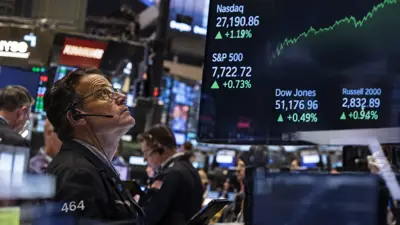
U.S. stocks closed Friday, Oct. 23, with the S&P 500 at 7,623.68 and the Nasdaq Composite at 25,955.34. Both indexes fell for the week, while the Dow rose 0.41% and the Russell 2000 gained about 2%.

The market did not break down across the board. One reading is that investors are demanding more from richly valued growth stocks and AI-linked companies.

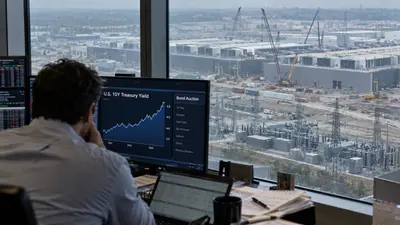
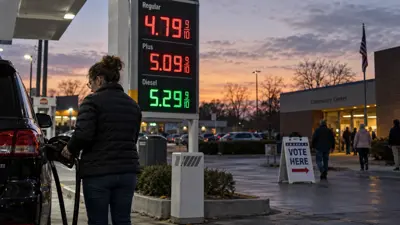
Two numbers stand out: the 10-year Treasury yield near 5% and WTI crude above $100 a barrel. High yields lower the present value of future earnings. Rising oil prices can feed inflation and risk extending the Fed's tightening.

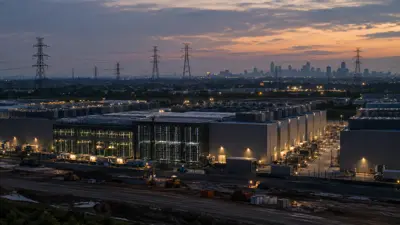
AI adds its own problem. Demand for chips and data centers may be strong, but whether the companies building those facilities can keep raising money is a separate question.

Ed Yardeni of Yardeni Research has flagged the scale of AI companies' spending and borrowing as a concern. He cut his year-end 2026 S&P 500 target to 7,900 and pushed back the timing of his earlier 8,400 target to mid-2027. The war in the Middle East and higher oil prices are also major worries for him.

Three events that could move the market this week

U.S. scheduleEventWhat investors will look for
Wed., Oct. 28FOMC rate decision, Chair Warsh press conferenceOdds of another hike in December
Wed., Oct. 28Microsoft, Alphabet earningsAzure and Google Cloud growth, AI investment
Thu., Oct. 29Q3 GDP advance estimate, September PCE price indexGrowth, core inflation, Treasury yields
Thu., Oct. 29Amazon earningsAWS growth, capital spending, cash flow

The Fed announcement is at 2 p.m. Eastern on Wednesday, with the press conference at 2:30 p.m.

The Fed can rattle markets even with a hold

In a Reuters poll on Oct. 20, economists expected the Fed to hold rates in October, and all 100 respondents forecast a hike in December. That is a survey result, not the same as the probability priced into fed funds futures.

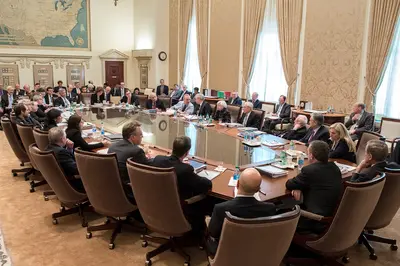
The Fed's current target range is 3.75% to 4.00%. A hold this week is largely expected, so the market is likely to focus on how Warsh weighs inflation against economic growth.

The key issue is less whether rates rise than how long they stay high. With Big Tech capital spending and data center operators' borrowing costs both climbing, moves in long-term Treasury yields matter.

AI spending: look at cash flow as well as revenue

The three companies' numbers should not be read the same way.

For Microsoft, the link between Azure growth and AI capital spending is central. If cloud revenue grows but depreciation and operating costs grow faster, questions about profitability remain.

For Alphabet, Google Cloud growth and operating profit improvement need to be read together. Whether expanding AI search erodes the profitability of traditional search advertising is another key variable.

For Amazon, AWS growth and company-wide free cash flow are the focus. The question is how much the build-out of AI data centers is squeezing cash generation.

AI infrastructure suppliers sit in a different position. For Nvidia, HBM memory makers, networking firms and chip equipment makers, customer spending turns into revenue. But if hyperscalers find funding harder to come by, order schedules could be affected over time.

Strong near-term results at chip companies therefore do not show that the whole AI investment cycle is safe.

The most important question for the week comes down to one thing: not how much money AI needs, but how much sustainable profit that money can produce.

The market is shifting from asking how fast AI grows to asking how much cash it needs and whether it can earn sustainable profit.

Insight Times Editorial Desk

More by topic

Starting with this story's topics, then what readers are following now

Investor psychology, decision-making and books on investing

Fed

This story's topic23 storiesSee all →

The central bank of the United States, carrying a dual mandate — stable prices…

Why Elon Musk's 4% Growth Call Deserves a Serious Read

Elon Musk says AI could double US GDP growth next year from roughly 2% to 4%. The number that matters isn't 4%, it's the idea that intelligence is turning from scarce labor into replicable capital.

Macro

It's Not Just Hormuz: Why the Middle East War Is Becoming a Fed Problem Again

The US-Iran ceasefire has already collapsed, and the risk no longer sits in the Gulf alone. With the Red Sea and Saudi Arabia's bypass pipeline now under threat too, an energy shock is spreading into prices, the Fed, and growth-stock valuations.

Macro

Stocks Bounce, but the AI Selloff May Not Be Over: A Two-Week Playbook

The Dow rose more than 1% while the Nasdaq barely moved and semiconductors kept falling. A W-shaped retest looks more likely than a V, and the task now is surviving the next drop.

Investing

Is Bitcoin Coming Back? A Recovery That Still Has to Prove Itself

Bitcoin has slipped from above $126,000 to around $83,000 while AI stocks hog the spotlight. It is up more than 40% from its summer low, but it is too early to call a new bull market.

Investing

10-Year Yield at 5.34%: The Problem Isn't a Missing Buyer, It's the Price

Washington and the AI industry are pulling in huge sums at once, and the bond market is demanding higher yields to absorb it. Equity investors now need to watch long-term rates, financing costs and AI payback alongside the Fed's next move.

Macro

Weekly Check: The AI Bull Market Isn't Over, It's Just Gotten Harder

A 5% 10-year yield, 470 gigawatts stacked up in Texas, Chinese DRAM, and whether data centers actually get switched on are starting to decide who wins the AI trade through 2027.

Tech

Gas Prices, Not Politics, Are Deciding This Midterm Market Story

Forecasts of a Republican defeat are not exaggerated. The House has tilted clearly toward Democrats, the Senate has moved from a toss-up to a slight Democratic edge, and Trump's net approval is the lowest of either term.

Macro

FOMC

This story's topic6 storiesSee all →

The committee inside the Fed that actually sets the policy rate.

A building that houses servers and networking gear and supplies them with powe…

US AI Data Centers Are Headed for 90GW. Gigawatts Now Matter More Than Dollars

Goldman Sachs expects US data center capacity to grow from 64GW at the end of 2026 to 90GW at the end of 2027. The AI race is moving from buying GPUs to building power plants and transmission lines alongside them.

Tech

Tesla Energy's 13.7GWh Paradox: Expectations Ran Faster Than Deployments

Q2 deployments recovered but margins collapsed. Q3 set a record for deployments and still missed estimates. The issue is not the size of AI power demand but how fast it converts into Tesla revenue and profit.

Tech

Why the White House Swapped "AI" for "Super Intelligence"

Executive Order 14434 renames AI across the federal government without defining a new technology. The real story is about roughly $700 billion in capex, free cash flow and electricity.

Tech

Why Nvidia Is Happy to Help Make AI Models Nearly Free

Falling model prices can squeeze model makers. For Nvidia, the number that matters is the total volume of tokens generated worldwide and the compute that produces them.

Tech

Nvidia Put $2 Billion Into Lumentum. Optics May Be the Next Bottleneck, but the Stock Has Already Run

Optical networking is emerging as the next constraint on AI data centers. Investors need to separate the industry's growth potential from the price they are already paying for it.

Tech

Nvidia's Next Target After GPUs: Controlling What AI Agents Are Allowed to Do

OpenShell and Sentry are not about policing what an AI says. They are about controlling, at the server infrastructure level, which files and APIs an AI can touch, what it can execute, and who can actually pull the plug when something goes wrong.

Tech

AI Needs to Find $1 Trillion a Year From Somewhere to Pay Back Its Capex

Saying AI capex is big is no longer the point. The harder question is what end users have to pay for the buildout to pencil out, and Goldman Sachs puts that number at roughly $1 trillion a year.

Tech

HBM

63 storiesSee all →

Memory stacked next to the GPU.

Has Memory Peaked? Prices Are Cooling, but the Shortage Looks Set to Run to 2028

Price growth has slowed and consumer demand is already breaking. Server and HBM supply remains short, and Micron says more than 75% of its 2027 volume is already committed to customers.

Tech

AI Chip Peak Check: Demand Still Rising, Risk Building in 2027-2029 Supply and Funding

DRAM and NAND contract prices are still climbing and HBM suppliers hold the edge. Power shortages, AI financing costs and simultaneous memory expansion are the risks for later years.

Investing

How Far Can China Push DRAM Without EUV

CXMT says it has shrunk DRAM features to 11.95nm using quadruple patterning instead of EUV lithography. The real question is not whether China caught up, but how much more it now costs China to get there.

Tech

Memory Chip Supercycle: Not at Peak Yet, But 5 of 6 Warning Signs Are Flashing

Memory prices are still climbing, but the pace is slowing and PC and smartphone demand is starting to crack under the weight of higher chip costs. This looks less like a price peak and more like a profit plateau building toward the next supply cycle.

Investing

The Real ASML Number Isn't the 3% Pop, It's the 30% Capacity Hike

ASML's rally isn't just an AI trade. Customers are already locking in 2027 tool slots, and ASML is raising Low-NA EUV capacity by roughly 30% to keep up.

Investing

2027 Isn't the End: Citi's Case for a Memory Supercycle Running to 2031

Citi says the memory shortage timeline is stretching again. If AI shifts from "train once" models to continual learning, HBM, server DRAM and enterprise SSDs could all fall short at the same time.

Tech

Samsung, SK Hynix Sold Off on AI Fears. The Orders Haven't Followed Yet

The selloff reflects a market recalculating AI capex speed and memory earnings expectations, not confirmed cancellations. So far, the data show a gap between fear and reality.

Investing