Nvidia Proves It Can Grow 103% Without Jensen Huang. The Next Test Is Leadership.

In its first earnings report since Huang's departure, Nvidia beat expectations, and customers, suppliers and product timelines held. One question remains: who designs the next chapter?
The 20-second read

1
First proof: Revenue grew 103% from a year earlier. Even as the founder stepped aside, the business kept moving at a record pace.
2
Second proof: The systems behind the supply chain, the product development schedule and customer demand are working.
3
The remaining test: Choosing the next CEO and protecting the company's long-term technology direction and key talent.

1. The first report card without the founder came in stronger

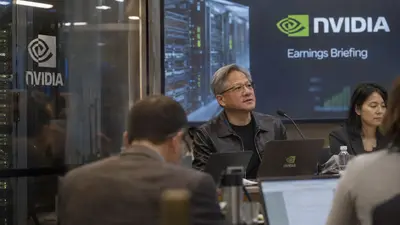
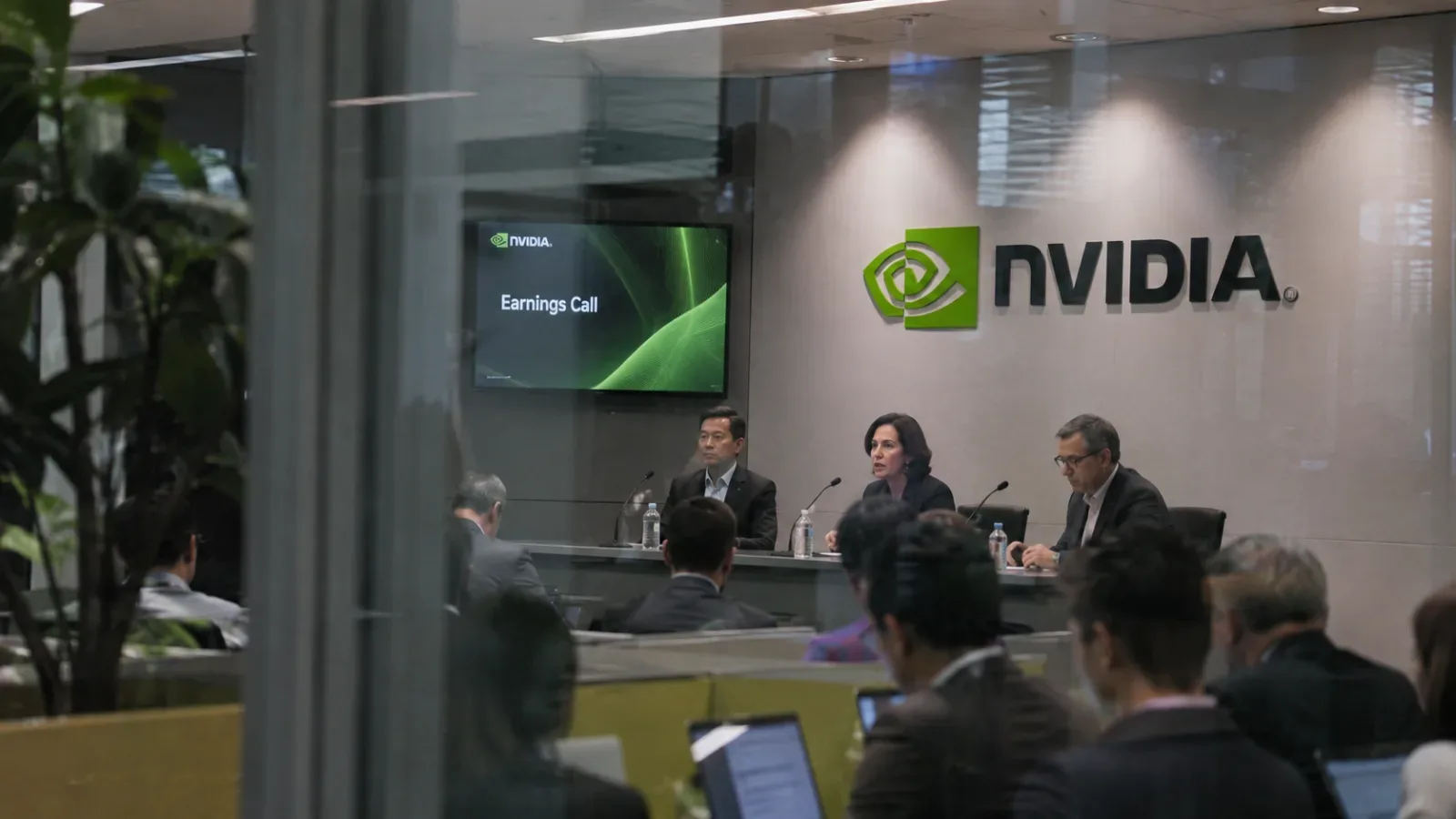
This was no routine quarterly report for Nvidia. It was the first time interim CEO Colette Kress stood before investors since Jensen Huang left. The market wanted to know more than the revenue figure. Would the founder's absence slow the business?

  • $115.8 billion: revenue in the third quarter of fiscal 2027
  • +103%: growth from the same quarter a year earlier

Revenue came in well above market expectations. The company guided to $130 billion in revenue for the next quarter, which includes one more week than usual.

Kress also raised her growth outlook for the next fiscal year, FY2028, from about 70% to about 75%. What the market welcomed was not a one-quarter surprise but the continuity of growth.

The results show business momentum far larger than the absence of one person.

2. Nvidia's real moat was wider than any one person

Huang's influence was formidable. But AI chips cannot be built and sold by one outstanding CEO alone. Customer investment plans, TSMC's manufacturing capacity, the memory supply chain, packaging technology and several generations of product development all have to mesh.

Kress stressed that customers, suppliers and partners all remain with Nvidia. She said TSMC executives visited Nvidia this week, and that the company has also secured memory and advanced packaging.

  • $279 billion: supply commitments last quarter
  • $390 billion: supply commitments this quarter

The rise in supply commitments is a move to lock in production capacity, including multi-year memory procurement. But the figure is not the same as booked revenue or a customer order backlog. The scale of supply prepared and actual sales results should be read separately.

The company also said its GPUs are fully utilized at hyperscalers and neoclouds. One example: renewal pricing for older Hopper GPUs has risen by as much as double. That suggests demand is holding up not only for the newest products but also for the installed base.

Nvidia's moat lies not only in the founder's charisma but in an ecosystem built jointly by customer demand and manufacturing partners.

3. The clock on next-generation chips has not stopped

A technology company's real strength does not end with selling well today. It lies in delivering the next product on time and getting customers to choose it again.

Kress said Vera Rubin Ultra is on schedule for next year and Feynman for 2028. Sales of today's high-performance GPUs have to flow naturally into the next generation for Nvidia's growth story to continue.

What matters here is not who stands on the stage at the launch. It is whether the engineering organization can design, produce and deliver to customer environments on schedule.

Whether launch dates are kept is the most direct test of Nvidia's technical competitiveness without its founder.

4. The board closed the door on a return, but the answer is unfinished

As clear as the business numbers were, the board's position on leadership was just as plain. Chair Harvey Jones said on the earnings call that the board has no intention of bringing Huang back as CEO.

In a November 12 public statement, Nvidia said Huang stepped down after personal conduct that did not meet the company's code of conduct, standards and cultural norms became public. The board says it decided carefully. It wants to find a new CEO as soon as possible, but will not rush before choosing the right person.

Investors including Brad Gerstner and Gavin Baker have also called for a careful succession process. Even if calls for Huang's return continue, the task the company actually has to solve is putting in place a leader who can steer long-term strategy.

"We've got this." Colette Kress, closing remarks on the earnings call

The line shows the current organization's confidence. But an earnings report cannot settle everything. Deciding the direction of the next technology amid enormous investment and competition, and keeping key researchers on board, are still open.

The numbers proved the organization can execute. They do not prove the vision for the next decade.
How much revenue did Nvidia report last quarter?
  • Revenue for the third quarter of fiscal 2027 was $115.8 billion.
  • That is up 103% from the same quarter a year earlier, and well above market expectations.
Why did Nvidia's results hold up after Jensen Huang stepped aside?
  • Based on the article, it is because customer demand, manufacturing partners such as TSMC, and the memory and packaging supply chain all keep moving together.
  • According to the company, Nvidia GPUs are fully utilized at hyperscalers and neoclouds.
  • Still, one quarter of results is not enough to judge the long-term impact.
Is Nvidia's $390 billion in supply commitments confirmed revenue?
  • No. That amount is not the same as confirmed revenue or a backlog of customer orders.
  • It is a number that shows how much supply the company has lined up. It should be read separately from actual sales results.
Does Nvidia's board plan to bring Jensen Huang back as CEO?
  • Board Chair Harvey Jones said on the earnings call that there is no intention of bringing him back.
  • The board says it will find a new CEO as soon as possible, but will not rush before it picks the right person.
What is Nvidia's next-generation chip schedule?
  • Interim CEO Colette Kress said Vera Rubin Ultra is on track for release next year and Feynman in 2028, as scheduled.
  • Whether this schedule holds can be seen as a direct test of Nvidia's technology without its founder.

What to watch

NEXT CHECKPOINTS
Choosing a successor CEOWhat matters more than a quick announcement is finding the right person to lead both strategy and the organization, and trust in the succession process.
Vera Rubin Ultra and Feynman timingThe more the announced release schedule is kept, the greater the confidence in the technology organization's independence and execution.
Linking supply commitments to revenueWe need to see whether the memory and packaging capacity secured turns into actual product supply and revenue growth.
Customer relationships and key talentWhether cloud customers keep investing and whether key technical staff stay may signal change before the numbers do.
Can a great company outgrow its founder? Nvidia has passed the first earnings test. A longer test has now begun.
Nvidia's numbers show the business runs without its founder, but the leader for the next decade has not been chosen.

Insight Times Editorial Desk

More by topic

Starting with this story's topics, then what readers are following now

Investor psychology, decision-making and books on investing

Earnings Report

This story's topic43 storiesSee all →
A person at a kitchen table looks at a food delivery app on a phone beside a laptop and a DoorDash delivery bag

AI Was Supposed to Do Our Shopping. DoorDash Got Only Several Hundred Orders From It

DoorDash logged 993 million orders in the third quarter, yet outside AI agents placed only several hundred in total. Orders built through its own in-app AI ran about 50% larger.

Tech

A building that houses servers and networking gear and supplies them with powe…

Why Nebius Is Keeping Some 2027 AI Capacity Off the Shelf

Nebius mixes long-term contracts, short-term premiums and auctions. Holding back capacity pays only if the servers stay busy, and it is not yet clear the pricing will last.

Tech

AI ran out of memory before it ran out of GPUs

The HBM bottleneck is spreading into DRAM prices, server costs and the price of the next laptop or phone.

Tech

Is Space Cooler for AI? Why Musk Wants Data Centers in Orbit
The next limit on AI may be power and cooling, not GPUs. Elon Musk is looking to Earth orbit for an answer, but the test is cost per hour of compute.

Tech

White House Swaps AI for "SI." The Real Investment Signal Is Infrastructure, Not the Name

An executive order renames artificial intelligence "Super Intelligence" and six frontier labs sign a voluntary safety accord. What investors should watch is the data center, power, nuclear and chip policy now gathered under one national-competitiveness frame.

Tech

Musk Sees the Next Phase of AI Infrastructure: Who Can Switch GPUs On, Fast

If neoclouds struggle under financial pressure, AI demand may not shrink. It may simply favor the few operators with the capital and execution to serve it, a shift that could matter for SpaceX and Tesla.

Tech

Weekly Check: The AI Bull Market Isn't Over, It's Just Gotten Harder

A 5% 10-year yield, 470 gigawatts stacked up in Texas, Chinese DRAM, and whether data centers actually get switched on are starting to decide who wins the AI trade through 2027.

Tech

Is Memory Peaking? In the AI Era, Watch the Bottleneck, Not the Demand

Demand still outruns supply. But memory stocks can peak before demand does. The real question is how long HBM4, server DRAM, CXL and Big Tech capex keep the cash flowing.

Tech

NVDA

101 storiesSee all →

Who Hits $1 Trillion Next: Reading AMD and ASML by Different Rules

One company is chasing Nvidia's GPU empire. The other sells the machine that draws the chips for every advanced chipmaker, including Nvidia. Both get floated as 2028 trillion-dollar candidates, but the numbers investors need to watch are entirely different.

Investing

Box Shows AI Its Manuals, and the AI Starts Redesigning the Workflow

Box Architect, built with NVIDIA, moves AI from reading documents to designing how work gets done. It has not yet reached beta, so the real-world payoff remains to be seen.

Tech

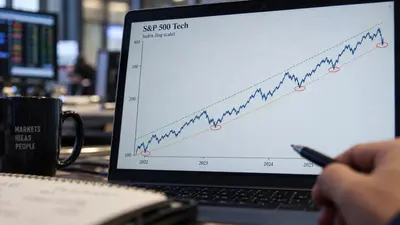
Tech Selloff: Is the Bull Market Over? Wall Street's Four-Year Chart Says Not Yet

The uptrend has survived five double-digit pullbacks in four years. This time, AI companies' debt and cash flow are the new variables.

Investing

Marvell's $115 Billion Lumentum Deal: Is AI's Next Bottleneck Light, Not Chips?

Marvell's purchase of Lumentum points to a contest beyond GPU speed, in data transfer and power efficiency. Whether the price is right is not yet confirmed.

Tech

Nvidia and Palantir Put AI Inside the Supply Chain - The Real Shift Is That It's Learning Judgment

A single Vera Rubin rack holds 1.3 million parts. The real breakthrough in Nvidia and Palantir's new supply chain AI isn't automating that complexity, it's capturing the judgment calls that used to live only in planners' heads.

Tech

If You Only Watch Tesla, You May Be Missing Half the AI Story

Nvidia builds the AI brain. Who supplies the electricity to run it? Six power companies Tesla investors should know, and why Tesla's storage business is just one link in the chain.

Investing

Nvidia Moves From GPUs to CPUs as AI Agents Reshape a $200 Billion Chip Market

A customer's early test found Nvidia's Vera CPU handled about twice the AI agent workload of its existing chips. The bigger story is where the money in semiconductors is heading as AI shifts from answering questions to doing work.

Tech

GPU

73 storiesSee all →

A chip built to draw graphics, whose ability to run thousands of identical cal…

The Next AI Chip Race Is About How Chips Connect

Applied Materials will lift its stake in Dutch equipment maker BESI from about 9% to 20%. The bet is less about control than about a new way to link chips.

Tech

US AI Data Centers Are Headed for 90GW. Gigawatts Now Matter More Than Dollars

Goldman Sachs expects US data center capacity to grow from 64GW at the end of 2026 to 90GW at the end of 2027. The AI race is moving from buying GPUs to building power plants and transmission lines alongside them.

Tech

Nvidia's $500 Billion Experiment: Wall Street Asks Who Backs the GPU, Not Just the Chip

The real issue in Nvidia's financing platform is not chip sales. It is how far Wall Street will trust GPU resale prices and rental income three to four years out.

Tech

The Cheaper Tokens Get, the Bigger Your AI Bill Gets

As AI shifts from training to inference, the token is becoming an industrial commodity. Falling prices are not cutting demand, because agents and automation consume tokens at a scale no human chat session ever did.

Investing

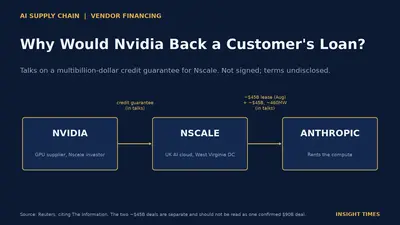
Dark navy cover. Flow diagram: Nvidia to Nscale (credit guarantee, in talks) to Anthropic (~$45B compute lease signed in August plus a separate ~$45B, ~460MW deal in talks). Title: Why Would Nvidia Back a Customer's Loan?

Why Would Nvidia Guarantee Its Customers' Data Center Loans?

Nvidia is reportedly in talks to back financing for Nscale's West Virginia data center. Nothing is signed, and the terms are not public.

Tech

Amazon Goes After Nvidia's Strongest Moat, and It Is Software, Not GPUs

Amazon's open-source TorchNeuron aims to let existing AI code run on its Trainium chips. The contest comes down to the total cost of AI compute and the return on Amazon's $220 billion in annual capital spending.

Tech

AI's Next Bottleneck Is Power, Not GPUs

Jensen Huang and Elon Musk sent the same warning in Washington. The AI race is widening from building better models to supplying power and chips at industrial scale.

Tech