Will 'Made by a Human' Become a Brand Once AI Can Make Anything?
As AI collapses the cost and time needed to make music, video, art and stories, scarcity in content markets may shift from "was it made well" to "who made it, and why." But a human premium does not appear automatically in every genre.
The question is no longer whether to use AI
South Korea's Ministry of Culture, Sports and Tourism is recruiting members for a new "culture technology consortium," working with a state-run content research institute. The program spans four areas: games and interactive media, video and media production, music and performance, and original story content. Companies, platforms, academic institutions and individual creators can all apply. The government is also funding a separate training program this year aimed at roughly 900 AI-specialized content creators.
The notable shift is in the question itself. Policymakers are moving away from asking "should the culture industry adopt AI" and toward "how do we design a production environment that assumes AI is already part of the process."

When everything is well-made, "well-made" stops meaning much
AI's biggest effect may not be raising average quality. It may be collapsing the cost of supply. When the time and money needed to produce a single backing track, an ad spot, dozens of character designs or hundreds of script drafts all fall sharply, the market gets flooded with far more "good enough" content than before.
At that point, the consumer's problem stops being scarcity and becomes overload. It is not that there is nothing to watch or listen to. It is that there is too much to choose from. A 2026 study on music streaming found that generative AI can simultaneously increase content oversupply, make discovery harder, and intensify competition among creators.
If a new song from an artist you like turns out to have been almost entirely AI-generated, would you like it exactly the same as before?
Two markets may open at once
Scenario 1: Origin Doesn't Matter
In this market, if the content is fun, attractive or moving, it does not matter who made it. Background music, short-form video and repetitive in-game content lean this way, because consumption there is closer to function and instant satisfaction.
Scenario 2: Human Premium
In the opposite market, a creator's life story, a real performance, the visible trace of a human hand, or the fact of a live moment are part of what the work is worth. Here, "a human actually made this" becomes a source of premium. Concerts, handcraft, auteur-driven film and limited-run creative work fall into this category.
The research is already split
In a 2025 experiment, researchers took identical AI-generated pop music and randomly labeled tracks as "composed by AI" or "composed by a human." Contrary to expectations, there was no significant difference in preference, quality ratings, willingness to relisten or purchase intent. The bare fact that AI made something did not necessarily make listeners rate it lower.
But a separate 2026 experiment set in a hotel-service context found something different. When people did not know the source, they could not reliably tell AI-made music from human-made music. Once told the music was human-made, though, they reported stronger positive feelings, especially in premium service settings where customers expect authenticity and emotional depth.
Put the two studies together and the conclusion is simple: a human premium is not a fixed property baked into a work, the way sound quality is. It is a contextual value that appears or disappears depending on how much authenticity and human intent the consumer demands from that particular piece of content.
Proving something was human-made becomes its own task
That opens a new market. A simple "100% Human Made" sticker is unlikely to hold up for long, because consumers have no easy way to verify whether AI was used.
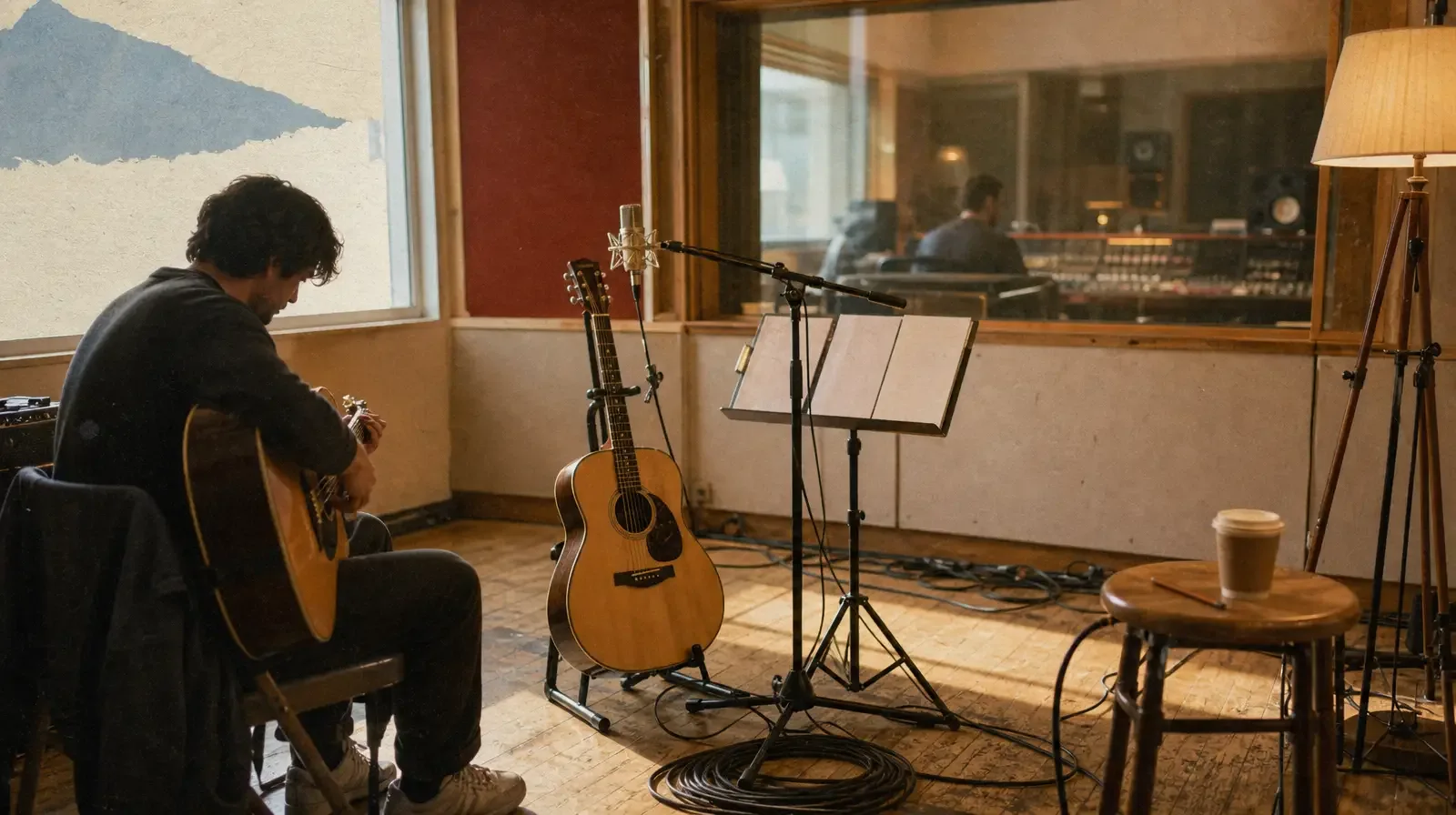
Instead, the production process itself may become part of the product: footage of a singer actually performing and recording, a writer's early drafts with visible revisions, behind-the-scenes documentation from a shoot, or a craftsperson's step-by-step process. Going forward, "how it was made" may become the brand story, more than the finished piece itself.
If a novelist used AI to write 90 percent of a first draft, whose work is it? There is no settled answer yet. But consumers are increasingly likely to ask not just about the finished product, but about where the boundary of human creation actually lies.
Insight Times Editorial Desk