Amazon Goes After Nvidia's Strongest Moat, and It Is Software, Not GPUs

Amazon's open-source TorchNeuron aims to let existing AI code run on its Trainium chips. The contest comes down to the total cost of AI compute and the return on Amazon's $220 billion in annual capital spending.
Amazon Goes After Nvidia's Strongest Moat, and It Is Software, Not GPUs

Nvidia's real strength is not only its GPUs

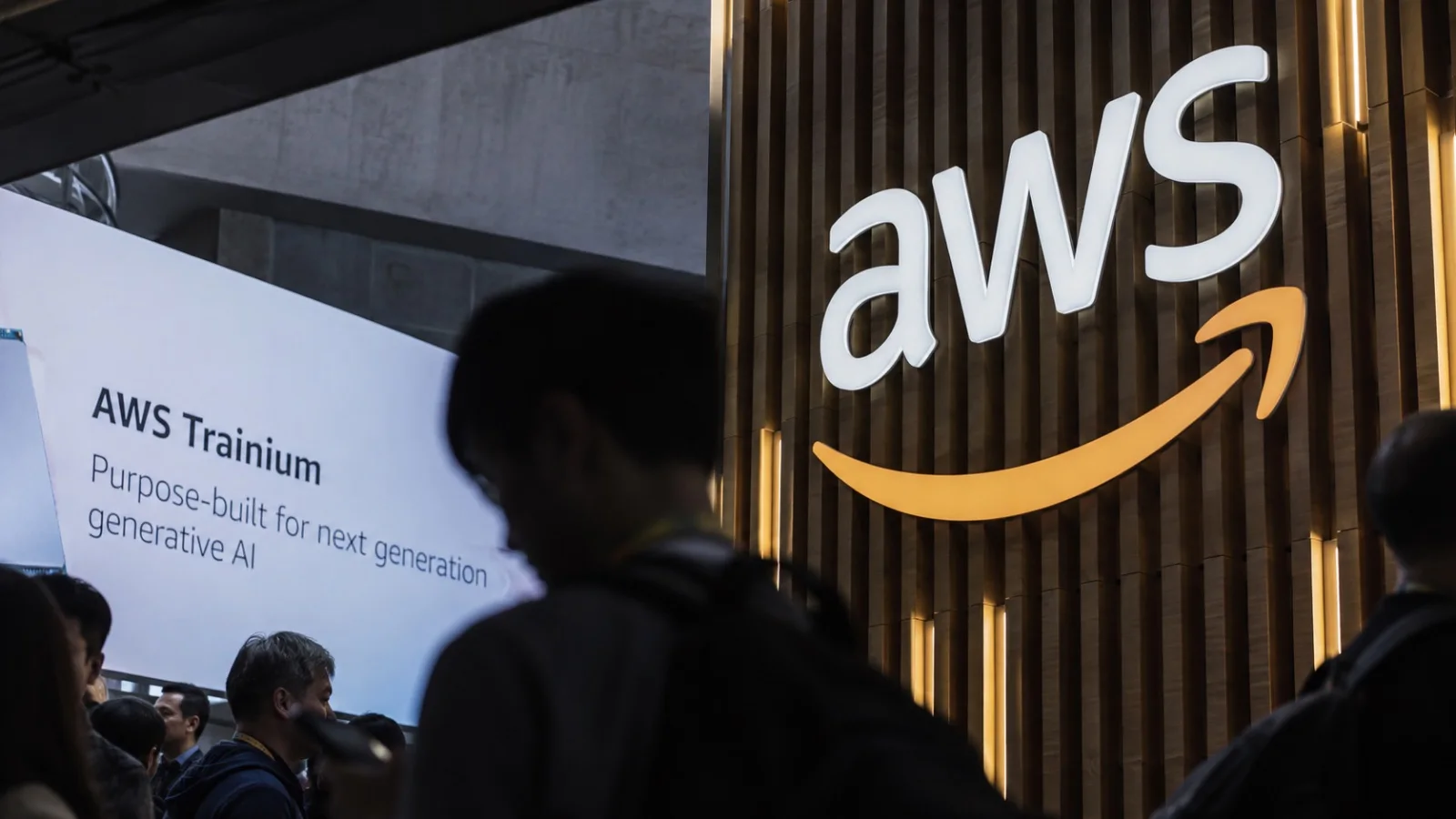
On Oct. 19, 2026, Amazon announced TorchNeuron, an open-source software package. On the surface, it is one more developer tool. Behind it sits the most important competitive structure in the AI chip market.

Nvidia's edge is not limited to GPU performance. It is built around CUDA, its parallel computing platform, where developers have long accumulated code, libraries and optimization tools that work together.

For a developer, a cheaper chip is hard to adopt. The software has to be modified, errors fixed and real performance validated again.

That is switching cost. Nvidia has sold more than chips. It has sold the ability to stay in an environment developers already know.

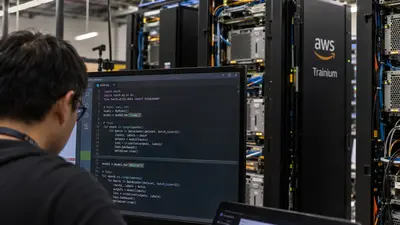
Amazon wants to lower that barrier. TorchNeuron uses a standard PyTorch extension mechanism so that Trainium shows up as a single compute device. For a typical PyTorch model, migration can be as simple as changing the target device from cuda to neuron.

According to the official documentation, TorchNeuron supports Eager Mode, torch.compile and distributed training. A public beta under the Apache 2.0 license begins Oct. 20.

What changes if switching gets easier

Existing structure (high software switching cost): PyTorch model → CUDA optimization → Nvidia GPU

With TorchNeuron (lower migration burden for some models): PyTorch model → TorchNeuron → AWS Trainium

Conceptual diagram. TorchNeuron lowers the cost of moving a development environment, but it does not guarantee full compatibility with CUDA-specific kernels or every operation.

If developers can run the same model on both chips with little effort, other factors weigh more in the buying decision: GPU price, power consumption, job throughput, and development and operating labor.

A chip that is 20% cheaper can lose its advantage if the same job takes twice as long. If performance is similar and operating costs are lower, customers have a stronger reason to move.

The key metric, then, is not a chip's theoretical compute. It is the total cost of ownership of completing one real AI job.

Early cost improvements have appeared

Amazon said more than 30 early adopters are using TorchNeuron, in areas such as voice AI, robotics, autonomous driving and world models.

A test by voice AI company Deepgram stands out. In an AWS technical case study, Trainium2 processed 11% to 70% more audio per dollar than the computing environment Deepgram had been using, on some of its offline batch workloads.

That result should not be extended to every AI model. Deepgram applied pre-built kernels and optimized the runtime environment as well. Ease of software migration and final cost competitiveness are separate questions.

Is this all bad for Nvidia?

No.

Nvidia supplies not just CUDA but GPU hardware, high-speed networking, integrated systems and optimized libraries. The fact that some PyTorch code runs on another chip does not erase that combined strength.

If the AI market keeps expanding, demand for a variety of chips could rise together. Even if Nvidia's share of the total market falls, revenue growth can continue if the market grows faster.

Amazon's Trainium is also less a full replacement for Nvidia GPUs than an option for AWS customers.

So the question now is not whether CUDA is about to collapse. It is how much extra customers will keep paying for the convenience and performance lead CUDA offers.

Amazon has its own problem: recouping the investment

  • 2026 annual capital spending plan: $220B, company-wide
  • AWS Q2 revenue growth: +37% year over year
  • AWS Q2 operating margin: 39.3% ($16.6B on $42.2B)
  • Companywide trailing 12-month free cash flow: -$7.6B

Source: Amazon Q2 2026 results and AP. Metrics cover different periods and accounting scopes and are shown separately.

AWS posted second-quarter 2026 revenue of $42.2 billion and operating income of $16.6 billion. But Amazon's companywide trailing 12-month free cash flow fell from positive $18.2 billion a year earlier to negative $7.6 billion.

AWS quarterly operating profit and companywide annual cash flow are different measures. Still, the picture is clear: high profitability and heavy up-front investment are showing up at the same time.

Amazon's annual capital spending plan is about $220 billion. That figure covers not only AI but also logistics, robotics and other infrastructure. AI servers in particular are expensive, and their technology cycles can be short. If demand does not grow enough, the payback period lengthens.

This is where TorchNeuron's strategic value grows. If more customers use Amazon's own chips, AWS can reduce its reliance on outside GPUs and improve its cost structure. Whether the price cut passed to customers or the profit AWS keeps is larger needs to be checked separately.

Why institutions are split on Amazon

On Oct. 19, Morgan Stanley named Amazon its top pick in internet. It cited AWS growth potential, Bedrock, and possible efficiency gains in e-commerce and robotics.

Some analysts, by contrast, warn that massive capital spending could weigh on free cash flow for a long time. Agreeing that AWS revenue growth is strong is a different matter from judging that the current investment scale is right.

ViewBull caseCautious case
AWS growthAI demand and expanding supplyRisk of falling short of high expectations
TrainiumLower chip cost and switching costLimits on general compatibility and optimization
Capital spendingLong-term competitiveness and barriers to entryDepreciation and payback burden
Cash flowRecovery from economies of scaleLosses could last longer with more spending

In the end, this contest is likely to be decided not by chip price tags but by what customers pay for AI compute and by the cash flow suppliers keep.

Amazon is trying to cut the cost of switching rather than win on raw chip speed, and how much that matters is not yet confirmed.

Insight Times Editorial Desk

More by topic

Starting with this story's topics, then what readers are following now

Investor psychology, decision-making and books on investing

NVDA

This story's topic75 storiesSee all →

Tesla Energy's 13.7GWh Paradox: Expectations Ran Faster Than Deployments

Q2 deployments recovered but margins collapsed. Q3 set a record for deployments and still missed estimates. The issue is not the size of AI power demand but how fast it converts into Tesla revenue and profit.

Tech

Why Nvidia Is Happy to Help Make AI Models Nearly Free

Falling model prices can squeeze model makers. For Nvidia, the number that matters is the total volume of tokens generated worldwide and the compute that produces them.

Tech

Nvidia Put $2 Billion Into Lumentum. Optics May Be the Next Bottleneck, but the Stock Has Already Run

Optical networking is emerging as the next constraint on AI data centers. Investors need to separate the industry's growth potential from the price they are already paying for it.

Tech

Nvidia's Next Target After GPUs: Controlling What AI Agents Are Allowed to Do

OpenShell and Sentry are not about policing what an AI says. They are about controlling, at the server infrastructure level, which files and APIs an AI can touch, what it can execute, and who can actually pull the plug when something goes wrong.

Tech

The US-China Summit Didn't Erase Taiwan Risk for Chip Stocks
Washington's Taiwan policy held, but roughly $14 billion in arms sales is still on hold. For AI chip investors, the summit reads less like risk removed and more like a fragile balance extended.

Macro

Nvidia's $500 Billion Experiment: Wall Street Asks Who Backs the GPU, Not Just the Chip

The real issue in Nvidia's financing platform is not chip sales. It is how far Wall Street will trust GPU resale prices and rental income three to four years out.

Tech

The AI Bubble Question Has Changed: By Late 2026, It's ROIC Over GPUs

There is no sign yet that AI investment is slowing. If anything, hyperscaler spending forecasts keep climbing. But as the scale of that capital has grown, the market's question has shifted from "is AI growing" to "when, and how much, does this capital come back as cash."

Tech

CapEx

This story's topic60 storiesSee all →

Money a company spends on things it will use for years — plants, equipment, bu…

Why the White House Swapped "AI" for "Super Intelligence"

Executive Order 14434 renames AI across the federal government without defining a new technology. The real story is about roughly $700 billion in capex, free cash flow and electricity.

Tech

Memory Chip Supercycle: Not at Peak Yet, But 5 of 6 Warning Signs Are Flashing

Memory prices are still climbing, but the pace is slowing and PC and smartphone demand is starting to crack under the weight of higher chip costs. This looks less like a price peak and more like a profit plateau building toward the next supply cycle.

Investing

AI Needs to Find $1 Trillion a Year From Somewhere to Pay Back Its Capex

Saying AI capex is big is no longer the point. The harder question is what end users have to pay for the buildout to pencil out, and Goldman Sachs puts that number at roughly $1 trillion a year.

Tech

Meta's Muse Wonder Is a Bid for the AI Operating System, Not Just a Model

An AI agent that remembers, decides and acts is Meta's next platform bet. Whether it pays off depends on user trust and sustainable profit, not just model quality.

Tech

AI Can Lift More Than Stocks: It May Push Long-Term Yields Higher Too

The AI boom can grow the numerator of corporate earnings while also growing the denominator of the discount rate. Investors watching long-term Treasury yields now need to add "AI capital demand" to the Fed, inflation and the deficit.

Tech

Why Tesla Lined Up $30 Billion in Credit It Says It Won't Use This Year

Tesla's 2026 capex is set to nearly triple. The question is less about debt than about when spending on AI, robotaxis, chips and energy turns into cash flow.

Tech

Year Four of the AI Revolution: The Real Winners May Emerge After the Highway Is Built

Railroads, the internet and mobile show that a technology can succeed while many investors lose money. The question for AI is whether the current pullback is the end of the boom or a handoff of wealth to new owners.

Investing

GPU

This story's topic50 storiesSee all →

A chip built to draw graphics, whose ability to run thousands of identical cal…

US AI Data Centers Are Headed for 90GW. Gigawatts Now Matter More Than Dollars

Goldman Sachs expects US data center capacity to grow from 64GW at the end of 2026 to 90GW at the end of 2027. The AI race is moving from buying GPUs to building power plants and transmission lines alongside them.

Tech

2027 Investing Needs Alignment, Not Prediction

A new investing book argues the hard part was never picking the next winner. It's staying aligned with where value and bottlenecks are moving while keeping old human weaknesses in check.

Investor Mind

If GPUs Are the Muscle, the Network Is the Nervous System

AI data centers do not get faster just by buying more GPUs. When thousands of accelerators cannot exchange data on time, the most expensive asset in the building sits idle. That is the whole investment case for Arista.

Investing

Nvidia and AMD Back Common Design to Build AI Data Centers Like Lego Blocks

A new Open Compute Project spec aims to let one building host rival chip systems. Whether it speeds up construction is not yet confirmed.

Tech

AI Data Centers in Space? The Real Test Launches This Week

On October 1, a SpaceX rocket carries a sub-50kg satellite with a Nvidia Orin NX chip and Google TPU test hardware into orbit. It is too early to call this a "space data center," but the signal is clear: the AI industry is rethinking where computing should physically sit.

Tech

AMD Crossed $1 Trillion, and the Market Started Looking at CPUs Again

AMD's stock topped a $1 trillion market cap for the first time. The rally isn't just about being an Nvidia alternative. It reflects a reassessment of AMD as a full-stack AI infrastructure vendor, one that bundles CPUs, GPUs and networking, as AI shifts from chatbots to agents and reignites data center demand for CPUs.</deck> <parameter name="oneline">As AI moves from chatbots to agents, the market has started counting the CPU sitting next to the GPU again.

Tech

Nvidia's New GPU Is 3.7x Faster. The Number That Matters More Is 99%

Nvidia scaled from 72 GPUs to 288 and throughput rose almost fourfold. That number shows the AI data center race is no longer just about who builds the fastest chip.

Tech

FCF

This story's topic12 storiesSee all →

Google Catches Up, and Rivals Run Ahead Again

The real test for Gemini 4 Argon is not AI performance. It is whether Google can win customers and keep them.

Tech

If AI Is Holding Up the Global Economy, Why Is the IMF Warning of an AI-Driven Financial Crisis?

AI succeeding and AI investors succeeding are different things. The IMF's concern is less that the technology fails than that the huge capital poured into it is not recovered.

Tech

AI Demand Is Proven. Now the $70 Billion Bill Comes Due

Oracle posted $19.3 billion in quarterly revenue and spent $28.5 billion on capex. The real question for the AI buildout is no longer whether demand exists, but how fast this spending turns into cash.

Tech

AI Has Five Years to Find $4.2 Trillion in New Annual Revenue

The AI infrastructure question is no longer how many more GPUs to buy. It is how quickly the trillions already committed can produce enough cash flow.

Tech

The Maturity Wall: Why 2027 Is When Cheap Corporate Debt Comes Due

Trillions in pandemic-era bonds refinance into a higher-rate world starting in 2027, and the AI buildout is riding the same wave of debt.

Tech

The Less an AI Says, the Cheaper It Gets: What Jev Means for Investors

TypeSafe AI's new model Jev skips long text generation and returns only probabilities, choices and scores, pointing to a new axis of competition: not the smartest model, but the cheapest way to embed intelligence into software.

Tech

Lam Research Falls 12%: The Problem Is the Timing of AI Growth, Not Its End

Revenue up 54%, an operating margin above 40% and $3.2 billion in free cash flow were not enough. The selloff likely reflects worry that revenue arrives later than hoped.

Investing