AI Chip Boom Rolls On, but Wall Street Wants to See the Cash

Chip results are at records while the cash flow of big AI spenders weakens. The market is starting to ask whether the money invested comes back as cash.

Chip sellers and chip buyers feel differently

On Oct. 21, chip equipment maker Lam Research reported fiscal 2027 first-quarter revenue of $8.22 billion. That was up 22% from the prior quarter, with a non-GAAP operating margin of 40.2%. The stock fell sharply the next day.

Chips did not stop selling. The market has begun judging future growth, and the expectations already built into the share price, more strictly than current results.

The picture is different for Meta, a buyer of AI infrastructure. Third-quarter revenue was $64.6 billion, up 26% from a year earlier. Free cash flow was negative $2.12 billion. Capital spending and repayment of finance lease principal exceeded operating cash flow.

That does not mean Meta's business is losing money. Operating income was positive in the same quarter, and the company also booked a large one-time charge tied to legal proceedings. But AI infrastructure spending is clearly running ahead of the pace at which cash is being generated.

+22%: Lam Research revenue, September 2026 quarter, quarter over quarter

-$2.12B: Meta free cash flow, third quarter 2026

Memory and foundry: the real economy is still rising

TrendForce expects fourth-quarter 2026 contract prices for commodity DRAM to rise 10% to 15% from the prior quarter, and NAND prices to rise 15% to 20%. A slower rate of increase is not the same as falling prices.

Still, gaps are widening inside the market. Enterprise SSDs benefit from strong cloud demand, while high prices are weighing on buyers of PC memory and SSDs. Western Digital, which is HDD-focused, grew revenue 55%, but that result should not be read as direct evidence of firm NAND pricing.

Foundry shows the same pattern. TSMC's third-quarter revenue was $46.72 billion, with a gross margin of 66.4%. The 2-nanometer share of wafer revenue rose to 8% from 3% in the previous quarter. Commercial production of leading-edge nodes is expanding.

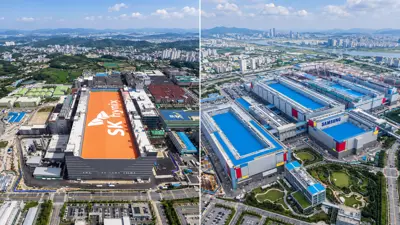
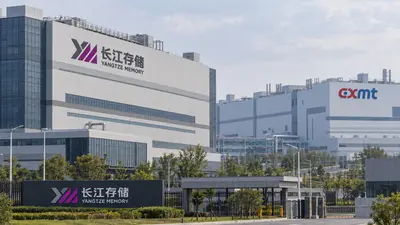
But if HBM and advanced packaging supply grows, and Chinese memory makers gain share in the commodity market, today's shortage could become tomorrow's oversupply.

Will $1.5 trillion of spending all pay off?

TrendForce projects combined capital spending by nine major global cloud providers will rise from about $957 billion in 2026 to more than $1.5 trillion in 2027. It expects AI server shipments to grow about 36% over the same period. These are research firm forecasts, not confirmed spending.

Will actual AI service revenue and cash flow grow as much as GPU and data center spending?

Higher spending also reflects rising equipment prices and advance purchases. The fact that spending is up does not mean customer usage or profitability is improving at the same rate.

Operators that build data centers with debt are especially exposed to higher rates. The jump in yields on CoreWeave bonds and the rise in Meta's credit risk gauges suggest the industry is starting to reprice its cost of capital. Wider credit spreads alone, though, do not show that the odds of an actual default have jumped.

Why 2028 matters

Through 2026 and 2027, new fabs are being built and existing capacity expanded. A finished plant does not add chip supply at once, because equipment installation, yield stabilization and customer qualification take time.

In 2028 and 2029, new capacity and HBM productivity gains could start to show up in full. If AI inference and data center demand are growing enough by then, the cycle could run longer.

If instead falling memory prices, fewer equipment orders, lower data center utilization and cuts to customer capex appear together, a turn in the real cycle would be worth suspecting.

The point is not to call a peak in a particular year. It is to check whether several leading indicators weaken at the same time.

Bottom line

The real AI chip cycle is still rising, but the conditions needed to justify investor expectations have become tougher.

What decides returns on chip investment from here is not how many GPUs are built or how many data centers go up. It is how much cash those facilities generate, at what utilization and margin.

2028 is not a year to pencil in as a sell date. It is when the productivity of today's investment could start to be tested in the numbers.

The AI chip boom is still running, but the market now wants numbers showing that invested money returns as cash.

Insight Times Editorial Desk

More by topic

Starting with this story's topics, then what readers are following now

Investor psychology, decision-making and books on investing

CapEx

This story's topic60 storiesSee all →

Money a company spends on things it will use for years — plants, equipment, bu…

Why the White House Swapped "AI" for "Super Intelligence"

Executive Order 14434 renames AI across the federal government without defining a new technology. The real story is about roughly $700 billion in capex, free cash flow and electricity.

Tech

Memory Chip Supercycle: Not at Peak Yet, But 5 of 6 Warning Signs Are Flashing

Memory prices are still climbing, but the pace is slowing and PC and smartphone demand is starting to crack under the weight of higher chip costs. This looks less like a price peak and more like a profit plateau building toward the next supply cycle.

Investing

AI Needs to Find $1 Trillion a Year From Somewhere to Pay Back Its Capex

Saying AI capex is big is no longer the point. The harder question is what end users have to pay for the buildout to pencil out, and Goldman Sachs puts that number at roughly $1 trillion a year.

Tech

AI Can Lift More Than Stocks: It May Push Long-Term Yields Higher Too

The AI boom can grow the numerator of corporate earnings while also growing the denominator of the discount rate. Investors watching long-term Treasury yields now need to add "AI capital demand" to the Fed, inflation and the deficit.

Tech

Why Tesla Lined Up $30 Billion in Credit It Says It Won't Use This Year

Tesla's 2026 capex is set to nearly triple. The question is less about debt than about when spending on AI, robotaxis, chips and energy turns into cash flow.

Tech

The AI Bubble Question Has Changed: By Late 2026, It's ROIC Over GPUs

There is no sign yet that AI investment is slowing. If anything, hyperscaler spending forecasts keep climbing. But as the scale of that capital has grown, the market's question has shifted from "is AI growing" to "when, and how much, does this capital come back as cash."

Tech

Year Four of the AI Revolution: The Real Winners May Emerge After the Highway Is Built

Railroads, the internet and mobile show that a technology can succeed while many investors lose money. The question for AI is whether the current pullback is the end of the boom or a handoff of wealth to new owners.

Investing

META

This story's topic31 storiesSee all →

Nvidia's $500 Billion Experiment: Wall Street Asks Who Backs the GPU, Not Just the Chip

The real issue in Nvidia's financing platform is not chip sales. It is how far Wall Street will trust GPU resale prices and rental income three to four years out.

Tech

S&P 500 Flat, 10-Year Yield at 5.16%: 5% Rates Split AI Winners From Losers

Headline indexes barely moved, but underneath, Meta jumped 4.50% and AMD gained 2.38% while Arm sank 7.88% and Oracle fell 3.47%, as the market judged AI names less on growth and more on how fast that growth becomes cash flow.

Tech

AI Agents Started Shopping, So Amazon Locked the Door

Amazon blocked Meta's shopping agent Muse, citing terms of service and security. The bigger question: when AI, not humans, searches, compares and buys, who sees the ads and who owns the front door?

Tech

AI Agents May Kill the Economy of Hassle Before They Kill Jobs

We keep paying for unused subscriptions, stay at low-rate banks and skip price comparisons for one reason: it is a hassle. Agents may attack that friction cost first.

Tech

In the AI Agent Era, the Real Power May Sit With the OS Makers, Not the Model Labs

Apple is tightening Full Disk Access on macOS after the Meta Muse dispute. The bigger story is who controls access to files, mail, messages and payments.

Tech

10-Year Yield at 5.34%: The Problem Isn't a Missing Buyer, It's the Price

Washington and the AI industry are pulling in huge sums at once, and the bond market is demanding higher yields to absorb it. Equity investors now need to watch long-term rates, financing costs and AI payback alongside the Fed's next move.

Macro

OpenAI's Dots Fights Back: Where the 24-Hour AI Worker War Will Be Decided

OpenAI's Dots, Meta's Muse and xAI's Grok Bot all keep working after the user leaves. Each is aiming at a different seat: the control plane of work, personal life context, or the AI org chart.

Tech

A building that houses servers and networking gear and supplies them with powe…

US AI Data Centers Are Headed for 90GW. Gigawatts Now Matter More Than Dollars

Goldman Sachs expects US data center capacity to grow from 64GW at the end of 2026 to 90GW at the end of 2027. The AI race is moving from buying GPUs to building power plants and transmission lines alongside them.

Tech

Tesla Energy's 13.7GWh Paradox: Expectations Ran Faster Than Deployments

Q2 deployments recovered but margins collapsed. Q3 set a record for deployments and still missed estimates. The issue is not the size of AI power demand but how fast it converts into Tesla revenue and profit.

Tech

Why Nvidia Is Happy to Help Make AI Models Nearly Free

Falling model prices can squeeze model makers. For Nvidia, the number that matters is the total volume of tokens generated worldwide and the compute that produces them.

Tech

Nvidia Put $2 Billion Into Lumentum. Optics May Be the Next Bottleneck, but the Stock Has Already Run

Optical networking is emerging as the next constraint on AI data centers. Investors need to separate the industry's growth potential from the price they are already paying for it.

Tech

Nvidia's Next Target After GPUs: Controlling What AI Agents Are Allowed to Do

OpenShell and Sentry are not about policing what an AI says. They are about controlling, at the server infrastructure level, which files and APIs an AI can touch, what it can execute, and who can actually pull the plug when something goes wrong.

Tech

2027 Investing Needs Alignment, Not Prediction

A new investing book argues the hard part was never picking the next winner. It's staying aligned with where value and bottlenecks are moving while keeping old human weaknesses in check.

Investor Mind

If GPUs Are the Muscle, the Network Is the Nervous System

AI data centers do not get faster just by buying more GPUs. When thousands of accelerators cannot exchange data on time, the most expensive asset in the building sits idle. That is the whole investment case for Arista.

Investing

HBM

63 storiesSee all →

Memory stacked next to the GPU.

Has Memory Peaked? Prices Are Cooling, but the Shortage Looks Set to Run to 2028

Price growth has slowed and consumer demand is already breaking. Server and HBM supply remains short, and Micron says more than 75% of its 2027 volume is already committed to customers.

Tech

AI Chip Peak Check: Demand Still Rising, Risk Building in 2027-2029 Supply and Funding

DRAM and NAND contract prices are still climbing and HBM suppliers hold the edge. Power shortages, AI financing costs and simultaneous memory expansion are the risks for later years.

Investing

How Far Can China Push DRAM Without EUV

CXMT says it has shrunk DRAM features to 11.95nm using quadruple patterning instead of EUV lithography. The real question is not whether China caught up, but how much more it now costs China to get there.

Tech

The Real ASML Number Isn't the 3% Pop, It's the 30% Capacity Hike

ASML's rally isn't just an AI trade. Customers are already locking in 2027 tool slots, and ASML is raising Low-NA EUV capacity by roughly 30% to keep up.

Investing

2027 Isn't the End: Citi's Case for a Memory Supercycle Running to 2031

Citi says the memory shortage timeline is stretching again. If AI shifts from "train once" models to continual learning, HBM, server DRAM and enterprise SSDs could all fall short at the same time.

Tech

Samsung, SK Hynix Sold Off on AI Fears. The Orders Haven't Followed Yet

The selloff reflects a market recalculating AI capex speed and memory earnings expectations, not confirmed cancellations. So far, the data show a gap between fear and reality.

Investing

China's DRAM Push Tests the Memory Supercycle for SK hynix, Samsung and Micron

Memory looks tight through 2027, with oversupply a risk from 2028. Investors in AI chips need to keep the two timelines apart.

Tech