Why AI Stocks Fall Whether Companies Spend More or Less
Tesla, Meta and Lam Research all fell on Oct. 22 despite solid results. The market may not be abandoning AI so much as asking whether the money comes back as cash.
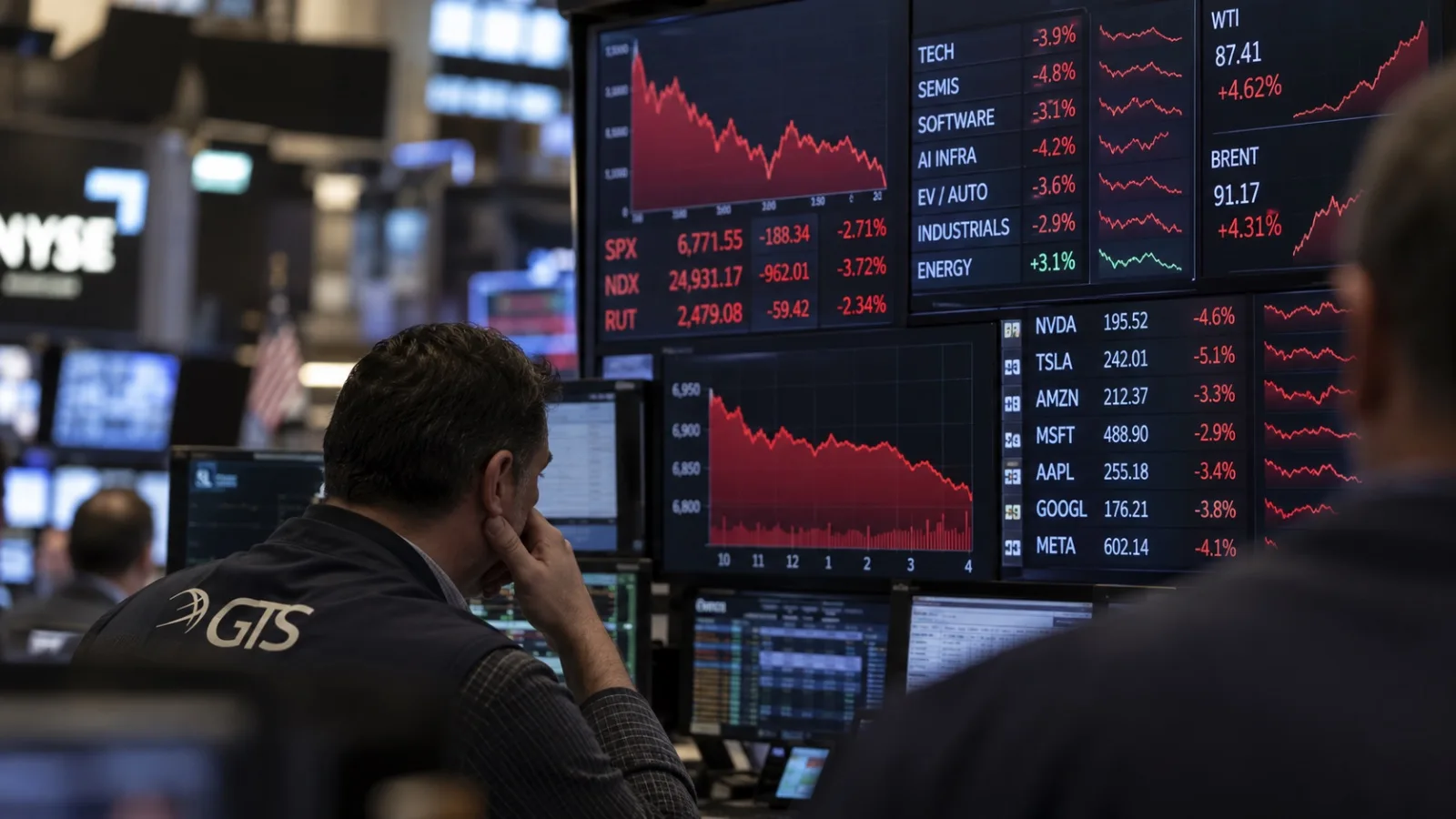
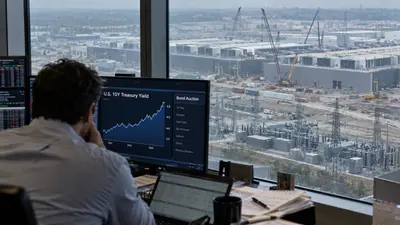
Is the AI investment boom ending, or has the market changed how it grades it?
Before the U.S. open on Oct. 22, Nasdaq 100 futures were down about 1.8%, and Tesla slid about 5% in premarket trading. Brent crude climbed to around $112 a barrel, which added to risk aversion.
Not every decliner reported bad numbers. Tesla posted better-than-expected cash flow. Lam Research delivered record-level results. Meta's revenue grew 26%.
The market was still not satisfied.
1. Tesla: why cutting spending still worries investors
Tesla lowered its 2026 capital expenditure outlook to about $20 billion, from more than $25 billion. For an ordinary manufacturer, that would read as a positive step to ease the cash burden.
Third-quarter free cash flow was positive at $1.531 billion. But GAAP operating income fell 56% from a year earlier. Investors have to weigh the profitability of the legacy auto business against the growth potential of the future AI business.
Tesla's high valuation is hard to explain with car sales alone. It also reflects the profits expected from robotaxis and Optimus.
So the capex cut supports two different readings.
First, if Tesla can pursue the same business with less capital, that is better capital efficiency. Second, if factory and computing buildouts are being delayed, the timing of future revenue could slip.
What investors need to check is not the capex cut itself, but whether the production and commercialization schedules for robotaxis and Optimus hold after the cut.
2. Meta: strong revenue growth, weaker cash flow
Meta reported third-quarter revenue of $64.6 billion, up 26% from a year earlier. The company also said AI is contributing to ad recommendations and monetization efficiency.
But capex for the quarter, including principal payments on finance leases, was $34.91 billion, and free cash flow was negative $2.12 billion. Full-year capex guidance runs to $135 billion to $145 billion.
Meta's strength is that it already shows some payoff from AI in its core ad business. Even so, if infrastructure spending keeps outrunning the growth in ad cash generation, the free cash left for shareholders could shrink.
The question for Meta is not whether AI monetization exists. It is whether the extra cash AI generates can cover the rising investment and operating costs ahead.
3. Lam Research: why the stock fell on record results
Chip equipment maker Lam Research reported September-quarter revenue of $8.219 billion, up about 54% from a year earlier and 22% from the prior quarter. Non-GAAP operating margin was 40.2% and EPS was $2.20.
The midpoint of its December-quarter revenue guidance, $8.6 billion, pointed to further growth. Yet the shares weakened after the report.
The issue is supply capacity. Lam projected global wafer fabrication equipment (WFE) spending above $200 billion in 2027, up more than 25% from roughly the mid-$150 billions in 2026.
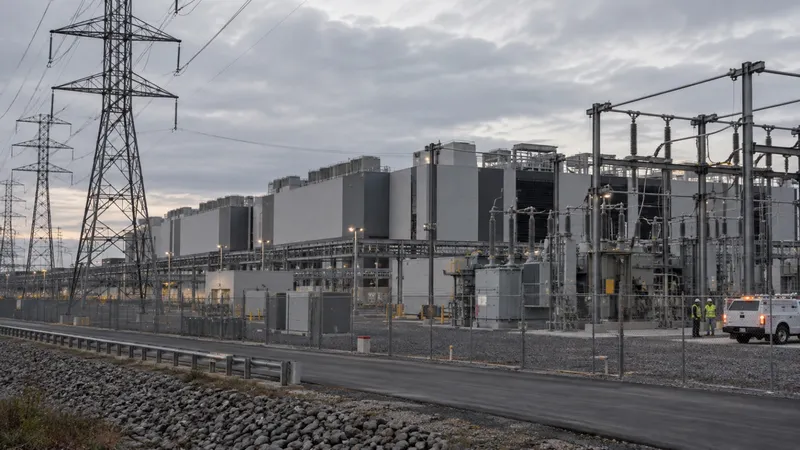
It also cited constraints on cleanroom space and some component supply. That does not mean customer demand for equipment has vanished. It means converting orders into actual output and revenue may be limited in speed.
Lam illustrates an important feature of the AI supply chain.
Strong demand is one thing. Every company in the chain turning that demand into revenue on time is another.
4. Oil at $112: a variable that also moves the discount rate
Debris from an intercepted drone caused deaths near Saudi Arabia's Shaybah oil field, and Brent rose to about $112 a barrel. There is little basis, though, for reading the rise as a large-scale halt in crude output.
If high oil prices persist, they could weigh on inflation and the path of interest rates. Growth stocks, whose value rests on large future profits, are more sensitive to the higher discount rates that rising rates imply.
The drop is therefore better read as concerns over AI spending efficiency overlapping with macro risk. One day of price action is not enough to declare a structural decline in AI demand.
The takeaway
It is hard to say the market has given up on AI. It has begun to demand that AI's economics show up in actual numbers.
For long-term investors, the key question is shifting too. Rather than who spends the most on AI, it is likely to matter more who generates the most sustainable cash flow from that spending.
Insight Times Editorial Desk