Eight Days From the Midterms, Trump Weighs an Iran Deal Against More Strikes

Threats of attack and signals of talks collided over the weekend. Wall Street is watching real change in Hormuz, oil and yields more than any declaration that the war is over.

Why can't Trump end the war with the election days away?

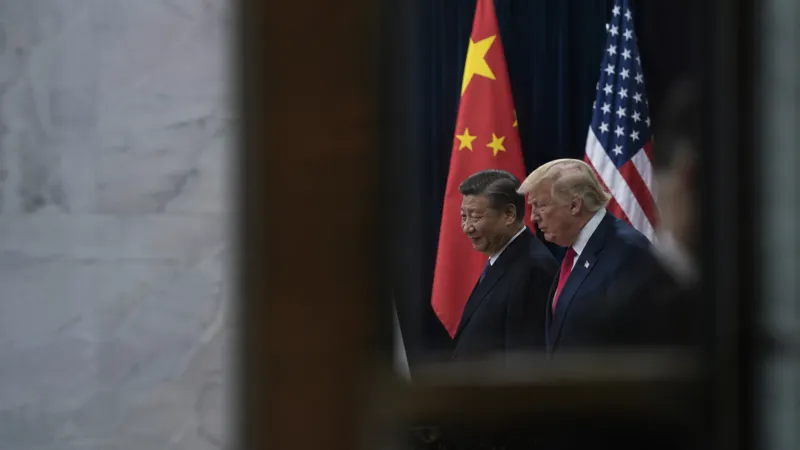
Eight days remain until the U.S. midterm elections. President Trump warned on Oct. 23 and 24 that he could order additional military operations against Iran. On the 25th, he denied that a strike was coming that day. In a Fox News interview the same day, he said he must decide whether to reach a deal with Iran or choose further military action.

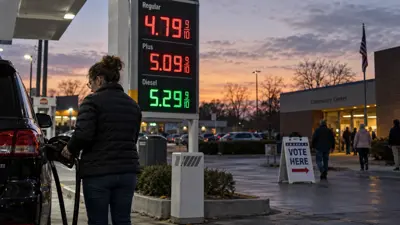
High oil prices are a political burden for Trump. Rising fuel and living costs can feed economic discontent ahead of the midterms. But if Washington hurries toward a deal, Iran has no reason to move at the same speed. Tehran may demand concessions on lifting the blockade and on sanctions.

The threat of an attack is a confirmed statement. An attack plan is not the same as a final order to carry it out. Trump's choice after the election should not be treated as a settled future.

Hormuz is uneasy, so why does the oil keep coming?

On Oct. 25, U.S. Central Command said that over the past six months, more than 3,000 merchant ships have transited the Strait of Hormuz with U.S. military support. It also said support for Gulf oil exports since the summer has exceeded 1.5 billion barrels. These are two cumulative figures, one for transits and one for export volumes supported. Neither measures how far the strait has returned to its prewar normal.

Even if shipments continue, energy prices can stay high if the risk of attacks on ships, insurance premiums, rerouting costs and refined-product shortages persist.

On Oct. 23, Brent crude closed at $116.72 a barrel, and the 10-year Treasury yield reached about 4.99%. The Dow fell about 1.2%. A recovery in crude supply is not the same as a normalization of energy costs.

  • 3,000+: merchant ships transiting with U.S. military support over six months (cumulative)
  • 1.5 billion+ barrels: Gulf crude exports supported since the summer (cumulative)
  • $116.72: Brent crude close per barrel on Oct. 23

After the election: renewed strikes or a dramatic deal?

The paths markets may weigh are progress in talks, continued limited clashes and a major renewed attack. If talks advance and actual transit improves, the risk premium could ease. If limited clashes recur, shipping costs and volatility could remain. If energy facilities and bypass export networks are hit, supply disruption could grow again.

These are three conditional scenarios, not probabilities. The economic shock differs in particular between limited strikes on Iranian territory and fighting that reaches Saudi ports, refineries and bypass pipelines.

  • Talks advance: transit could recover and the risk premium could ease
  • Limited clashes: high oil prices and volatility could persist
  • Major renewed attack: risk of wider supply disruption, with more pressure on inflation and rates

The midterms are not the end date of the war. Markets may first calculate whether the war's added cost to the economy is shrinking, before any final declaration from Trump.

Oil flowing does not mean energy costs fall right away, so markets are likely to focus on whether the war's added losses shrink, not on the election result.

Insight Times Editorial Desk

More by topic

Starting with this story's topics, then what readers are following now

Investor psychology, decision-making and books on investing

Crude Oil Prices

This story's topic11 storiesSee all →

The price of crude.

It's Not Just Hormuz: Why the Middle East War Is Becoming a Fed Problem Again

The US-Iran ceasefire has already collapsed, and the risk no longer sits in the Gulf alone. With the Red Sea and Saudi Arabia's bypass pipeline now under threat too, an energy shock is spreading into prices, the Fed, and growth-stock valuations.
Macro

Gas Prices, Not Politics, Are Deciding This Midterm Market Story

Forecasts of a Republican defeat are not exaggerated. The House has tilted clearly toward Democrats, the Senate has moved from a toss-up to a slight Democratic edge, and Trump's net approval is the lowest of either term.

Macro

Brent at $109, the 10-year at 4.94%: the discount rate is beating the AI trade

Stocks fell for a fourth straight session on Sept. 10 as producer prices and energy costs pushed long yields toward 5%. After the close, Oracle showed AI demand is converting into signed contracts. The question is no longer demand. It is what multiple the market can pay for it.

Tech

Why the Fed cannot cut: the triple lock of jobs, oil and AI

Inflation is not the only thing blocking a rate cut. A firm labour market, energy prices back on the rise, and an enormous AI investment cycle are each pushing up the floor under US interest rates by a different route.

Macro

S&P 500 Slips 0.22%, but 73% of the Market Fell

Long-term yields above 5% weighed on small caps and semiconductors on Oct. 7. A strong 10-year Treasury auction and a few large tech names limited the index's losses.

Tech

Tesla Semi Waited 9 Years. Now It's Rolling Off a Real Factory Line

The Tesla Semi, unveiled back in 2017, has finally reached full-scale production at a dedicated Nevada plant. The number investors should watch isn't the 50,000-unit annual capacity, though. It's what the truck actually saves per mile.

Tech

Rate at 5%: How to Hold AI Stocks This Week - Oil and Cash Flow Are the Real Variables

The Fed raised rates for the first time in three years even as August core CPI cooled to 2.4%. The market's real question this week is not whether inflation has fallen, but whether an oil shock revives inflation expectations and long-term yields, and whether AI companies' profits can hold up under 5% rates.

Investing

A building that houses servers and networking gear and supplies them with powe…

US AI Data Centers Are Headed for 90GW. Gigawatts Now Matter More Than Dollars

Goldman Sachs expects US data center capacity to grow from 64GW at the end of 2026 to 90GW at the end of 2027. The AI race is moving from buying GPUs to building power plants and transmission lines alongside them.

Tech

Tesla Energy's 13.7GWh Paradox: Expectations Ran Faster Than Deployments

Q2 deployments recovered but margins collapsed. Q3 set a record for deployments and still missed estimates. The issue is not the size of AI power demand but how fast it converts into Tesla revenue and profit.

Tech

Why the White House Swapped "AI" for "Super Intelligence"

Executive Order 14434 renames AI across the federal government without defining a new technology. The real story is about roughly $700 billion in capex, free cash flow and electricity.

Tech

Why Nvidia Is Happy to Help Make AI Models Nearly Free

Falling model prices can squeeze model makers. For Nvidia, the number that matters is the total volume of tokens generated worldwide and the compute that produces them.

Tech

Nvidia Put $2 Billion Into Lumentum. Optics May Be the Next Bottleneck, but the Stock Has Already Run

Optical networking is emerging as the next constraint on AI data centers. Investors need to separate the industry's growth potential from the price they are already paying for it.

Tech

Nvidia's Next Target After GPUs: Controlling What AI Agents Are Allowed to Do

OpenShell and Sentry are not about policing what an AI says. They are about controlling, at the server infrastructure level, which files and APIs an AI can touch, what it can execute, and who can actually pull the plug when something goes wrong.

Tech

AI Needs to Find $1 Trillion a Year From Somewhere to Pay Back Its Capex

Saying AI capex is big is no longer the point. The harder question is what end users have to pay for the buildout to pencil out, and Goldman Sachs puts that number at roughly $1 trillion a year.

Tech

HBM

63 storiesSee all →

Memory stacked next to the GPU.

Has Memory Peaked? Prices Are Cooling, but the Shortage Looks Set to Run to 2028

Price growth has slowed and consumer demand is already breaking. Server and HBM supply remains short, and Micron says more than 75% of its 2027 volume is already committed to customers.

Tech

AI Chip Peak Check: Demand Still Rising, Risk Building in 2027-2029 Supply and Funding

DRAM and NAND contract prices are still climbing and HBM suppliers hold the edge. Power shortages, AI financing costs and simultaneous memory expansion are the risks for later years.

Investing

How Far Can China Push DRAM Without EUV

CXMT says it has shrunk DRAM features to 11.95nm using quadruple patterning instead of EUV lithography. The real question is not whether China caught up, but how much more it now costs China to get there.

Tech

Memory Chip Supercycle: Not at Peak Yet, But 5 of 6 Warning Signs Are Flashing

Memory prices are still climbing, but the pace is slowing and PC and smartphone demand is starting to crack under the weight of higher chip costs. This looks less like a price peak and more like a profit plateau building toward the next supply cycle.

Investing

The Real ASML Number Isn't the 3% Pop, It's the 30% Capacity Hike

ASML's rally isn't just an AI trade. Customers are already locking in 2027 tool slots, and ASML is raising Low-NA EUV capacity by roughly 30% to keep up.

Investing

2027 Isn't the End: Citi's Case for a Memory Supercycle Running to 2031

Citi says the memory shortage timeline is stretching again. If AI shifts from "train once" models to continual learning, HBM, server DRAM and enterprise SSDs could all fall short at the same time.

Tech

Samsung, SK Hynix Sold Off on AI Fears. The Orders Haven't Followed Yet

The selloff reflects a market recalculating AI capex speed and memory earnings expectations, not confirmed cancellations. So far, the data show a gap between fear and reality.

Investing

NVDA

75 storiesSee all →

The US-China Summit Didn't Erase Taiwan Risk for Chip Stocks

Washington's Taiwan policy held, but roughly $14 billion in arms sales is still on hold. For AI chip investors, the summit reads less like risk removed and more like a fragile balance extended.

Macro

Nvidia's $500 Billion Experiment: Wall Street Asks Who Backs the GPU, Not Just the Chip

The real issue in Nvidia's financing platform is not chip sales. It is how far Wall Street will trust GPU resale prices and rental income three to four years out.

Tech

The AI Bubble Question Has Changed: By Late 2026, It's ROIC Over GPUs

There is no sign yet that AI investment is slowing. If anything, hyperscaler spending forecasts keep climbing. But as the scale of that capital has grown, the market's question has shifted from "is AI growing" to "when, and how much, does this capital come back as cash."

Tech

2027 Investing Needs Alignment, Not Prediction

A new investing book argues the hard part was never picking the next winner. It's staying aligned with where value and bottlenecks are moving while keeping old human weaknesses in check.

Investor Mind

What Jensen Huang sold at the G20 was not GPUs. It was national infrastructure

Nvidia's message is that AI should be laid down like electricity, roads and the internet. After the hyperscalers, the buyers are governments, telcos, regional clouds and industrial data centers.

Tech

ASML Is Discussing 2030 Orders. How Long Can the AI Chip Supercycle Last?

Despite bubble worries, ASML sees equipment shortages through 2028. Investors should watch future production capacity, not just today's orders.

Tech

Nvidia and AMD Back Common Design to Build AI Data Centers Like Lego Blocks

A new Open Compute Project spec aims to let one building host rival chip systems. Whether it speeds up construction is not yet confirmed.

Tech