Tesla-SpaceX Merger Could Be Announced in December. The Shareholder Stake Matters More Than $3.45 Trillion

Merger talks have reached a possible December timeline and review by independent directors. What Tesla holders would own afterward now matters more than how large the two companies become.
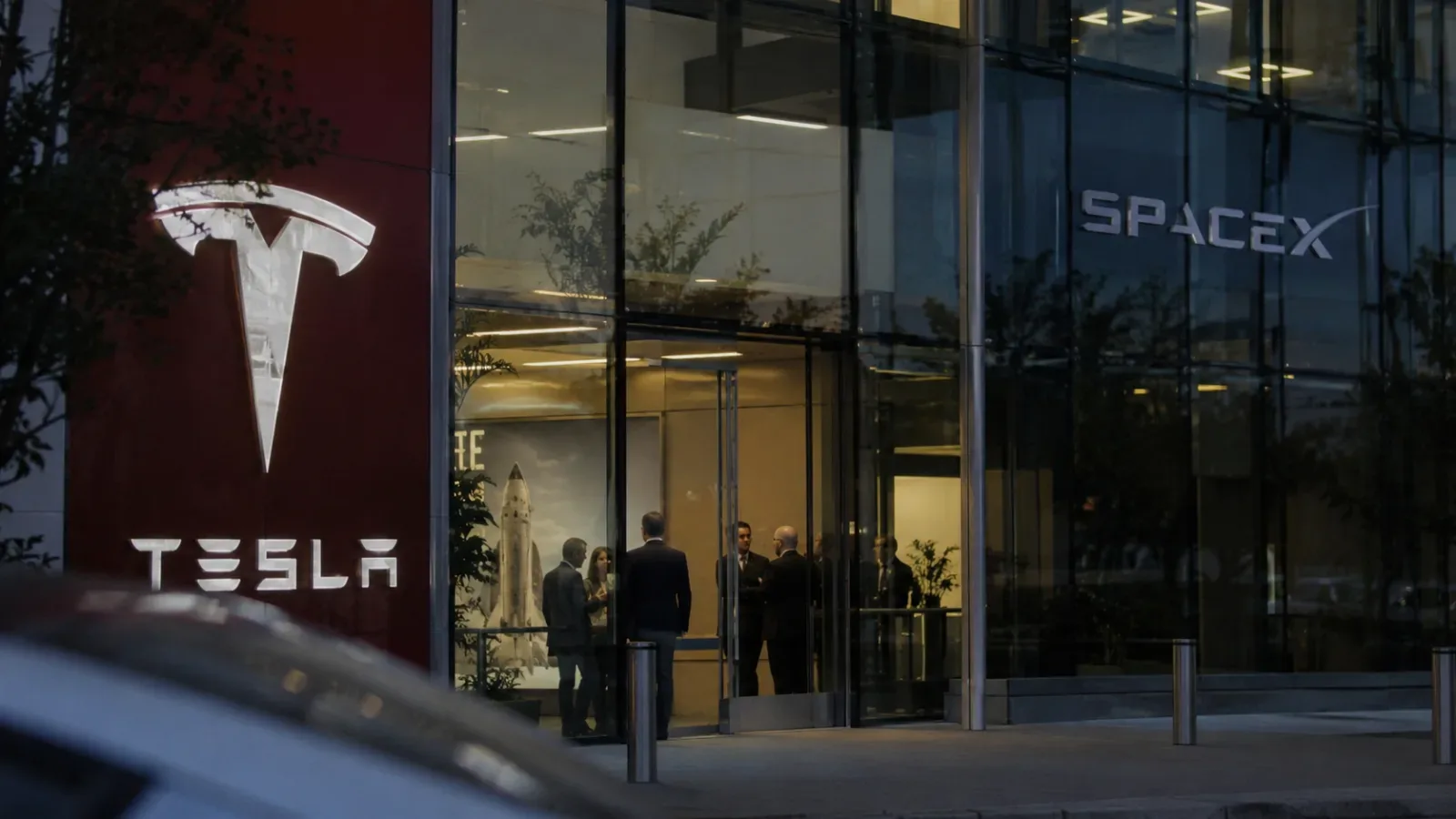
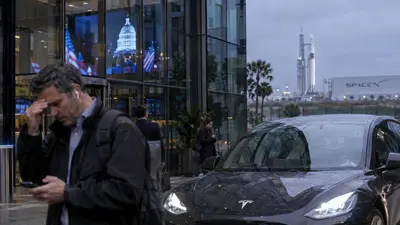
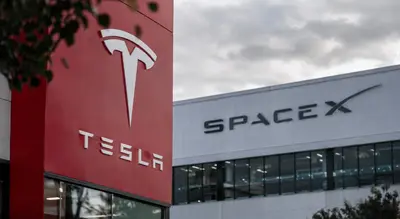
Tesla and SpaceX logos on a building entrance at dusk

The 20-second read

1
After reports that merger talks have advanced, a timeline of as early as December has emerged.
2
Both companies have formed a special committee of independent directors to review the deal.
3
The key question for Tesla shareholders is what their stake will be after the merger and where the company's cash will go.

1. The question is no longer "will they combine?"

The rumor that the two companies will merge is interesting. For Tesla shareholders, a different question matters more: after a merger, what would my shares own, and how much of it?

Bloomberg reported on Nov. 12 that merger talks between Tesla and SpaceX have advanced and that a deal could be announced as soon as December. Elon Musk spoke positively about a merger on SpaceX's October earnings call. The two companies have formed a special committee of independent directors to review it.

Two things have changed. A vague possibility now has a December timeline. And the discussion has become more concrete, with independent directors reviewing the terms.

Attention is shifting from judging the hope of a merger to judging the terms of a deal.

2. $3.45 trillion is not the whole story

Valuation cited in the report
SpaceX$1.90 trillion
Tesla$1.55 trillion
Simple combined total$3.45 trillion

Big numbers catch the eye. But when two businesses combine, what matters is not only how large the result is. What percentage of the combined company would my existing stake represent?

Suppose the two companies were combined in stock at the valuations in the report, with no other adjustments. Existing Tesla shareholders would then own less than half of the merged company. In exchange, they would co-own the SpaceX business.

The exchange ratio, the share-swap terms, synergies and dilution have not been disclosed.

A bigger company is not the same as a more valuable investment.

3. Four things shareholders should check on announcement day

In the announcement, look first at the design of the deal, not the grand vision. Long-term Tesla holders can catch the essentials with four questions.

01. Exchange ratio: how much does my stake change? How many new Tesla shares would be issued to SpaceX holders? What business value do existing holders receive in return for the dilution of their stake? The exchange ratio and the valuation premium need to be read together.

02. Business synergies: do they turn into money? Combining AI, robotics, communications and energy makes an attractive story. The real value depends on how much cost is saved and how much new revenue is created. Look for an execution plan, not a shared vision.

03. Capital allocation: where does the cash go? Space development, robotics and autonomous driving all need capital. Where the combined company invests first, and how it manages each business's cash needs, would change the investment profile for Tesla shareholders.

04. Governance: who verifies the terms? On what basis did the special committee of independent directors evaluate the terms? What is disclosed to shareholders, and what approval process follows? When two companies led by the same person combine, the credibility of the review matters even more.

To judge whether this is a good deal, look at the share exchange price, the ability to execute, the direction of cash and the approval process together.

4. Signals to watch next

  1. Whether a formal announcement comes in December. The first gateway, when an actual deal proposal appears.
  2. The independent committee's conclusion. The evidence for how, and by what logic, the terms were verified.
  3. The exchange ratio and premium. The key numbers for comparing what Tesla shareholders give up with what they receive.
  4. The shareholder meeting vote schedule. The point at which the proposal passes to shareholder judgment and approval.

Whatever is announced in December, the shareholder's question stays the same. It is not how large the combined company is, but how much the stake inside it is worth.

Is the Tesla-SpaceX merger confirmed?
  • No. Nothing has been confirmed.
  • On November 12, Bloomberg reported that talks had advanced and that an announcement could come as early as December.
When could the Tesla-SpaceX merger be announced?
  • According to Bloomberg, as early as December.
  • However, it has not yet been confirmed whether there will be an official announcement.
What happens to Tesla shareholders' stake if the companies merge?
  • It cannot be known yet because the exchange ratio has not been disclosed.
  • If the companies were combined in stock at the values in the reports, with no other adjustments, existing Tesla shareholders would hold less than half.
  • In exchange, they would co-own the SpaceX business.
What values were reported for SpaceX and Tesla?
  • SpaceX was reported at $1.90 trillion and Tesla at $1.55 trillion.
  • Simply added together, that comes to $3.45 trillion.
  • This does not mean the merged company would be worth that total.
What should Tesla shareholders look at when a merger is announced?
  • Four things are worth watching together: the exchange ratio, business synergies, capital allocation and governance.
  • In particular, it matters on what basis the special committee of independent directors verified the terms.

What to watch

Official December announcementThis is the first gate to see whether an actual deal proposal emerges.
Independent committee conclusionThis is the basis for seeing what process and reasoning were used to verify the deal terms.
Exchange ratio and premiumThese are the key numbers for comparing the stake Tesla shareholders give up with the value they receive.
Shareholder vote scheduleThis is the point at which the proposal moves into the shareholder approval process.
A Tesla merger should be judged by what the shareholder's stake is worth afterward, not by how big the company becomes.

Insight Times Editorial Desk

More by topic

Starting with this story's topics, then what readers are following now

Investor psychology, decision-making and books on investing

TSLA

This story's topic50 storiesSee all →

The Cybercab is not a $30,000 car. Tesla is selling hours, not vehicles

No steering wheel, no pedals. The economics of Tesla's robotaxi turn on how many paid hours a day it runs, not on what it costs to build.

Tech

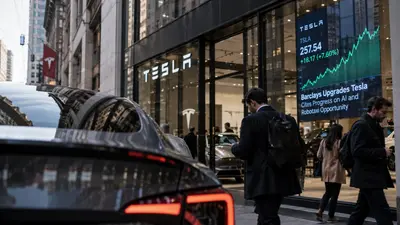
Why Tesla Jumped: Barclays Sets a $450 Target on SpaceX Merger Hopes

Hopes for a SpaceX merger moved the stock. Whether the rally lasts likely depends on how robotaxis turn into profit and cash flow.

Investing

Musk Says He'd Cancel Government Contracts. Washington Still Holds Leverage

After Democrats won both chambers in the midterms, Musk floated cancelling SpaceX's federal contracts. The share of revenue matters less than bargaining power and the regulatory risk that remains.

Tech

Tesla Semi's Real Bottleneck Is Starting to Clear

A new 30-megawatt heavy-truck charging buildout in California is too small to move Tesla's earnings on its own. But it marks real progress on one of the Semi business's hardest problems: charging infrastructure that has to exist before the trucks do.

Investing

Musk Sees the Next Phase of AI Infrastructure: Who Can Switch GPUs On, Fast

If neoclouds struggle under financial pressure, AI demand may not shrink. It may simply favor the few operators with the capital and execution to serve it, a shift that could matter for SpaceX and Tesla.

Tech

If You Only Watch Tesla, You May Be Missing Half the AI Story

Nvidia builds the AI brain. Who supplies the electricity to run it? Six power companies Tesla investors should know, and why Tesla's storage business is just one link in the chain.

Investing

When Will Tesla's Rally Finally Hold? The Case for 2027

The next leg up for Tesla will not come from another product reveal. It will come when self-driving, AI investment and Optimus stop being "future stories" and start showing up as real profit and cash flow. The first real test window is likely 2027.

Investing

Valuation

This story's topic38 storiesSee all →

Measuring where a share price sits relative to the company’s results.

A 3x P/E is not a discount. It is a verdict on how long memory profits last

Nomura's buy case on Samsung Electronics and SK Hynix does not stop at higher memory prices. It argues that if AI has turned memory from a cyclical component into strategic infrastructure, the formula the market uses to value both companies has to change too.

Investing

Marvell's $115 Billion Lumentum Deal: Is AI's Next Bottleneck Light, Not Chips?

Marvell's purchase of Lumentum points to a contest beyond GPU speed, in data transfer and power efficiency. Whether the price is right is not yet confirmed.

Tech

The S&P 500 Looks Fine. So Why Do Most Stocks Hurt?

The index sits near its high, yet most of its members are down 20% to 30% or more from their own peaks. A look at the "stealth bear market" and the numbers long-term investors should watch.

Investing

Are AI Chips Really Undervalued? Why Market Doubts Persist

Demand is strong and earnings are record-setting, yet shares remain jittery. The question for investors is now the durability of profits and the ability to recoup capital, more than the growth rate.

Tech

Year Five of the Bull Market: Why U.S. Stocks Aren't Expensive Yet, and What AI Chips and Power Must Deliver

U.S. stocks have gained about 117% since the October 2022 low. What happens next depends less on the bull market's age than on whether expected earnings, which lean heavily on AI semiconductors, turn into reality.

Investing

Anthropic's IPO: The Number That Matters More Than $100 Billion Is $2 Trillion

Claude-maker Anthropic is growing at a stunning pace, but the real question for investors is not how fast, only how long, and how much cash is left after GPUs and data centers.

Tech

Why a Wobbly Yen Carry Trade Hits US AI Stocks First

It is not just dollar-yen at 160. Watch the US-Japan rate gap, yen direction, volatility, and US long-term rates together, because AI and high-valuation growth stocks get squeezed first when all four move at once.

Macro

M&A

This story's topic9 storiesSee all →

Why a Power Company Wants to Pay $20 Billion for Design Software

In Schneider Electric's talks to buy PTC, the deal matters less than the direction: power, automation, industrial data and design software merging into one operating stack.

Tech

A building that houses servers and networking gear and supplies them with powe…

Why Nebius Is Keeping Some 2027 AI Capacity Off the Shelf

Nebius mixes long-term contracts, short-term premiums and auctions. Holding back capacity pays only if the servers stay busy, and it is not yet clear the pricing will last.

Tech

AI ran out of memory before it ran out of GPUs

The HBM bottleneck is spreading into DRAM prices, server costs and the price of the next laptop or phone.

Tech

Is Space Cooler for AI? Why Musk Wants Data Centers in Orbit

The next limit on AI may be power and cooling, not GPUs. Elon Musk is looking to Earth orbit for an answer, but the test is cost per hour of compute.

Tech

White House Swaps AI for "SI." The Real Investment Signal Is Infrastructure, Not the Name

An executive order renames artificial intelligence "Super Intelligence" and six frontier labs sign a voluntary safety accord. What investors should watch is the data center, power, nuclear and chip policy now gathered under one national-competitiveness frame.

Tech

Weekly Check: The AI Bull Market Isn't Over, It's Just Gotten Harder

A 5% 10-year yield, 470 gigawatts stacked up in Texas, Chinese DRAM, and whether data centers actually get switched on are starting to decide who wins the AI trade through 2027.

Tech

Is Memory Peaking? In the AI Era, Watch the Bottleneck, Not the Demand

Demand still outruns supply. But memory stocks can peak before demand does. The real question is how long HBM4, server DRAM, CXL and Big Tech capex keep the cash flowing.

Tech

Nvidia and Palantir Put AI Inside the Supply Chain - The Real Shift Is That It's Learning Judgment

A single Vera Rubin rack holds 1.3 million parts. The real breakthrough in Nvidia and Palantir's new supply chain AI isn't automating that complexity, it's capturing the judgment calls that used to live only in planners' heads.

Tech