As the Nasdaq Slips, Tesla Holds Up on 1.74 Million FSD Users and Cybercab Ramp
Tesla's long growth story is moving from future promise to current business metrics. The market may be starting to notice, though profitability has not yet been confirmed.
The 20-second read
In November 2026, an interesting pattern showed up in US tech stocks.
While the Nasdaq corrected on worries about AI infrastructure spending and stretched valuations, Tesla held up relatively well.
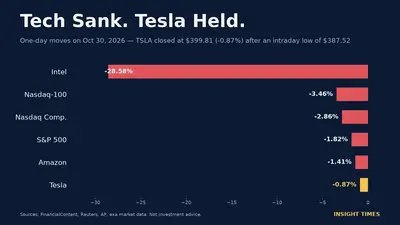
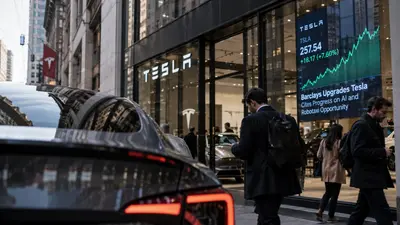
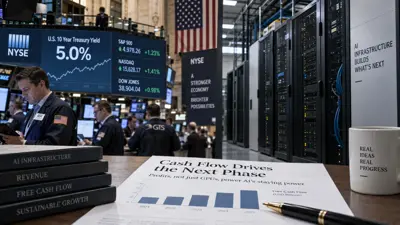
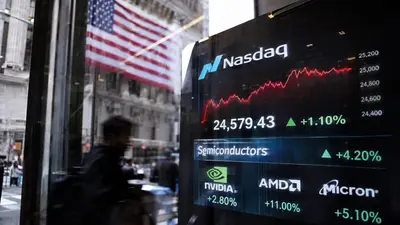
From November 11 to November 18, the Nasdaq Composite fell about 4.07%. Tesla fell only about 1.82%. Over the same period, Nvidia and other AI chip companies swung widely between earnings expectations and concerns about the cost of investment.
Tesla's relative strength is notable because it coincided with growth in FSD users and an expanding robotaxi business. Investors now have new business metrics to judge the long-term growth story.
Read together, the recently reported figures allow a slightly different reading of the stock's move.
- 1.74 million paying FSD users.
- An FSD take rate above 75% on new North American vehicles.
- 1,507 Tesla robotaxis registered in Texas, 773 of them dedicated Cybercabs.
Investors have waited a long time for numbers like these. What matters is less the size of any one figure than the fact that the business is moving from technology development to product sales, and from product sales to actual service operation.
1. Would old Tesla have swung harder?
Tesla has long been a growth stock whose price moves on expectations about the future.
When rates rise or tech sentiment weakens, companies whose value rests on distant profits tend to face more pressure. Tesla has not been an exception.
This correction looks a little different.
Close on Nov. 11 vs. close on Nov. 18, 2026
| Change | |
|---|---|
| Nasdaq Composite | -4.07% |
| Tesla (TSLA) | -1.82% |
Tesla's relative advantage was about 2.25 percentage points. It appeared just as FSD customer growth and robotaxi commercialization overlapped.
On November 18, Nvidia fell 2.89% after strong earnings, while Tesla rose 0.95%.
One possibility is that the market's yardstick for AI companies has changed.
For AI chip companies, a key question is how quickly the profits from massive data center spending can be recovered. For Tesla, attention is on whether autonomy technology developed over many years can become a paid service.
One side is a business that has already grown large and must keep meeting high expectations. The other is a new business that is only beginning to show commercial metrics.
Tesla also went through heavy volatility in early November. Even so, improving autonomy metrics have drawn attention to room for a re-rating of its medium- and long-term growth drivers.
The reason to watch this relative strength is not the small gap in price. It is that the business results investors can evaluate are changing.
2. 1.74 million FSD users: from "it could work" to "customers are buying"
Tesla's account of self-driving long centered on technical possibility and future development timelines.
For investors, though, what is technically possible and what customers actually pay for are very different things.
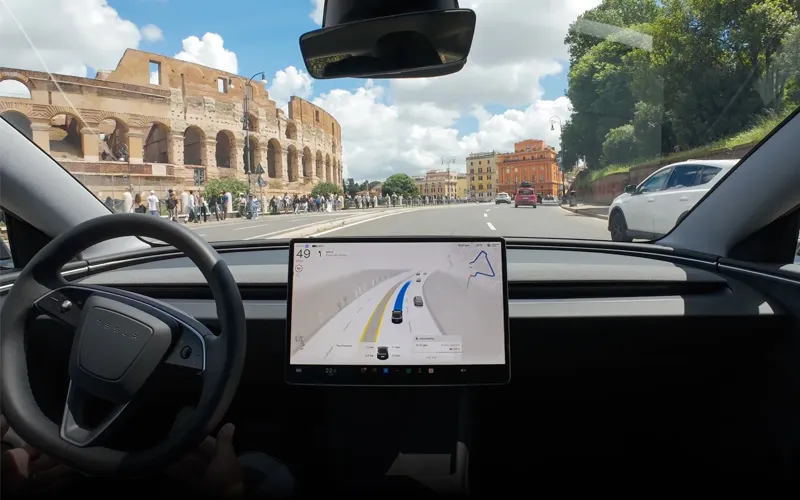
In the third quarter of 2026, Tesla had 1.74 million active paying FSD users. That is up 700,000 from 1.04 million a year earlier.
Active paying FSD users (Tesla quarterly results; includes one-time purchasers, excludes free trials)
| Quarter | Users |
|---|---|
| Q3 2025 | 1.04 million |
| Q4 2025 | 1.10 million |
| Q1 2026 | 1.28 million |
| Q2 2026 | 1.48 million |
| Q3 2026 | 1.74 million |
The pace of growth stands out.
Net additions in 2026 rose from 180,000 in the first quarter to 200,000 in the second and 260,000 in the third. Users are not just increasing. The number added each quarter is growing too.
In North America, more than 75% of new vehicle deliveries now come with a paid FSD subscription. Tesla said that is about 20 percentage points higher than the prior quarter.
That suggests FSD is becoming a core option in the car-buying process rather than a peripheral feature. Going forward, how fast subscription retention among new subscribers and re-subscription among existing customers build the cumulative base becomes an important growth measure.
The 1.74 million figure is an active paying base that includes one-time purchasers. It should be distinguished from pure monthly subscribers. Still, expansion of that paying base is the starting point for monetizing the software.
The positive case is clear.
Tesla is no longer a company that only explains the technical possibility of FSD. It has begun to show market demand through actual paying users and take rates.
This is a shift from a manufacturer that sells a car and is done to a software business that keeps generating revenue after the sale.
The real inflection point is the ninth city, not the eighth
Starting November 12, Tesla's robotaxi began 24-hour service in eight cities: Austin, Dallas, Fort Worth, Houston, San Antonio, Miami, Orlando and Tampa. What matters now is how quickly longer operating hours repeat in new areas.
The variable long-term investors should check is not the number of cities but the time and cost of opening a new one. If the AI and operating procedures built for the first region can largely be reused in the next, the preparation cost of each added city could fall.
If each region instead requires new work on accident response, insurance, regulation and validation of operating zones, the pace of expansion will be limited. Claims that learning time for a new city is already approaching zero, or that growth is exponential, have not been proven.
Tesla's robotaxi scalability will be validated not simply when cities are added, but when the time and marginal cost of adding them actually decline.
3. Cybercab: from test vehicle to production vehicle
A similar change is visible in robotaxis.
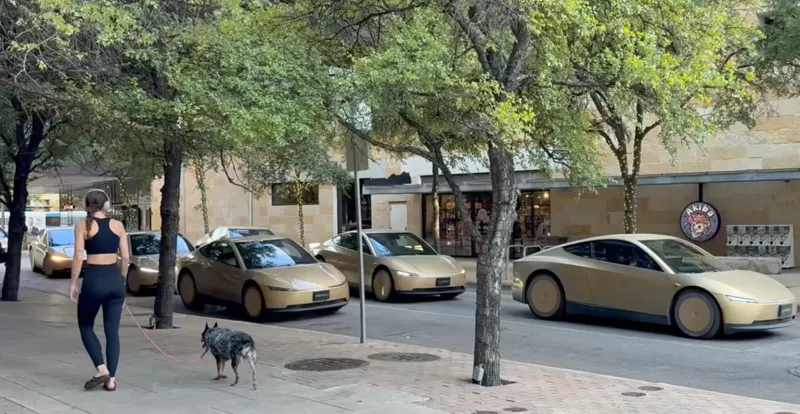
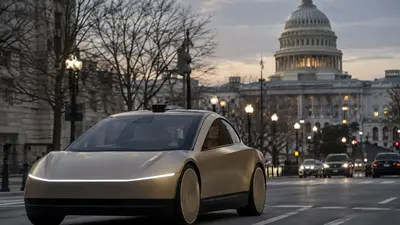
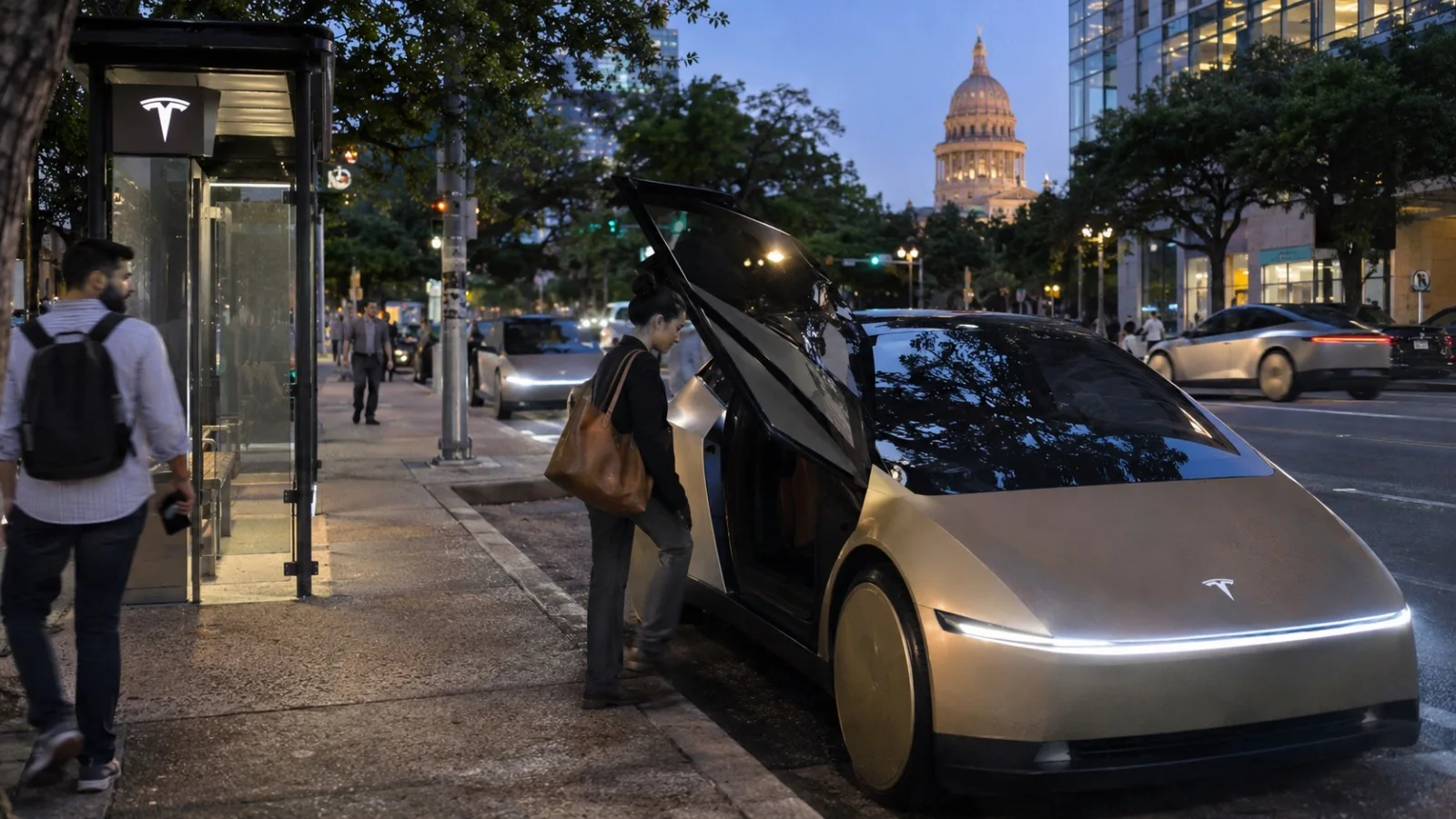
Texas registration data as of November 17 shows Tesla's autonomous vehicles rose to 1,507. Of these, 773 are dedicated Cybercabs and 734 are Model Ys. With 200 new Cybercab registrations in a single day, the Cybercab share reached 51.3%.
| Total registered vehicles | 1,507 |
| Cybercab share | 51.3% |
| Cybercab | 773 |
| Model Y | 734 |
These are registration figures and differ from the actual size of the commercial fleet or paid operations.
The significance is not how many vehicles Tesla is ahead of Waymo. Waymo still leads in commercial robotaxi operating experience and paid rides across the US.
The more important change for Tesla shareholders is that purpose-built autonomous vehicles have begun to make up half of the registered fleet.
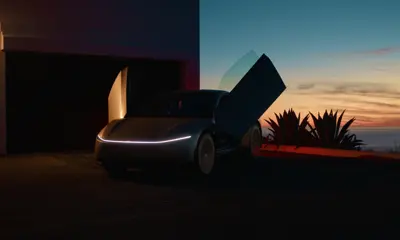
Tesla once tested robotaxi service with existing Model Ys. Now the Cybercab, designed from the start only for autonomous service, is being supplied.
In car manufacturing, building one prototype is not the point. A company must produce the same quality repeatedly, at low cost and in large numbers.
If rising Cybercab registrations translate into actual production and wider commercial service, Tesla's long-stated strategy of mass-producing dedicated autonomous vehicles starts to look more realistic.
Rising registrations do not, however, mean production yield has been secured or that operating profitability has been shown. The next step has to be confirmed through actual utilization and paid-ride results.
A personal Cybercab: separating ownership from the ride service
On November 13, Tesla offered some invited customers a personal Cybercab for $29,990 before taxes. Using the vehicle requires a $299 monthly autonomy subscription, and first deliveries are expected in December.
The long-term meaning of this sale is a structure that keeps selling autonomous service even on privately owned vehicles. The first step is the owner riding in it. A possible second step, in which personal vehicles join a paid robotaxi network, is not a currently permitted business.
Extending to that stage would require insurance and accident liability, in-car cleaning, charging and maintenance, and supply-demand management in service areas. The prospect that car buyers might someday earn income from rides can be judged for its economics only once these operating conditions are resolved.
4. What is starting is a mobility service market, not just car sales
This is a good point to rethink Tesla's long-term growth story.
The most familiar number for judging Tesla's growth has been vehicle sales: how many cars it built, how many it sold, and how much profit each one left.
If autonomy succeeds commercially, a new revenue source is added to that formula.
That is because Tesla could earn recurring mobility revenue by operating vehicles, not only by building and selling them.
| Model | Focus |
|---|---|
| Build cars, sell cars | Vehicle volume and profit per car. New revenue requires more production and sales. |
| Build vehicles, software, repeat rides | Possible FSD subscription revenue or robotaxi ride revenue after the vehicle is sold. |
Profit from mobility services depends not only on the vehicle's purchase price but on total cost, including charging, maintenance, insurance, remote operations and depreciation. Tesla's manufacturing efficiency, a strength, could become more competitive when combined with those operating costs.
If autonomous vehicles reach high enough utilization, and Tesla can use its own manufacturing to bring per-vehicle cost down competitively, it could build a profit structure different from its traditional auto business.
Tesla also has a manufacturing base that has already delivered more than 10 million vehicles cumulatively. Available features vary with hardware compatibility of existing cars and regional regulation. Even so, the large customer base is an important asset for expanding software customers without building new vehicles.
That is the most interesting part of the long-term Tesla thesis.
FSD subscriptions monetize the existing customer base, while Cybercab robotaxis make mobility service a new revenue source.
The two businesses have different customers and revenue structures, but both draw on the same autonomy technology, vehicle manufacturing base and compute investment.
If the large cost of developing the technology can be recovered through several revenue streams, the economics of the long-term business could improve.
Shifting manufacturing resources: Tesla is betting on the Cybercab
Tesla plans to phase out Cybertruck production around summer 2027 and use the Texas factory's resources to expand Cybercab output. It is a change in capital allocation, concentrating limited manufacturing resources on the business with greater growth potential.
On November 16, a plan also emerged to invest about 3 billion euros (about $3.3 billion) in Tesla's Berlin factory to build a new Cybercab production facility. The company is aiming to break ground in the first half of 2027 and start production in 2029, with a long-term design capacity of up to 1 million vehicles a year. That is a target, not actual output.
Cybercab manufacturing strategy
- Texas: conversion of existing product production resources
- Berlin: planned new investment of about 3 billion euros, with production targeted for 2029
- What investors should check: production cost, yield, order demand, utilization and cash flow
What matters is not whether a particular engineer transfers. It is that Tesla has begun to treat the Cybercab as a product line to be built at multiple factories, not a small pilot project.
Global FSD expansion is a growth path separate from robotaxis
According to Tesla's third-quarter materials, Supervised FSD was available in nine European countries at the time, with more than 100,000 customers and cumulative driving of more than 160 million km. Each additional country approval increases the chance to win new software customers from vehicles already sold.
Country-by-country approval of Supervised FSD opens new software customers and revenue on its own. Apart from driverless robotaxi permits, the global FSD market alone carries significant weight for business expansion.
5. Why Tesla's growth story deserves a fresh look now
Tesla's autonomy vision is not new.
Investors have heard for years about FSD's progress, a robotaxi network and the chance for vehicle owners to earn income.
The biggest question was less whether to believe in the technology than when the actual business would start and how large it could grow.
What is visible in the second half of 2026 is different in kind.
The number of paying FSD customers is rising. Robotaxis have begun commercial service, and registered Cybercabs are increasing. These indicators show a new stage opening on the path to commercialization.
In valuation, what matters from here is whether these numbers connect to one another.
If paying FSD users grow while subscription retention rises, and the robotaxi fleet grows while revenue per vehicle improves, the evidence supporting Tesla's growth thesis will accumulate.
From there, investor attention shifts from development timelines to operating metrics. As paid miles per vehicle and operating costs improve, the path by which commercial progress reaches cash flow becomes more concrete.
For long-term investors, the most important progress is not a declaration that the robotaxi business has succeeded. It is that the chance of success is getting closer to being verifiable in financial numbers.
Key metrics to watch
- Net additions and retention of paying FSD users: whether customers not only increase but keep subscriptions over time.
- Actual Cybercab production and commercial utilization: how quickly registered vehicles go into paid service.
- Robotaxi revenue per vehicle and total cost per mile: the core test of whether profitability improves as the service scales.
- Profit contribution from software and services: whether autonomy growth flows into company-wide operating profit and free cash flow.
Additional long-term indicators
New-city launch interval: is preparation time shrinking? Cybercab mass production: do rising registrations connect to yield and actual paid service? FSD subscriptions: do new paying customers and retention improve together? Cash flow: does free cash flow improve even after the capital spending growth requires?
FAQ
Q. How should Tesla's relative resilience in the recent Nasdaq correction be read?
- The relative strength came as growth in paying FSD customers, robotaxi expansion and Cybercab supply all became visible at once. It matters because Tesla may increasingly be judged on commercialization metrics already under way rather than on the promise of future technology.
Q. What is the biggest investment implication of 1.74 million active paying FSD users?
- It is a paying base up 67% from a year earlier, with quarterly net additions rising from 180,000 to 200,000 to 260,000 this year. The figure includes one-time purchasers, but the fact remains that the base of customers choosing to pay for FSD is growing. A larger subscription share adds to the potential for recurring revenue.
Q. Why does the 75% FSD take rate on new North American vehicles matter?
- It shows FSD is becoming a main product in the new-car purchase process, not just a choice for a few enthusiasts. Each new vehicle sold brings a software revenue opportunity. If retention and re-subscription accumulate, revenue could also continue from vehicles already on the road.
Q. What do 1,507 Texas robotaxis and 773 Cybercabs say?
- Cybercabs, designed solely for autonomy, have begun to make up a majority of Tesla's registered fleet in Texas. The business is moving beyond vehicle demonstration and small-scale operation toward wider supply of dedicated vehicles. The next investment points are actual utilization of the supplied vehicles and the pace of expansion into new cities.
Q. What would change if Tesla's autonomy business reaches a true growth trajectory?
- FSD could expand software revenue from existing vehicle customers, while the Cybercab could create new mobility service revenue. A strength is that both use the same autonomy technology and manufacturing infrastructure. As shorter new-city launch times and lower Cybercab costs are confirmed, the economics of scaling could improve.
- From Nov. 11 to 18, the Nasdaq fell about 4.07% and Tesla fell about 1.82%.
- The cause has not been confirmed. One possible reason is that the rise in paying FSD users and the robotaxi expansion came out around the same time.
- It is the number of active paying users as of the third quarter of 2026. That is 700,000 more than the 1.04 million a year earlier.
- The figure includes buyers who paid upfront and excludes free trials. It should be kept separate from the number of pure monthly subscribers.
- It means more than 75% of people who take delivery of a new car in North America sign up for a paid FSD subscription.
- Tesla said this is about 20 percentage points higher than the previous quarter. How long customers keep their subscriptions has not yet been confirmed.
- On Nov. 17, 773 of the 1,507 vehicles registered in Texas were Cybercabs, a share of 51.3%.
- These are only registration counts, so they differ from actual paid operating scale or profitability. Waymo still leads in commercial operating experience and in the scale of paid rides.
- Watch FSD subscription retention, Cybercab utilization, robotaxi revenue per vehicle and cost per mile.
- It also has not yet been shown that the time and cost of opening a new city are falling.
What to watch
Insight Times Editorial Desk