Ron Baron Bets on Tesla at 5x and Data Centers in Space. What Would Prove Him Right?

The 83-year-old investor says he is fine with or without a Tesla-SpaceX merger. What he is really backing is AI-era power, autonomy and orbital infrastructure.
The 20-second read

1
Hundreds of billions of dollars in additional investment returns over the next 10 years. Ron Baron expects long-term growth to hold up whether Tesla and SpaceX merge or operate independently. But this is his expectation, not profit actually earned.
2
Power is the new variable in the AI race. China's overwhelming pace of power generation buildout and constraints on the US grid are drawing attention. Baron believes SpaceX's space data centers could get around that gap.
3
The key to the 5x Tesla outlook over 10 years is execution. Robotaxi service areas and cumulative miles driven are growing. But whether expanding the service will translate into sustainable profit still needs to be proven.

1. A $30 billion gain, and now hundreds of billions more?

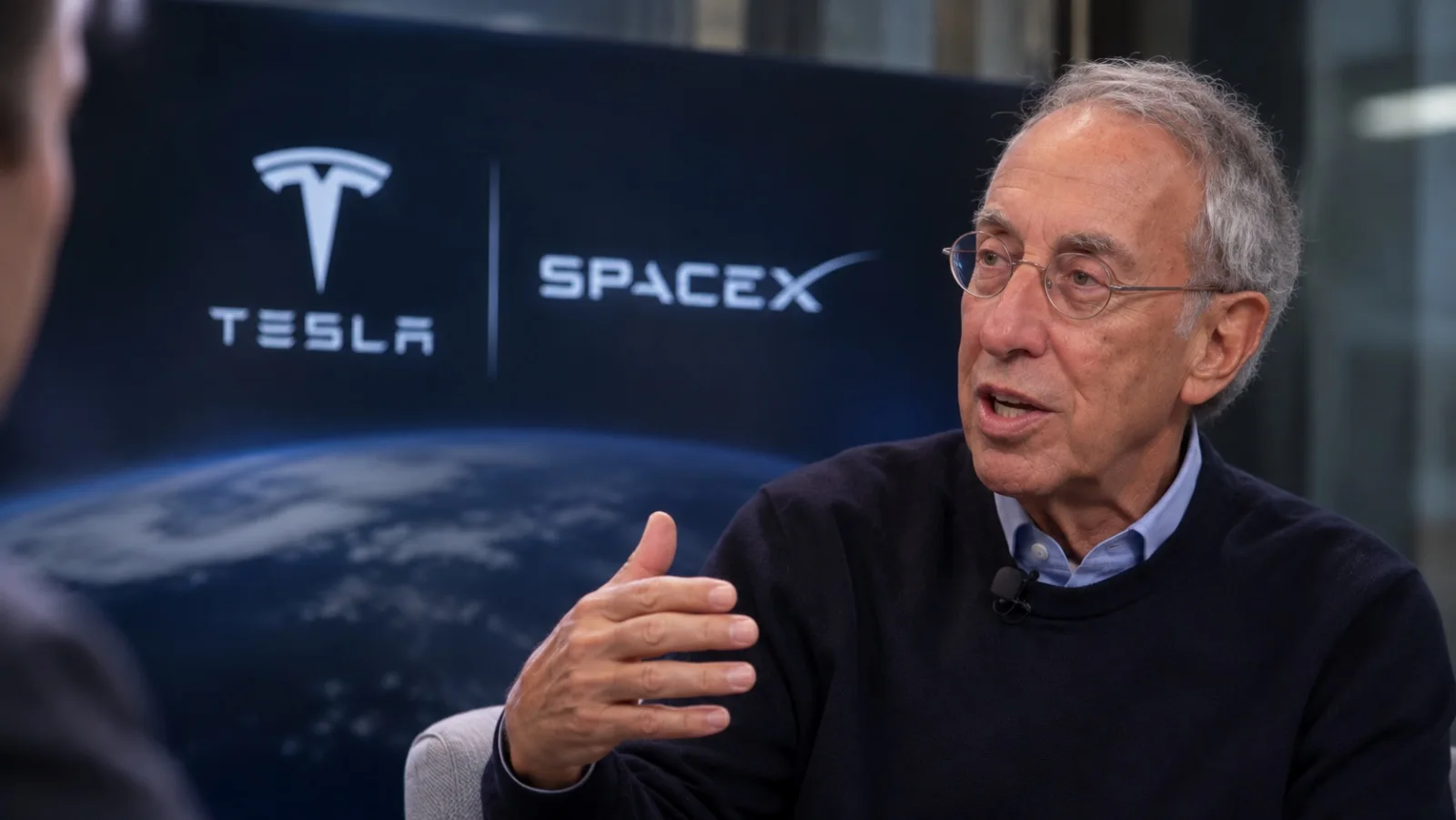
Ron Baron, founder of Baron Capital, made a striking forecast on CNBC on Nov. 6. He expects hundreds of billions of dollars in additional gains from Elon Musk-related investments over the next 10 years.

The confidence has a track record behind it. Baron Capital has held Tesla and SpaceX for a long time. By Baron's account, the two holdings have produced about $30 billion in cumulative gains for clients. The firm has previously disclosed positions of about $25 billion in SpaceX and about $5 billion in Tesla. Those are valuations at the time, not the original capital invested.

Asked about a merger of the two companies, Baron gave a simple answer. A merger would be fine, and so would no merger.

He said he has passed Musk his private views on the pros and cons, has not made them public, and will back the decision of an independent committee and Musk's management judgment.

What matters here is less whether a deal happens than where Baron locates the source of returns.

What he expects is not a one-time jump in value from combining companies. It is business growth that AI, energy and space infrastructure could generate over a long period.

A merger is a separate question. Gains and losses for each shareholder would depend on the exchange ratio and premium offered to existing Tesla holders, how conflicts of interest are handled, and regulatory review. Technical synergies between the two companies do not by themselves make a merger good for shareholders.

2. In US AI, power may be a bigger constraint than chips

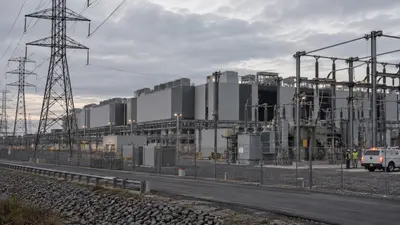
The figure Baron stressed during the interview was China's pace of power build-out.

He said China builds about 300 GW of generating capacity a year, while the US builds about 20 GW.

The direction is right, but the actual statistics are more complicated than his remarks.

2025What it counts
ChinaAbout 452 GWNew renewable generating capacity
USAbout 53 GWAll new utility-scale generating capacity

Sources: China's National Energy Administration and the US Energy Information Administration. The scopes differ, so the two figures should not be read as a like-for-like comparison.

According to China's National Energy Administration, new renewable capacity in 2025 was about 452 GW. New utility-scale capacity in the US that year was about 53 GW, per the EIA. US plans for 2026 call for 86 GW of additions.

Capacity is not the same as actual generation. Solar output depends on weather and daylight hours, and data centers need stable, round-the-clock power.

Still, it is clear that China is expanding its power infrastructure much faster.

The US leads in advanced AI chips and software. But if it cannot secure power for data centers in time, the pace at which it can add computing capacity could be constrained.

3. SpaceX's Starmind sends the data center off the planet

That is why Baron is focused on SpaceX's Starmind.

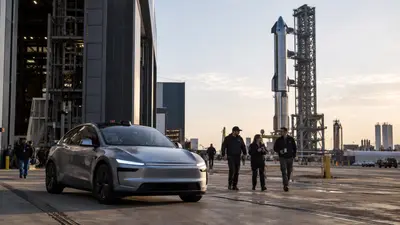
Starmind is a concept to place AI computing hardware in orbit, powered by solar energy collected in space. SpaceX's published AI1 satellite design lists peak compute capacity of up to 250 kW and average compute capacity of 175 kW. Results are relayed over laser links to the Starlink network.

In space, there is no need to acquire large tracts of land or connect to a ground grid. Heat is shed through radiators in a vacuum, and a well-chosen orbit can extend the hours of available sunlight.

None of that, however, proves it is cheaper than a ground-based data center.

Space offers no air to carry heat away, so large radiator structures are needed. Radiation-induced chip errors, the difficulty of repairing hardware, satellite lifetimes, launch costs and data transmission delays all have to be solved.

SpaceX's biggest strengths are its large-scale launch capability through Starship and its existing Starlink production and communications infrastructure. The key question is whether it can use them to cut costs enough to compete with ground-based data centers.

Baron projected that space data centers would operate at meaningful scale from 2028 and grow sharply in the one to two years after that. That is an optimistic forecast about the speed of commercialization, not proven business results.

The value of a space data center is likely to be set less by how many satellites are launched than by how cheaply it can deliver useful AI compute compared with the ground.

4. Tesla at 5x in 10 years: how far has the robotaxi come?

Baron said he expects another fivefold return on Tesla over the next 10 years.

He explained that during Tesla's big past run he did not try to time short-term highs and lows, and that holding for the long term produced his results.

This time there is also different evidence.

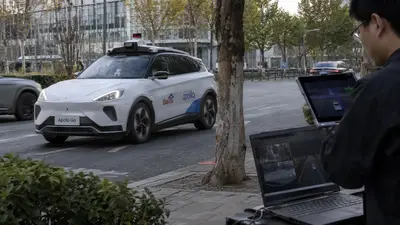
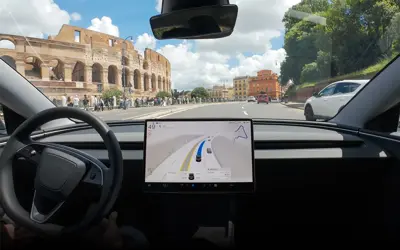
According to Tesla's website, the robotaxi service operates in limited areas of Austin, Dallas, Fort Worth, Houston, Miami, Orlando and Tampa.

Tesla's published safety report shows about 3.1 million miles of autonomous driving through Oct. 18, 2026. Safety monitors and operating methods may differ by market, a distinction worth keeping in mind.

The expansion of service is a positive. But valuing the robotaxi business takes different numbers.

How many hours a day does each vehicle run? How much fare revenue does it actually earn? How much is left after vehicle, insurance, maintenance and remote-support costs?

Miles driven are a measure of technical validation. Contribution profit per vehicle is a measure of business viability. They are not the same.

If Tesla's market value is assumed to be about $1.4 trillion, a fivefold share price would, other things equal, imply a valuation of about $7 trillion. Growth on that scale would likely require substantial cash flow not only from robotaxis but also from energy storage, autonomous driving software and the Optimus robot business.

The question the interview raises

The question is simple.

It is not whether Tesla and SpaceX merge. It is which company, 10 years from now, can supply the compute and power AI needs most economically, and return the results to shareholders.

Baron believes the answer lies with Musk's companies. For investors, the task is not to follow that belief but to watch which numbers, over time, prove or refute it.

Is a Tesla-SpaceX merger automatically good for Tesla shareholders?
  • No. Depending on the exchange ratio, new share issuance, asset valuation, and the transfer of business risk, existing shareholders' value could be diluted.
  • Whether business synergies turn into higher shareholder value has to be examined separately.
If Starmind succeeds, will ground-based data centers become unnecessary?
  • That is unlikely. Ground infrastructure may be better for latency-sensitive services and large-scale data storage.
  • Space computing is likely to grow first as a complement that takes on certain AI workloads.
If robotaxis operate in more cities, does the 5x stock price outlook become reality?
  • Expanding to more cities shows progress toward commercialization, but it does not prove profitability.
  • You need to look at revenue per vehicle, service costs, and the payback period on vehicle investment together.
Can individual investors just hold for the long term like Baron?
  • Holding for the long term is different from holding unconditionally. If the business thesis is damaged, your judgment should change too.
  • Keep checking progress in the technology and the business, and avoid concentrating your portfolio too heavily in one executive or company.

What to watch

Starmind test satelliteVerification of the actual launch and in-orbit computing performance.
Cost of orbital AI computingEconomics compared with the ground, including launch, heat dissipation, and replacement costs.
Robotaxi revenue per vehicleGrowth in utilization and paid-ride revenue matters more than the number of cities.
Robotaxi contribution profitThe profit one vehicle generates after operating costs.
Tesla FCFThe cash left over even as spending on AI, robots, and energy grows.
Baron's 10-year outlook is a bet on power and the cost of compute rather than a merger, and numbers like profit per vehicle and the unit cost of orbital compute will test it.

Insight Times Editorial Desk
More by topic

Starting with this story's topics, then what readers are following now

Investor psychology, decision-making and books on investing

Robotaxi

This story's topic19 storiesSee all →

The Cybercab is not a $30,000 car. Tesla is selling hours, not vehicles

No steering wheel, no pedals. The economics of Tesla's robotaxi turn on how many paid hours a day it runs, not on what it costs to build.

Tech

Tesla Targets Year-End Cybercab Deliveries, but Oct. 30 NHTSA Deadline Comes First

Tesla wants to deliver the wheel-less Cybercab to outside customers by the end of 2026. Before production can scale, it must show federal regulators how the car meets US safety standards.

Tech

Tesla's biggest asset is not the car: when Robotaxi and Optimus stop being options

Tesla's AI value sits in autonomy and humanoids, and both could dwarf car manufacturing. The gap is between a demo and a fleet that earns cash per vehicle.

Tech

Why Tesla Lined Up $30 Billion in Credit It Says It Won't Use This Year

Tesla's 2026 capex is set to nearly triple. The question is less about debt than about when spending on AI, robotaxis, chips and energy turns into cash flow.

Tech

Tesla's FSD Clears Eight European Countries. The Number That Matters Now Is Paid Conversion

European regulatory barriers for FSD Supervised are falling. But investors who lump supervised software revenue together with the value of driverless robotaxis risk pricing the same news twice.
Tech

When Will Tesla's Rally Finally Hold? The Case for 2027

The next leg up for Tesla will not come from another product reveal. It will come when self-driving, AI investment and Optimus stop being "future stories" and start showing up as real profit and cash flow. The first real test window is likely 2027.

Investing

Rates Hit 5% Again, But AI Held - Now Wall Street Wants Cash Flow, Not Just GPUs

The Fed raised rates and the 10-year yield broke back above 5%, yet the Nasdaq did not crack. This week's real story is not the end of the AI rally but a change in what the market is grading.

Investing

HBM

75 storiesSee all →

Memory stacked next to the GPU.

AI Chip Peak Check: Demand Still Rising, Risk Building in 2027-2029 Supply and Funding

DRAM and NAND contract prices are still climbing and HBM suppliers hold the edge. Power shortages, AI financing costs and simultaneous memory expansion are the risks for later years.

Investing

Has Memory Peaked? Prices Are Cooling, but the Shortage Looks Set to Run to 2028

Price growth has slowed and consumer demand is already breaking. Server and HBM supply remains short, and Micron says more than 75% of its 2027 volume is already committed to customers.

Tech

The Real ASML Number Isn't the 3% Pop, It's the 30% Capacity Hike

ASML's rally isn't just an AI trade. Customers are already locking in 2027 tool slots, and ASML is raising Low-NA EUV capacity by roughly 30% to keep up.

Investing

2027 Isn't the End: Citi's Case for a Memory Supercycle Running to 2031

Citi says the memory shortage timeline is stretching again. If AI shifts from "train once" models to continual learning, HBM, server DRAM and enterprise SSDs could all fall short at the same time.

Tech

AI Chips Haven't Peaked. The Real Risk Sits in 2028 Supply

HBM and server DRAM shortages are now spreading into enterprise SSDs. The question isn't today's strength, it's how much new capacity these prices are pulling in and when it lands.

Investing

The Next AI Chip Race Is About How Chips Connect

Applied Materials will lift its stake in Dutch equipment maker BESI from about 9% to 20%. The bet is less about control than about a new way to link chips.

Tech

US AI Data Centers Are Headed for 90GW. Gigawatts Now Matter More Than Dollars

Goldman Sachs expects US data center capacity to grow from 64GW at the end of 2026 to 90GW at the end of 2027. The AI race is moving from buying GPUs to building power plants and transmission lines alongside them.

Tech

A building that houses servers and networking gear and supplies them with powe…

Nvidia and Palantir Put AI Inside the Supply Chain - The Real Shift Is That It's Learning Judgment

A single Vera Rubin rack holds 1.3 million parts. The real breakthrough in Nvidia and Palantir's new supply chain AI isn't automating that complexity, it's capturing the judgment calls that used to live only in planners' heads.

Tech

Why the White House Swapped "AI" for "Super Intelligence"

Executive Order 14434 renames AI across the federal government without defining a new technology. The real story is about roughly $700 billion in capex, free cash flow and electricity.

Tech

2027 Investing Needs Alignment, Not Prediction

A new investing book argues the hard part was never picking the next winner. It's staying aligned with where value and bottlenecks are moving while keeping old human weaknesses in check.

Investor Mind

AMD Crossed $1 Trillion, and the Market Started Looking at CPUs Again

AMD's stock topped a $1 trillion market cap for the first time. The rally isn't just about being an Nvidia alternative. It reflects a reassessment of AMD as a full-stack AI infrastructure vendor, one that bundles CPUs, GPUs and networking, as AI shifts from chatbots to agents and reignites data center demand for CPUs.</deck> <parameter name="oneline">As AI moves from chatbots to agents, the market has started counting the CPU sitting next to the GPU again.

Tech

Why Nebius Is Keeping Some 2027 AI Capacity Off the Shelf

Nebius mixes long-term contracts, short-term premiums and auctions. Holding back capacity pays only if the servers stay busy, and it is not yet clear the pricing will last.

Tech

DeepSeek's $15 Billion Raise: Model Makers May Feel It Before Nvidia Does

China's DeepSeek is closing a round about twice its original target. For US investors, the question is less the size of the check than where the money goes and whose profits it could erode.

Tech

AI Data Centers Are Rewriting Contracts While They Wait for Power

Oracle's Project Jupiter shows that the AI power shortage is no longer a "2030 forecast." The mere possibility of a delayed power hookup has already triggered a force majeure clause, and it is starting to shake billions in loans and lease-income timelines.

Tech

NVDA

92 storiesSee all →

Amazon Goes After Nvidia's Strongest Moat, and It Is Software, Not GPUs

Amazon's open-source TorchNeuron aims to let existing AI code run on its Trainium chips. The contest comes down to the total cost of AI compute and the return on Amazon's $220 billion in annual capital spending.

Tech

AI's Next Bottleneck Is Money, Not Chips

Broadcom is lending Anthropic up to $42 billion, and Nvidia wants to build a $500 billion market for loans backed by GPUs. The AI race may turn on what rate buyers pay to borrow.

Tech

China's AI Labs Went Open Source Because They Had to, Not Because They Wanted To

A GPU shortfall pushed Chinese AI labs toward efficiency and open weights, and that constraint is now reshaping the global competition over who controls AI's basic infrastructure.

Tech

Nvidia's Next Target After GPUs: Controlling What AI Agents Are Allowed to Do

OpenShell and Sentry are not about policing what an AI says. They are about controlling, at the server infrastructure level, which files and APIs an AI can touch, what it can execute, and who can actually pull the plug when something goes wrong.

Tech

The US-China Summit Didn't Erase Taiwan Risk for Chip Stocks

Washington's Taiwan policy held, but roughly $14 billion in arms sales is still on hold. For AI chip investors, the summit reads less like risk removed and more like a fragile balance extended.

Macro

ASML Is Discussing 2030 Orders. How Long Can the AI Chip Supercycle Last?

Despite bubble worries, ASML sees equipment shortages through 2028. Investors should watch future production capacity, not just today's orders.

Tech

Tesla Energy's 13.7GWh Paradox: Expectations Ran Faster Than Deployments

Q2 deployments recovered but margins collapsed. Q3 set a record for deployments and still missed estimates. The issue is not the size of AI power demand but how fast it converts into Tesla revenue and profit.

Tech