The Maturity Wall: Why 2027 Is When Cheap Corporate Debt Comes Due

Trillions in pandemic-era bonds refinance into a higher-rate world starting in 2027, and the AI buildout is riding the same wave of debt.

High rates hit stock prices first. They hit earnings later.

When rates rise, the discount rate on growth stocks rises with them, and P/E multiples fall. That part of the story is familiar. But it's only half of what higher rates actually do.

Companies aren't borrowing all their money at today's market rate. A company that issued 2-3% long-term fixed-rate bonds during the pandemic and the era of near-zero rates keeps paying that same coupon even if market rates top 5% in 2026. That's why many companies can hold up better than expected in the early stages of a high-rate cycle.

The problem is maturity. According to a Reuters analysis of LSEG data, roughly $4.3 trillion in US non-financial corporate bonds come due between 2027 and 2031. Annual maturities climb from about $572 billion in 2027 to roughly $1.03 trillion in 2030. If market rates stay elevated, cheap old debt gets replaced with expensive new debt, year after year.

2027-2031 maturities: $4.3 trillion in US non-financial corporate bonds.

2027 maturities: $572 billion.

2030 maturities: $1.03 trillion — the year annual maturities cross the trillion-dollar mark.

What happens when $10 billion at 3% becomes $10 billion at 6%

$10 billion x 3% = $300 million a year. $10 billion x 6% = $600 million a year.

Even if revenue, products and operating income stay exactly the same, annual interest expense rises by $300 million. Pretax income and free cash flow fall by the same amount. This is refinancing risk in its plainest form.

What matters is that this shock doesn't arrive all at once. Companies with long, laddered maturity schedules buy themselves time. Companies with heavy short-term and floating-rate exposure get hit fast. That's why looking at a single number like "$50 billion in total debt" tells you less than looking at how much comes due in 2027, how much in 2028, and how much in 2029.

Stage 1: Valuation Compression. Market rates rise, discount rates rise, the present value of future cash flows falls, and P/E multiples get squeezed.

Stage 2: Earnings Compression. Low-rate debt matures, gets refinanced at higher rates, interest expense rises, and EPS and free cash flow get squeezed.

Not all debt is created equal, and the gap is widening

Not every company faces the same shock. Reuters reports that high-yield bond maturities jump from about $68.5 billion in 2027 to $314.1 billion in 2029. Investment-grade maturities also rise over the same period, from $437 billion to $512.6 billion, though the increase is far more moderate.

PIMCO's view: most investment-grade and high-yield issuers should be able to absorb higher refinancing costs, but the lowest-rated borrowers could face far more pressure. Its analysis found that CCC-rated bonds maturing in 2027-2028 could see coupons roughly double if refinanced at current market yields.

What to watchWhy it mattersThe favorable direction
Debt maturity scheduleShows exactly when higher rates hit the income statementLess concentration in near-term maturities is better
Net debt / EBITDAMeasures debt load against cash-generating powerLower is more defensive
Interest coverageShows how many times operating income can cover interestHigher means a wider safety margin
Average interest rateGauges how much cheap legacy debt remainsSlower increases are better
FCF and capex fundingDistinguishes self-funded investment from debt-funded investmentHigher share of internal cash cuts rate sensitivity

AI's second act may be a financing problem, not a technology problem

The main investors in AI's first act were cash-rich giants: Microsoft, Alphabet, Amazon and Meta. They could fund much of their GPU and data center spending out of operating cash flow and strong balance sheets.

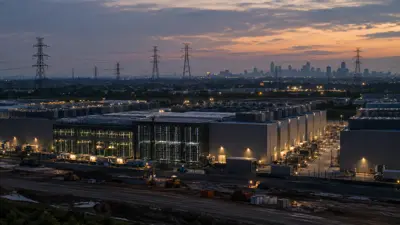
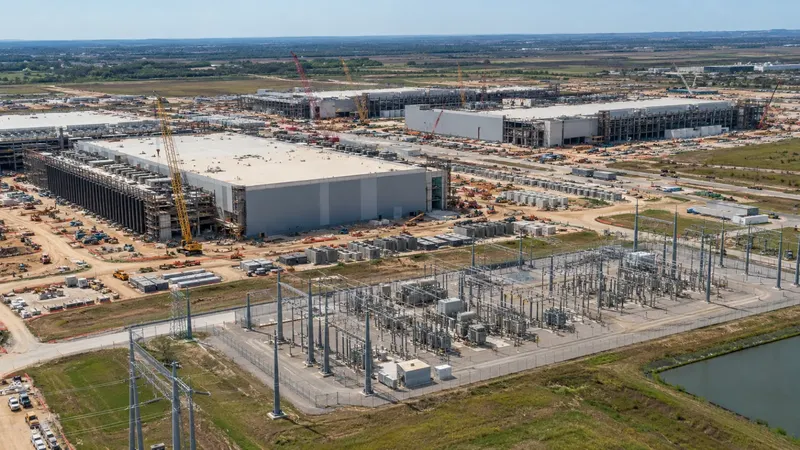
But as AI infrastructure scales up, funding is shifting toward data center developers, neoclouds, utilities, private credit, project financing and corporate bonds. Goldman Sachs expects total debt issuance by hyperscalers — including Amazon, Alphabet, Meta, Microsoft and Oracle — to reach $420 billion in 2027, a 60% increase over its 2026 estimate.

Bond markets are already pricing this differently. Reuters reports that spreads on AI-linked issuers run around 115 basis points, versus roughly 78 basis points for the broader investment-grade market. That gap doesn't necessarily signal an imminent credit blowup. It more likely reflects bond investors demanding extra compensation as supply grows very fast while visibility on returns gets harder to pin down.

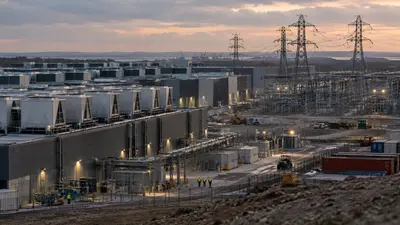
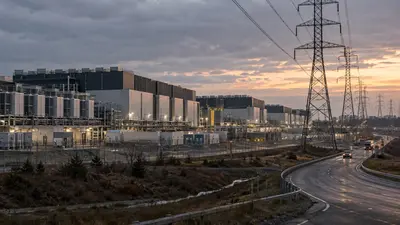
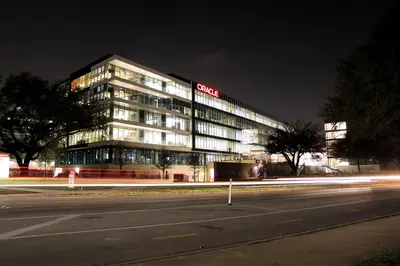
Project Jupiter illustrates the structure. A data center in New Mexico leased by Oracle is tied to roughly $18 billion in loans. As concerns grew over power supply and permitting delays, that loan traded below face value. When a data center's launch slips, rental income and revenue recognition get pushed back too, but the cost of capital doesn't wait.

Insight Times Editorial Desk

More by topic

Starting with this story's topics, then what readers are following now

Investor psychology, decision-making and books on investing

Data Centers

This story's topic106 storiesSee all →

A building that houses servers and networking gear and supplies them with powe…

Why Nebius Is Keeping Some 2027 AI Capacity Off the Shelf

Nebius mixes long-term contracts, short-term premiums and auctions. Holding back capacity pays only if the servers stay busy, and it is not yet clear the pricing will last.

Tech

AI ran out of memory before it ran out of GPUs

The HBM bottleneck is spreading into DRAM prices, server costs and the price of the next laptop or phone.

Tech

Is Space Cooler for AI? Why Musk Wants Data Centers in Orbit

The next limit on AI may be power and cooling, not GPUs. Elon Musk is looking to Earth orbit for an answer, but the test is cost per hour of compute.

Tech

White House Swaps AI for "SI." The Real Investment Signal Is Infrastructure, Not the Name

An executive order renames artificial intelligence "Super Intelligence" and six frontier labs sign a voluntary safety accord. What investors should watch is the data center, power, nuclear and chip policy now gathered under one national-competitiveness frame.

Tech

Musk Sees the Next Phase of AI Infrastructure: Who Can Switch GPUs On, Fast

If neoclouds struggle under financial pressure, AI demand may not shrink. It may simply favor the few operators with the capital and execution to serve it, a shift that could matter for SpaceX and Tesla.

Tech

Weekly Check: The AI Bull Market Isn't Over, It's Just Gotten Harder

A 5% 10-year yield, 470 gigawatts stacked up in Texas, Chinese DRAM, and whether data centers actually get switched on are starting to decide who wins the AI trade through 2027.

Tech

Is Memory Peaking? In the AI Era, Watch the Bottleneck, Not the Demand

Demand still outruns supply. But memory stocks can peak before demand does. The real question is how long HBM4, server DRAM, CXL and Big Tech capex keep the cash flowing.

Tech

CapEx

This story's topic71 storiesSee all →

Money a company spends on things it will use for years — plants, equipment, bu…

Oracle Sets a Date for AI Payback: $30 Billion in Free Cash Flow by Fiscal 2029

Oracle laid out when its AI data center spending should start returning cash: positive free cash flow in the second half of fiscal 2028 and more than $30 billion in fiscal 2029. The plan only works if contracts hold and customers can pay.

Tech

Tech Selloff: Is the Bull Market Over? Wall Street's Four-Year Chart Says Not Yet

The uptrend has survived five double-digit pullbacks in four years. This time, AI companies' debt and cash flow are the new variables.

Investing

AI Infrastructure Spending Is Holding Up 3% Global Growth, the IMF Says

AI is acting as a real-economy investment engine, offsetting an energy supply shock. The next test is whether that spending comes back as profit.

Investing

Morgan Stanley Says 'Buy the Drop' on AI Stocks, Keeps $3.4 Trillion Capex Forecast

After a post-midterm selloff on data center regulation fears, Morgan Stanley argues spending is likely delayed, not lost. The winners may differ, though.

Investing

Year Four of the AI Revolution: The Real Winners May Emerge After the Highway Is Built

Railroads, the internet and mobile show that a technology can succeed while many investors lose money. The question for AI is whether the current pullback is the end of the boom or a handoff of wealth to new owners.

Investing

Dark navy cover. Flow diagram: Nvidia to Nscale (credit guarantee, in talks) to Anthropic (~$45B compute lease signed in August plus a separate ~$45B, ~460MW deal in talks). Title: Why Would Nvidia Back a Customer's Loan?

Why Would Nvidia Guarantee Its Customers' Data Center Loans?

Nvidia is reportedly in talks to back financing for Nscale's West Virginia data center. Nothing is signed, and the terms are not public.

Tech

Amazon Goes After Nvidia's Strongest Moat, and It Is Software, Not GPUs

Amazon's open-source TorchNeuron aims to let existing AI code run on its Trainium chips. The contest comes down to the total cost of AI compute and the return on Amazon's $220 billion in annual capital spending.

Tech

FCF

This story's topic17 storiesSee all →

Why the White House Swapped "AI" for "Super Intelligence"

Executive Order 14434 renames AI across the federal government without defining a new technology. The real story is about roughly $700 billion in capex, free cash flow and electricity.

Tech

AI Demand Is Proven. Now the $70 Billion Bill Comes Due

Oracle posted $19.3 billion in quarterly revenue and spent $28.5 billion on capex. The real question for the AI buildout is no longer whether demand exists, but how fast this spending turns into cash.

Tech

CoreWeave's Bond Slide Is the First AI Warning, and It Came From Credit, Not Stocks

CoreWeave's 2032 notes fell below 80 cents on the dollar, with yields near 15%. Why is the bond market flashing a warning at a company swamped with AI demand?

Tech

Lam Research Falls 12%: The Problem Is the Timing of AI Growth, Not Its End

Revenue up 54%, an operating margin above 40% and $3.2 billion in free cash flow were not enough. The selloff likely reflects worry that revenue arrives later than hoped.

Investing

If AI Is Holding Up the Global Economy, Why Is the IMF Warning of an AI-Driven Financial Crisis?

AI succeeding and AI investors succeeding are different things. The IMF's concern is less that the technology fails than that the huge capital poured into it is not recovered.

Tech

Dark navy cover. Horizontal bar chart of Reddit Q3 2026: revenue +53%, ad revenue +54%, global DAU +12%, US DAU -2%, stock about -29% on Oct 30. Title: Google AI Is Taking Reddit's Visitors.

Google's AI Search Is Cutting Reddit's Traffic. Are the Web's Economics Changing?

Reddit's revenue grew fast, but search visits fell. The shock points to a shifting relationship between companies that produce content and platforms that answer with AI.

Tech

Google Cloud Grew 103%. Alphabet Fell 10% Anyway. Here Is What Wall Street Fears

AI demand is showing up in the numbers, but search ads missed and AI spending is not yet returning enough cash. Alphabet's results ask not how fast it is growing, but how profitably.

Investing

Interest Rates

This story's topic8 storiesSee all →

Rates Hit 5% Again, But AI Held - Now Wall Street Wants Cash Flow, Not Just GPUs

The Fed raised rates and the 10-year yield broke back above 5%, yet the Nasdaq did not crack. This week's real story is not the end of the AI rally but a change in what the market is grading.

Investing

Who Buys the T-Bill Behind Your $1 Stablecoin

Stablecoins aren't a crypto asset class so much as new plumbing for moving dollars online, and every new dollar that flows in gets tied to short-term Treasuries.

Macro

The U.S. Stock Market Selloff: What Investors Should Protect—and What They Should Change

The latest U.S. stock market decline is better understood as a simultaneous reassessment of inflation, interest rates, and the profitability and financing assumptions behind AI investment—not simply as panic selling.

InvestingWHAT NEXT

A 2027 Playbook: Stop Watching the Business Cycle, Start Watching Where the Money Flows

A new Korean economics book, "The Reverse Flow of Money," argues that interest rates still act like gravity on every asset, but AI and chips are pulling in capital strong enough to defy it. For investors, the question is not the average growth rate but where that money goes, and where it eventually turns into cash flow.

Macro

Higher Rates Don't Break Big Tech's Business. They Reprice Its Future.

Microsoft, Alphabet, Apple and Nvidia are sitting on more cash than debt. What rates actually change is the discount rate applied to cash flows a decade out, and whether a cut is a soft landing or a recession signal.

Tech

Gas Prices, Not Politics, Are Deciding This Midterm Market Story

Forecasts of a Republican defeat are not exaggerated. The House has tilted clearly toward Democrats, the Senate has moved from a toss-up to a slight Democratic edge, and Trump's net approval is the lowest of either term.

Macro