The AI Bill Comes Due: Three Tests for Chips, Rates and the Midterms This Week
The Philadelphia Semiconductor Index fell 7.2% on Friday. AMD earnings, Tuesday's midterm elections and Friday's jobs report may show what kind of selloff it was.

The question last week raised: why are AI stocks falling while AI grows?
On Friday, Oct. 30, the S&P 500 fell 1.82% to 7,580.07. The Nasdaq lost 2.86%, and the Philadelphia Semiconductor Index (SOX) dropped 7.2%. Intel fell 28.58% in a single day, AMD 10.88% and Nvidia 4.22%.
The defining feature of the day was not new evidence that AI demand had vanished. Instead, the market began recalculating how much money must be spent up front to grow the AI industry, and who bears that investment cost.
Alphabet's third-quarter cloud revenue rose 103% from a year earlier, but quarterly capital spending of $51.4 billion and negative free cash flow weighed on the stock. Amazon's AWS revenue grew 39.3%, but quarterly capital expenditure of $77.3 billion far exceeded operating cash flow of $42.4 billion.
Microsoft stood apart. It posted 48% Azure growth and kept free cash flow positive.
Wall Street has started to judge not only how fast AI is growing, but how efficiently the capital spent on that growth comes back.
First test: can AMD set the direction for chips?
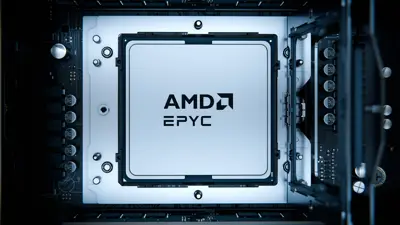
AMD reports after the close on Tuesday. The results are an important input for judging what Friday's chip rout was. AMD competes with Intel in server CPUs and with Nvidia in AI accelerators.
If AMD offers a solid growth outlook for data center GPU revenue and server CPU demand, that could support the view that Intel's bad news was extended too far across the sector.
If even AMD shows strain in AI infrastructure demand or gross margin, investors are likely to ask again how much sustainable profit hyperscaler capex growth leaves for chip suppliers.
Monday's earnings from Apple and Palantir also matter. Apple is judged on a relatively light direct AI capex burden alongside a high valuation. Palantir is a test of whether AI turns into real software revenue and cash flow.
Second test: where the midterms meet interest rates
The U.S. midterm elections are on Tuesday, Nov. 3. Expectations for taxes, regulation and fiscal policy could shift depending on how the House and Senate majorities change. For stocks, what matters is not only which party wins but how far the result departs from expectations.
For the AI industry, state and local policy on data center permits, grid expansion and electricity rates is also worth watching. Delays in data center construction could push back the point at which GPUs and networking gear turn into revenue.
On Oct. 28, the Fed held its target range at 3.75% to 4.00%. The vote was 10 to 2, and the two dissenters preferred a 0.25 percentage point hike.
Strong jobs data may not be good news for stocks this week by itself. If wage pressure builds, worries about further rate hikes could grow, and the discount-rate burden on stocks priced for long-term growth could rise.
Third test: wages are the core of Friday's jobs report
The October jobs report is due Friday, Nov. 6, at 8:30 a.m. ET.
Market expectations provided are for nonfarm payrolls of about 65,000, an unemployment rate of 4.2% and average hourly earnings up about 0.3% from the prior month. The payroll number alone is not the point.
Modest hiring and stable wage growth could be a combination that eases the rate burden. If jobs and wages are both strong, fears of reaccelerating inflation could rise. If hiring weakens sharply, worries about corporate earnings could grow even if rates fall.
This is a week in which the reason rates fall matters more than the fall itself.
Key events this week (ET)
Times converted from the Korean schedule using the 14-hour gap to Korea's time zone. Schedules may change at the issuer's discretion.
| Time | Event | What to watch |
|---|---|---|
| Mon, Nov. 2, after the close | Apple, Palantir earnings | iPhone demand, AI software monetization |
| Mon, Nov. 2, 10:00 a.m. | October ISM manufacturing | Simultaneous signals on growth and prices |
| Tue, Nov. 3, 10:00 a.m. | September JOLTS | Job openings and labor market pressure |
| Tue, Nov. 3, after the close | AMD, Arista, Super Micro earnings | AI infrastructure demand and margins |
| Wed, Nov. 4, from the morning | Midterm vote count | Congressional balance and speed of results |
| Wed, Nov. 4, 8:15 a.m. | October ADP employment | Early signal on private hiring |
| Wed, Nov. 4, after the close | Qualcomm, Arm, AppLovin earnings | Mobile, CPUs, AI ad monetization |
| Thu, Nov. 5, 8:30 a.m. | Jobless claims, productivity | Labor market, unit labor costs |
| Fri, Nov. 6, 8:30 a.m. | October jobs report | Nonfarm payrolls, unemployment, hourly earnings |
Daylight saving time in the U.S. ended on Sunday, Nov. 1.
What to Watch
| Variable | Signal to check |
|---|---|
| AMD earnings | Data center GPU and server CPU growth outlook, gross margin |
| Hyperscaler free cash flow | Cash generation relative to the pace of capex growth |
| October U.S. wages | How far they stray from the expected 0.3% monthly gain |
| 10-year Treasury yield | Whether it breaks through or stabilizes near 5% |
| Chip rebound | Joint recovery in SOX, AMD, Nvidia and Arista, not SOX alone |
FAQ
Q. AI stocks fell sharply. Does that mean AI demand has weakened?
- The cloud revenue growth seen in current results and the share-price declines are separate phenomena.
- The key question is whether future demand growth can deliver a sufficient return on the capital invested.
Q. If AMD reports well, is that good for Nvidia too?
- It is a positive in that it points to solid data center investment demand.
- GPU market share, price competition and profitability by product are separate factors to assess.
Q. If rates fall, do tech stocks necessarily rebound?
- Lower rates driven by easing price pressure are friendly to growth-stock valuations.
- If rates fall because the economy is weakening, a worse earnings outlook could offset that effect.
Q. What should investors who buy in installments prioritize this week?
- Check changes in revenue outlooks and cash flow after earnings.
- Stick to pre-set buying intervals, position sizes and cash-holding rules.
- Avoid judging an investment's appeal on a short-term drop alone, and test whether long-term assumptions still hold.
Insight Times Editorial Desk