US Bets $389 Million That Power, Not Just Chips, Is AI's Next Bottleneck
Washington is funding power-conversion technology for AI data centers and fusion, and taking minority stakes in the companies. The money comes from the CHIPS R&D budget.
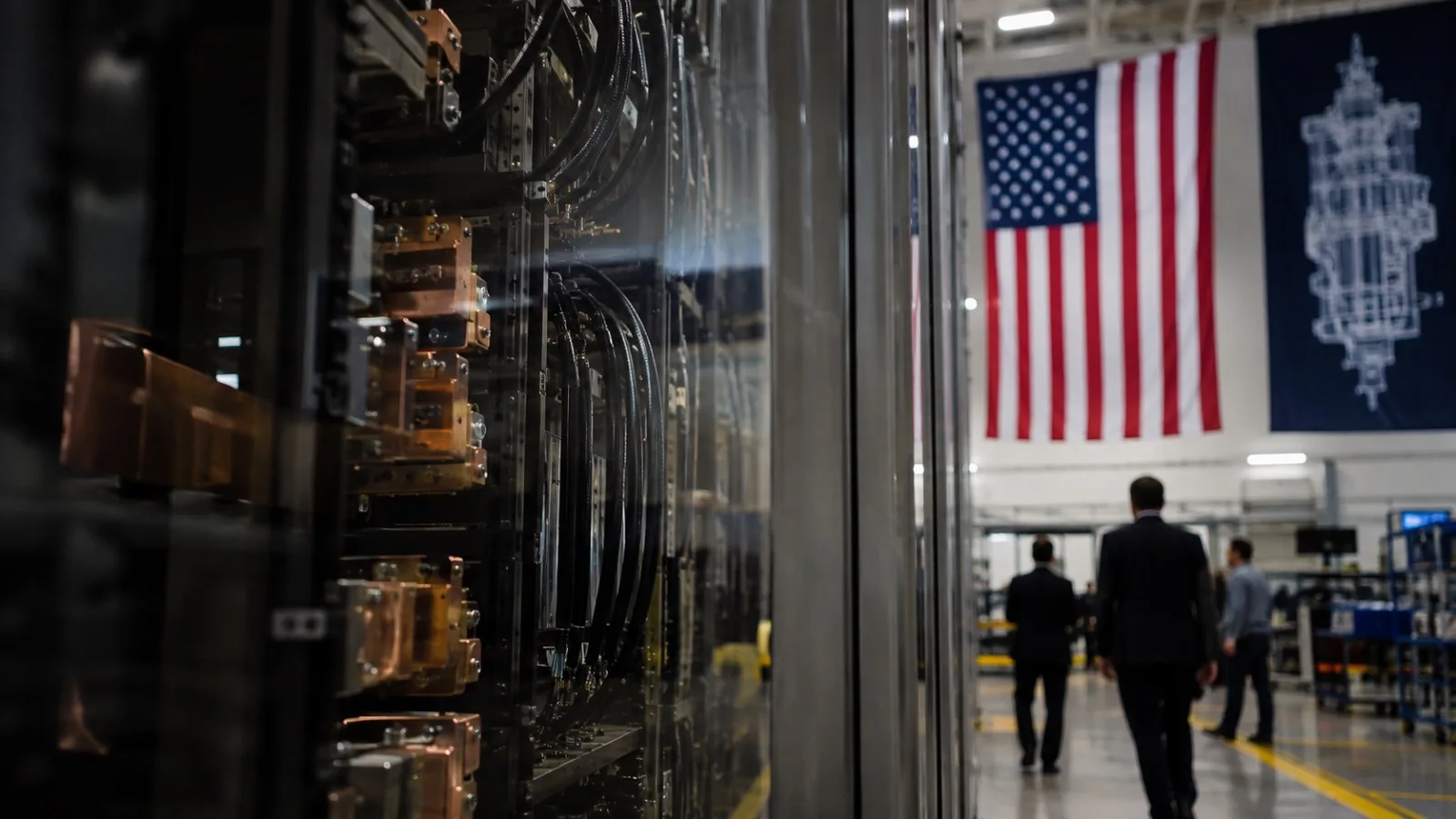
Power conversion, long overshadowed by the race over GPU performance, has moved to the center of US semiconductor policy. The government is backing next-generation chips for AI data centers and fusion energy, and it will take equity in the companies.
The four technologies Washington picked
On Oct. 22, the Commerce Department said it had signed letters of intent with four companies for up to $389 million through its semiconductor research and development program. The money is part of the $100 billion R&D budget created under the CHIPS and Science Act of 2022.
| Company | Maximum award | Focus |
|---|---|---|
| Helion | $175 million | High-voltage semiconductors and power modules for fusion |
| Commonwealth Fusion Systems | $85 million | Plasma heating, control and radiation-tolerant semiconductors |
| Vertical Semiconductor | $73 million | Vertical GaN power semiconductors for AI racks |
| Sibelco | $56 million | Ultra-high-purity quartz for chipmaking |
By share of the $389 million total (rounded), Helion gets 45.0%, Commonwealth Fusion Systems 21.9%, Vertical Semiconductor 18.8% and Sibelco 14.4%.
About 67% of the funding goes to the two fusion companies. The split shows how much weight the government places on future energy production alongside AI data centers.
Helion said an additional $50 million in private investment is expected. With government and private money combined, its package could reach $225 million.
Why power semiconductors matter in AI data centers
An AI server does not run just because it is plugged in. Electricity from the grid has to be converted several times to the voltages that GPUs and memory require.
Some power is lost as heat at each step. As rack power density rises, the cost of cooling and floor space matters as much as the lost power itself.
Vertical Semiconductor's vertical GaN chips target this problem. GaN is well suited to high switching frequencies and high power density. The project aims to demonstrate the technology in a 2.5 MW AI data center rack. That does not mean mass production or customer supply is already settled.
As an illustration, take a device converting 2.5 MW. If efficiency improves from 97% to 98%, losses fall by about 26.3 kW at the same output. Running year-round, that equals roughly 230,000 kWh saved per year. The calculation is meant to show the economics of the technology. It is not measured Vertical performance.
Why the grants come with equity
The government will also take minority, non-controlling, non-voting stakes in the recipients.
Helion said that if a final agreement is signed, it expects to give the government non-voting equity worth $175 million, based on its most recent Series G preferred valuation. Ownership percentages and valuation terms for the other companies have not been disclosed.
The structure pairs R&D support with an equity requirement. It would be a stretch, though, to say all US chip subsidies have shifted to equity investments. The terms of this program, and whether it expands, need to be treated separately.
Insight Times Editorial Desk