Wall Street Is Split on Jensen Huang's Future at Nvidia. Here Is What Long-Term Investors Can Weigh

Analysts disagree on the odds that Huang leaves as CEO while a board probe continues. No evidence of a confidential leak has been made public.
The 20-second read

1
Prediction markets put the odds of Jensen Huang leaving by 2027 at around 17%, but some experts call it 50-50.
2
The company says there is no basis for a confidential information leak, and no evidence of an intentional leak has been made public so far.
3
The lack of a formal succession plan is a weakness. But the CUDA ecosystem and the demand structure for GPUs are unchanged, so for long-term investors this looks more like short-term noise.

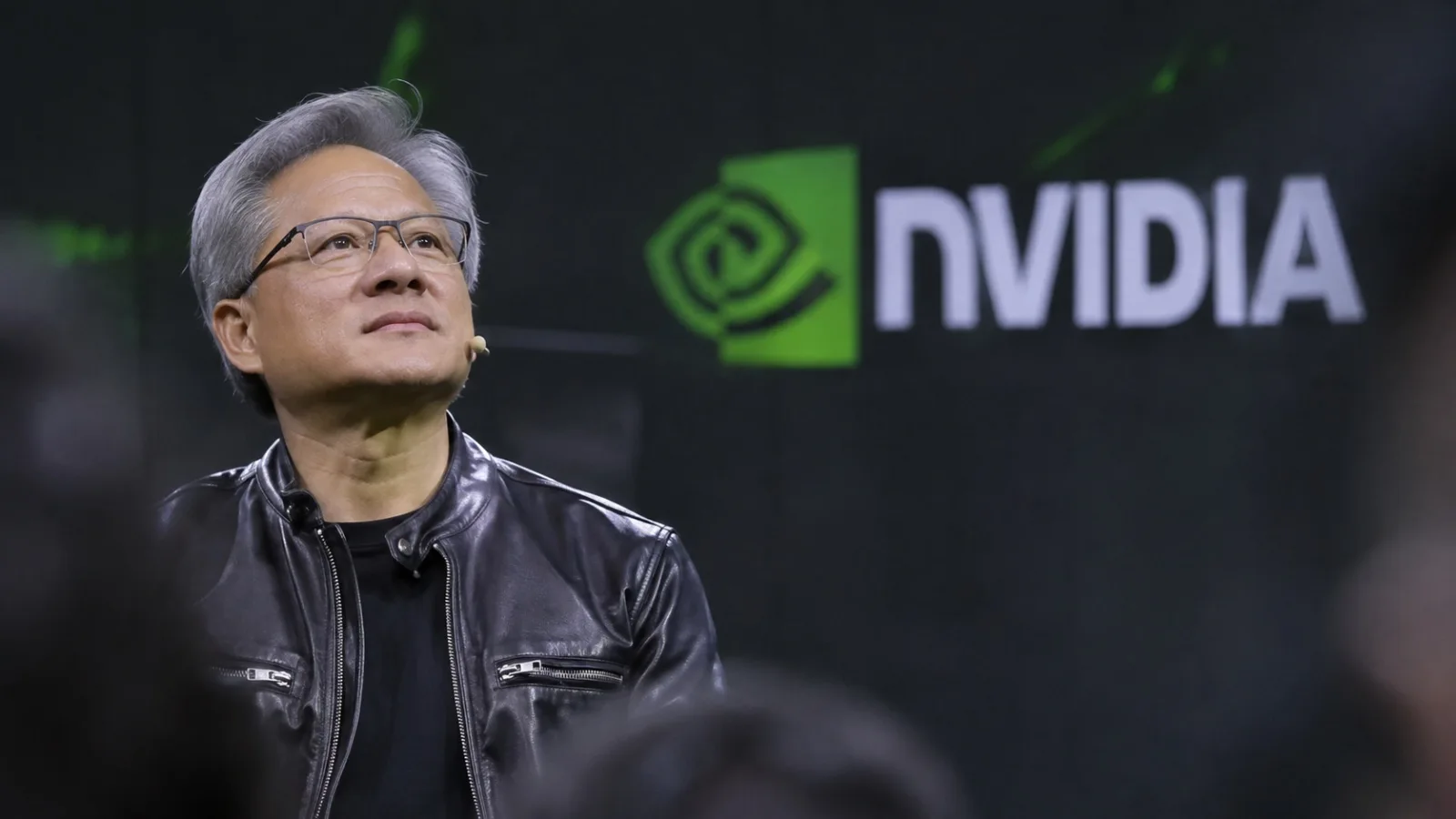
Dan Ives of Wedbush has said that if Jensen Huang stepped down as CEO, Nvidia's value could fall 25% to 30%, and that the competitive picture in AI GPUs, especially in China, would change sharply. Ives put the odds of Huang's removal at about 15%.

This desk does not fully share that view, and Wall Street itself is divided.

Wall Street's read

  • Prediction markets such as Kalshi put the odds of Huang leaving by 2027 at around 17%.
  • Jeffrey Sonnenfeld of Yale called it "50-50" and pointed to the lack of a formal succession plan.
  • Gary Black said there is "no natural successor."
  • Gil Luria and others floated CFO Colette Kress as a possible interim CEO in the short term. For the longer term, they named Ian Buck, a key figure behind CUDA.
  • Stacy Rasgon put it this way: "Jensen is Nvidia."

What the company says

Nvidia says its board has confidence in Huang and that there is "no evidence of a secret or national security leak." Huang has said he will keep serving as CEO without interruption.

The backdrop is the board's independent investigation. It began after Huang acknowledged an affair and after reports raised questions about the other party, Alice Huang, and alleged ties to Chinese intelligence. So far, no evidence of an intentional leak of confidential information has been made public.

Scenarios

The most likely scenario is that Huang stays in the near term. If the probe turns up nothing serious, those odds rise further. But sensitivity around national security and export controls is high. If the investigation and political pressure drag on, uncertainty could grow.

Over the medium to long term, key-man risk could become real. Huang has reportedly been skeptical of succession planning, the organization is flat, and no formal successor has been named. The worst case is an abrupt replacement. The best case is a quick end to the probe and an orderly transition.

For long-term investors

It is hard to imagine Nvidia without Huang. Still, for a long-term holder, this episode looks closer to short-term noise. The company's underlying value has not changed.

The scale is far smaller than when Steve Jobs died. That was a structural shock that could have shaken Apple's product vision and brand. Apple moved to Tim Cook and became an even larger company. Nvidia's case is still at the investigation stage, with no evidence of a confidential leak or an intentional national security breach. Key-man risk is now in focus, but the CUDA ecosystem and the structure of data-center GPU demand remain intact.

It is also much smaller than Elon Musk's 2018 "take Tesla private" tweet. Musk gave up the chairman's seat and settled with the SEC, yet Tesla kept growing. Nvidia has not reached even that level of change in control or regulatory settlement. Whether Huang stays or some of his roles are adjusted in an orderly way, it is unlikely that Nvidia's products, customers and software moat would collapse in a short time.

In the near term, the stock could swing on the probe's findings and outside pressure. The absence of a formal succession plan is also a governance weakness. But for long-term investors, the key question is not the "Jensen is Nvidia" rhetoric. It is whether Nvidia keeps the structural position to meet AI infrastructure demand. That has not changed.

So a measured approach may make more sense than overreacting: watch the investigation and earnings, and hold or adjust positions accordingly. Key-man risk cannot be ignored entirely. On the facts disclosed so far, though, the event does not look large enough to force a reassessment of Nvidia's long-term value.

What are the odds that Jensen Huang steps down as Nvidia CEO by 2027?
  • Prediction markets such as Kalshi put the odds of him leaving by 2027 low, at around 17%.
  • By contrast, Yale professor Jeffrey Sonnenfeld rated it "50-50." Wall Street is split.
Why did Nvidia's board open an investigation?
  • The background is reporting that Huang admitted to an affair and that the woman, Alice Huang, has alleged ties to Chinese intelligence.
  • The board has launched an independent investigation. So far, no evidence of an intentional leak of confidential information has been made public.
Who could lead Nvidia if Jensen Huang leaves?
  • No formal successor has been named. Gary Black said, "There is no natural successor."
  • Gil Luria and others raised the possibility of CFO Colette Kress serving as interim leader in the short term. For the long term, they pointed to Ian Buck, a key figure behind CUDA.
What does this episode mean for long-term investors in Nvidia?
  • The article's author sees it as closer to short-term noise for long-term investors, because the CUDA ecosystem and the demand structure for data center GPUs are unchanged.
  • However, if the investigation drags on or political pressure grows, the stock could be shaken in the short term. Key-person risk also cannot be fully ignored.
How big is this compared with the cases of Steve Jobs or Musk?
  • The article sees this as smaller than both cases. It is still at the investigation stage, and no change of control or regulatory settlement has been confirmed.
  • This is the author's judgment. It could change depending on the investigation's findings.

What to watch

Board investigation resultsThe first thing to watch is whether any serious problem is found and when the investigation ends.
Release of leak evidenceNo evidence has been made public so far. If it is, the assessment could change.
Formal succession planWatch whether the board formalizes a succession structure.
Export controls and political pressureWatch whether this spreads into a national security issue and prolongs the investigation.
Kalshi departure oddsWatch which direction the figure of around 17% moves.
The probe is ongoing and no confirmed evidence of a confidential leak has surfaced, so long-term investors may focus on whether Nvidia's business structure holds rather than on the CEO's fate.

Insight Times Editorial Desk
More by topic

Starting with this story's topics, then what readers are following now

Investor psychology, decision-making and books on investing

NVDA

This story's topic96 storiesSee all →

Who Hits $1 Trillion Next: Reading AMD and ASML by Different Rules

One company is chasing Nvidia's GPU empire. The other sells the machine that draws the chips for every advanced chipmaker, including Nvidia. Both get floated as 2028 trillion-dollar candidates, but the numbers investors need to watch are entirely different.

Investing

Nvidia and Palantir Put AI Inside the Supply Chain - The Real Shift Is That It's Learning Judgment

A single Vera Rubin rack holds 1.3 million parts. The real breakthrough in Nvidia and Palantir's new supply chain AI isn't automating that complexity, it's capturing the judgment calls that used to live only in planners' heads.

Tech

AI ran out of memory before it ran out of GPUs

The HBM bottleneck is spreading into DRAM prices, server costs and the price of the next laptop or phone.

Tech

Musk Sees the Next Phase of AI Infrastructure: Who Can Switch GPUs On, Fast
If neoclouds struggle under financial pressure, AI demand may not shrink. It may simply favor the few operators with the capital and execution to serve it, a shift that could matter for SpaceX and Tesla.

Tech

China's AI Labs Went Open Source Because They Had to, Not Because They Wanted To

A GPU shortfall pushed Chinese AI labs toward efficiency and open weights, and that constraint is now reshaping the global competition over who controls AI's basic infrastructure.

Tech

The Cheaper Tokens Get, the Bigger Your AI Bill Gets

As AI shifts from training to inference, the token is becoming an industrial commodity. Falling prices are not cutting demand, because agents and automation consume tokens at a scale no human chat session ever did.

Investing

Box Shows AI Its Manuals, and the AI Starts Redesigning the Workflow

Box Architect, built with NVIDIA, moves AI from reading documents to designing how work gets done. It has not yet reached beta, so the real-world payoff remains to be seen.

Tech

GPU

This story's topic69 storiesSee all →

A chip built to draw graphics, whose ability to run thousands of identical cal…

Is Space Cooler for AI? Why Musk Wants Data Centers in Orbit

The next limit on AI may be power and cooling, not GPUs. Elon Musk is looking to Earth orbit for an answer, but the test is cost per hour of compute.

Tech

Chinese Economy

This story's topic20 storiesSee all →

The Real ASML Number Isn't the 3% Pop, It's the 30% Capacity Hike

ASML's rally isn't just an AI trade. Customers are already locking in 2027 tool slots, and ASML is raising Low-NA EUV capacity by roughly 30% to keep up.

Investing

DeepSeek's $15 Billion Raise: Model Makers May Feel It Before Nvidia Does

China's DeepSeek is closing a round about twice its original target. For US investors, the question is less the size of the check than where the money goes and whose profits it could erode.

Tech

AI's Next Bottleneck Is Power, Not GPUs

Jensen Huang and Elon Musk sent the same warning in Washington. The AI race is widening from building better models to supplying power and chips at industrial scale.

Tech

Memory Chip Supercycle: Not at Peak Yet, But 5 of 6 Warning Signs Are Flashing

Memory prices are still climbing, but the pace is slowing and PC and smartphone demand is starting to crack under the weight of higher chip costs. This looks less like a price peak and more like a profit plateau building toward the next supply cycle.

Investing

Lam Research Falls 12%: The Problem Is the Timing of AI Growth, Not Its End

Revenue up 54%, an operating margin above 40% and $3.2 billion in free cash flow were not enough. The selloff likely reflects worry that revenue arrives later than hoped.

Investing

China Wants to Replace Nvidia, but Its Tech Giants Ordered $35 Billion of Its Chips

A huge order for the RTX PRO 5500 shows where AI inference demand stands, and what Nvidia can and cannot turn into revenue.

Tech

Weekly Check: The AI Bull Market Isn't Over, It's Just Gotten Harder

A 5% 10-year yield, 470 gigawatts stacked up in Texas, Chinese DRAM, and whether data centers actually get switched on are starting to decide who wins the AI trade through 2027.

Tech

HBM

77 storiesSee all →

Memory stacked next to the GPU.

Memory Is Still Short, but Less Short: Checking for the Peak This Week

Citi trimmed its 2027 DRAM and NAND shortage forecasts together. Server pricing remains strong, while consumer markets show weakness. This week's numbers show where the memory boom may peak.

Investing

A 3x P/E is not a discount. It is a verdict on how long memory profits last

Nomura's buy case on Samsung Electronics and SK Hynix does not stop at higher memory prices. It argues that if AI has turned memory from a cyclical component into strategic infrastructure, the formula the market uses to value both companies has to change too.

Investing

2027 Isn't the End: Citi's Case for a Memory Supercycle Running to 2031

Citi says the memory shortage timeline is stretching again. If AI shifts from "train once" models to continual learning, HBM, server DRAM and enterprise SSDs could all fall short at the same time.

Tech

Has Memory Peaked? Prices Are Cooling, but the Shortage Looks Set to Run to 2028

Price growth has slowed and consumer demand is already breaking. Server and HBM supply remains short, and Micron says more than 75% of its 2027 volume is already committed to customers.

Tech

AI Chip Peak Check: Demand Still Rising, Risk Building in 2027-2029 Supply and Funding

DRAM and NAND contract prices are still climbing and HBM suppliers hold the edge. Power shortages, AI financing costs and simultaneous memory expansion are the risks for later years.

Investing

AI Chips Haven't Peaked. The Real Risk Sits in 2028 Supply

HBM and server DRAM shortages are now spreading into enterprise SSDs. The question isn't today's strength, it's how much new capacity these prices are pulling in and when it lands.

Investing

AI's Peak Isn't Next Year: How to Invest for 2029 Now

Growth in AI infrastructure spending may slow, but the money is likely to move from memory and power toward enterprise AI, data, security and robotics. Investors may do better to track the order in which profits shift than to guess when AI ends.

Investing