SOXX Jumps 6% on CoreWeave, Then Nvidia Falls 7.6% After Hours on CEO Report

CoreWeave's results eased worries about AI demand. Then a report that Nvidia's board may weigh Jensen Huang's exit introduced a different kind of uncertainty.
SOXX Jumps 6% on CoreWeave, Then Nvidia Falls 7.6% After Hours on CEO Report

The 20-second read

1
AI supply chain rebounds. CoreWeave's earnings eased worries about slowing demand, and SOXX rose 6.01%. Buying spread to memory, server and equipment stocks.
2
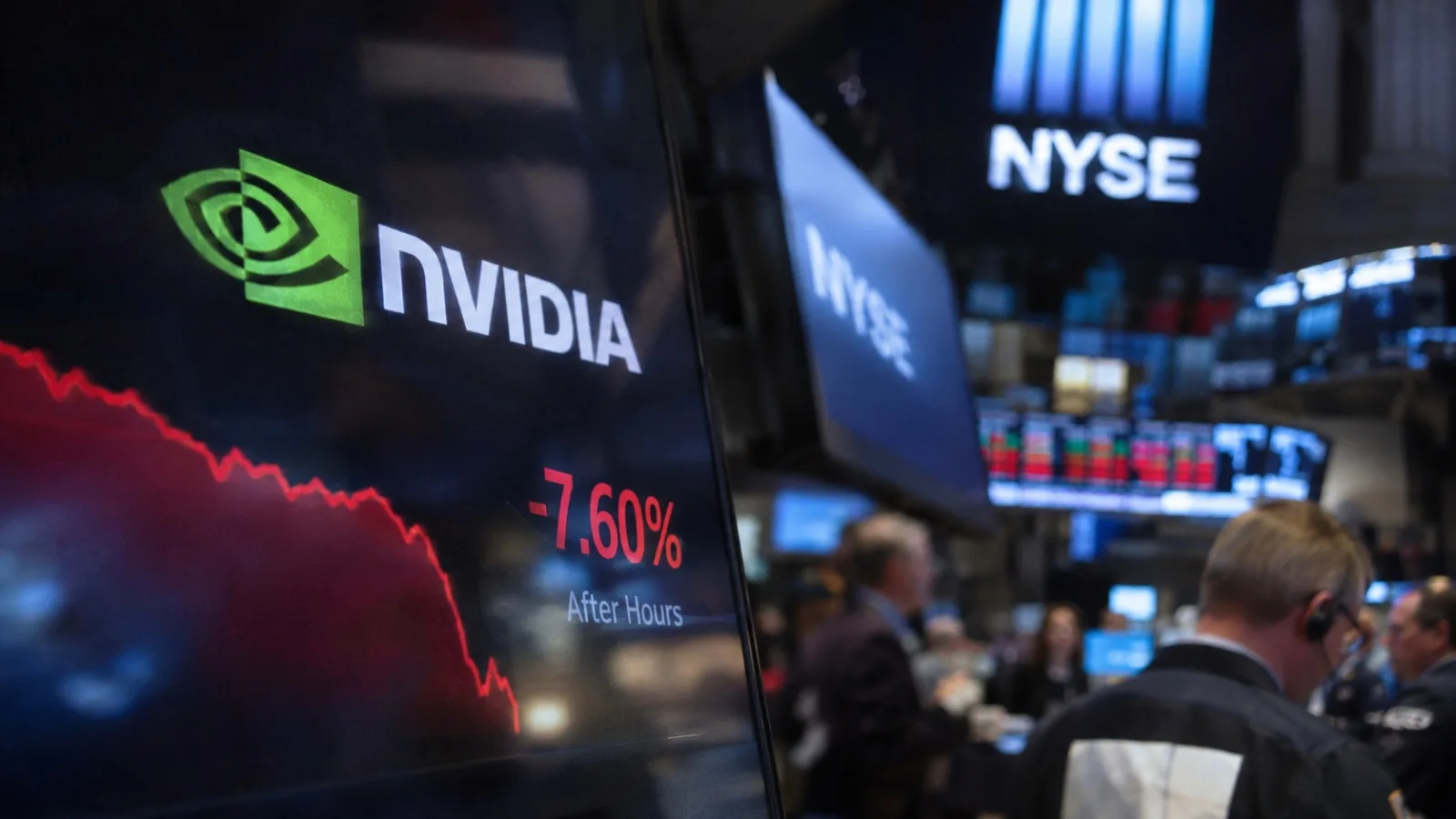
A different risk for Nvidia. It rose 2.92% in the regular session, but fell about 7.6% at one point after hours following a report that the board is weighing a CEO change. No dismissal has been confirmed.
3
The decision point for investors. AI infrastructure demand and Nvidia's leadership question are separate issues. The next thing to check is whether money moves to competitors and the supply chain.
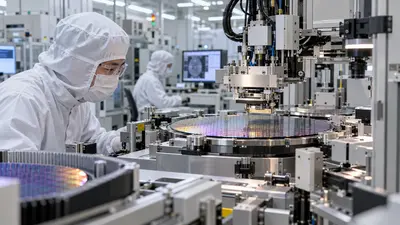
Illustration created to help readers follow the article

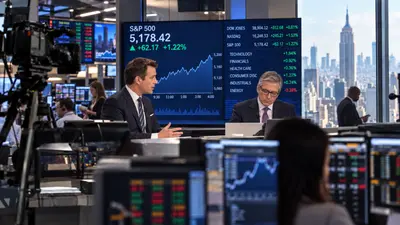
Semiconductors rose nearly four times as much as the Nasdaq

Index / ETFCloseChange
SOXX$155.40+6.01%
Nasdaq Composite25,466.19+1.60%
S&P 5007,619.38+1.31%

The Dow rose 0.49% and the Russell 2000 gained 0.88% in Wednesday's regular session on Nov. 11.

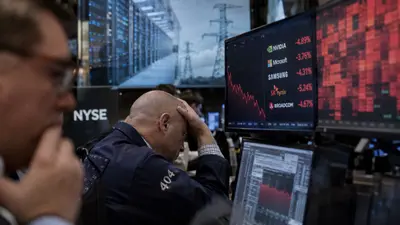
Chips led the market. Worries that AI investment could cool faster than expected eased after CoreWeave's earnings. Nvidia rose, and so did memory, server and chip equipment makers.

Sandisk gained 13.69%, Arm 12.05%, Micron 11.89% and Dell 11.75%. AMD rose 7.32%. Nvidia's regular-session gain was 2.92%. Hopes for AI spending revived, but the benefit did not concentrate in Nvidia alone.

  • Sandisk (storage): +13.69%
  • Arm (chip design): +12.05%
  • Micron (memory): +11.89%
  • Dell (servers): +11.75%
  • AMD (AI chips): +7.32%
  • Nvidia (GPUs): +2.92%

CoreWeave confirmed demand. Costs remain.

CoreWeave's third-quarter 2026 revenue was $3.661 billion, up about 168% from $1.365 billion a year earlier. The company raised its 2026 revenue outlook to $13.0 billion to $13.3 billion. It also raised its adjusted operating income outlook to $1.275 billion to $1.375 billion.

The figures show AI cloud usage is turning into real revenue. But net loss for the quarter was $709 million, and net interest expense was $846 million. Strong revenue growth and a heavy financing burden exist side by side.

CoreWeave's 24.71% jump is better read as a market reassessment that demand is lasting, not as proof of an AI demand recovery. Profitability across AI infrastructure has not been verified.

After the close, the question changed

Nvidia, regular session: +2.92%, closing at $173.73, rising with the recovery in AI sentiment.

Nvidia, after hours: -7.60%, the drop that followed reports about CEO Jensen Huang's position.

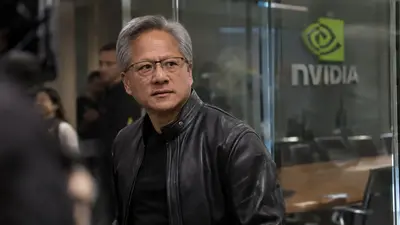
The Wall Street Journal reported that Nvidia's board is preparing to consider the possibility of Huang stepping down. Huang had earlier acknowledged an extramarital relationship and apologized. After allegations of ties to a foreign intelligence service were raised, the board opened an independent investigation. The New York Times separately reported allegations of a relationship within the company.

A removal is not confirmed. In a Nov. 8 statement, Nvidia's board said it had no basis to believe national security or company secrets were compromised. On the 10th, it said it had retained outside legal experts to investigate. Personal allegations, the fact of an investigation and the possibility of a change in leadership should not be treated as the same fact.

Even so, the market has begun to price how much the company's core strength depends on one person's judgment and network. If a leadership vacuum materialized, uncertainty could reach the product roadmap, relationships with major customers and policy negotiations. That is a different risk from falling demand.

Why big tech and chips diverged

Apple rose 2.04% and Tesla 2.91%. Microsoft fell 2.26%, Amazon 1.74% and Meta 1.97%. Not every AI-related stock moved the same way.

Rising AI capital spending can mean more orders for chip and equipment suppliers. Platform companies buying that equipment must absorb higher costs and still earn enough. The same AI spending can show up as revenue for the supplier and, first, as cost for the buyer.

The VIX fell 10.12% to 17.49 in the regular session. That reading does not reflect the Nvidia news after the close. The bond market was closed for Veterans Day, so any new reaction in Treasury yields will have to be checked on the next trading day.

What to check next session

The open for Nvidia, how the board's investigation develops, and whether Treasury yields move once the bond market reopens.

Has Nvidia's board decided to remove Jensen Huang?
  • No. What is confirmed is a media report about an independent investigation involving outside experts and the possibility that the board is reviewing the CEO's position. Whether a final decision is made should be confirmed through an official company announcement.
Does the possibility of a CEO change mean AI chip demand is falling?
  • No. Management risk and customers' demand for GPUs are different variables. However, an actual leadership vacuum could affect Nvidia's execution and customer trust.
Is CoreWeave's earnings proof that returns on AI investment have improved?
  • Revenue growth and the raised adjusted operating income outlook are positive. But given the large net loss and interest expense, it is hard to say that investment payback and cash flow have been sufficiently verified.
Why is only Nvidia weak when the semiconductor ETF rose?
  • Customers' AI infrastructure spending also benefits memory, manufacturing, equipment and servers. This time, Nvidia faces an added governance concern. Both trends can appear at the same time.

What to watch

Nvidia boardAn official announcement on the CEO's position and succession plans. Watch whether this moves from rumor to decision.
AMD and BroadcomIf competitors stay strong despite Nvidia's weakness, it favors reading this as a company-specific risk rather than a sector-wide one.
SOXX and the supply chainWhether gains in memory, server and equipment stocks continue. If they fall together after the surge, recheck sentiment across the whole industry.
10-year yield and VIXIf yields rise again or volatility widens after bond trading resumes, it weighs on the sustainability of the chip rebound.
CoreWeave eased AI demand worries, but Nvidia now faces a new risk tied to its CEO's future.

Insight Times Editorial Desk
More by topic

Starting with this story's topics, then what readers are following now

Investor psychology, decision-making and books on investing

NVDA

This story's topic96 storiesSee all →

Who Hits $1 Trillion Next: Reading AMD and ASML by Different Rules

One company is chasing Nvidia's GPU empire. The other sells the machine that draws the chips for every advanced chipmaker, including Nvidia. Both get floated as 2028 trillion-dollar candidates, but the numbers investors need to watch are entirely different.

Investing

Nvidia and Palantir Put AI Inside the Supply Chain - The Real Shift Is That It's Learning Judgment

A single Vera Rubin rack holds 1.3 million parts. The real breakthrough in Nvidia and Palantir's new supply chain AI isn't automating that complexity, it's capturing the judgment calls that used to live only in planners' heads.

Tech

AI ran out of memory before it ran out of GPUs

The HBM bottleneck is spreading into DRAM prices, server costs and the price of the next laptop or phone.

Tech

Musk Sees the Next Phase of AI Infrastructure: Who Can Switch GPUs On, Fast
If neoclouds struggle under financial pressure, AI demand may not shrink. It may simply favor the few operators with the capital and execution to serve it, a shift that could matter for SpaceX and Tesla.

Tech

China's AI Labs Went Open Source Because They Had to, Not Because They Wanted To

A GPU shortfall pushed Chinese AI labs toward efficiency and open weights, and that constraint is now reshaping the global competition over who controls AI's basic infrastructure.

Tech

The Cheaper Tokens Get, the Bigger Your AI Bill Gets

As AI shifts from training to inference, the token is becoming an industrial commodity. Falling prices are not cutting demand, because agents and automation consume tokens at a scale no human chat session ever did.

Investing

Box Shows AI Its Manuals, and the AI Starts Redesigning the Workflow

Box Architect, built with NVIDIA, moves AI from reading documents to designing how work gets done. It has not yet reached beta, so the real-world payoff remains to be seen.

Tech

Semiconductors

This story's topic59 storiesSee all →

The whole business of designing, fabricating and testing chips.

The Real ASML Number Isn't the 3% Pop, It's the 30% Capacity Hike

ASML's rally isn't just an AI trade. Customers are already locking in 2027 tool slots, and ASML is raising Low-NA EUV capacity by roughly 30% to keep up.

Investing

A 3x P/E is not a discount. It is a verdict on how long memory profits last

Nomura's buy case on Samsung Electronics and SK Hynix does not stop at higher memory prices. It argues that if AI has turned memory from a cyclical component into strategic infrastructure, the formula the market uses to value both companies has to change too.

Investing

The Next AI Chip Race Is About How Chips Connect

Applied Materials will lift its stake in Dutch equipment maker BESI from about 9% to 20%. The bet is less about control than about a new way to link chips.

Tech

White House Swaps AI for "SI." The Real Investment Signal Is Infrastructure, Not the Name

An executive order renames artificial intelligence "Super Intelligence" and six frontier labs sign a voluntary safety accord. What investors should watch is the data center, power, nuclear and chip policy now gathered under one national-competitiveness frame.

Tech

Before Robots Sell, Chips Sell First: Following the Money in the Humanoid Race

Billions of dollars are moving before humanoid robots reach mass sales. Compute suppliers may see revenue first, but that does not guarantee stock returns.

Tech

Tech Selloff: Is the Bull Market Over? Wall Street's Four-Year Chart Says Not Yet

The uptrend has survived five double-digit pullbacks in four years. This time, AI companies' debt and cash flow are the new variables.

Investing

Samsung Posts 107 Trillion Won Profit, TSMC Sales Jump 50%. Why Did the Shares Fall?

The AI chip supercycle has not ended. But the market's question has changed: not how fast earnings grow, but how long today's enormous margins can last.

Tech

Earnings Report

This story's topic39 storiesSee all →

Two Companies Drive 34% of S&P 500 Earnings Growth as AI Pays Sellers First

Nvidia and Micron generate a third of expected earnings growth in US large caps. Apollo says the financial effect of AI is not yet visible in the S&P 493.

Investing

SpaceX AI Revenue Jumps 830%, but Starlink Still Earns the Real Money

In its first quarter as a public company, SpaceX turned profitable and guided to as much as $40 billion in fourth-quarter capex. A possible Tesla merger adds another question for investors.

Investing

Tesla Energy's 13.7GWh Paradox: Expectations Ran Faster Than Deployments

Q2 deployments recovered but margins collapsed. Q3 set a record for deployments and still missed estimates. The issue is not the size of AI power demand but how fast it converts into Tesla revenue and profit.

Tech

Apple and Palantir Beat Estimates, but Two Questions Remain

Apple has to show how much of its revenue turns into profit. Palantir has to show how long its explosive growth can last.

Investing

Amazon's AI Business Is Booming. Why Did the Stock Slide?

AWS revenue rose 39% and operating margin hit a record 13.9%. But capital spending now exceeds the cash Amazon generates, and that gap is what investors are pricing.

Tech

SK hynix's 80% Margin Matters Less Than Its Pre-Sold 2028 Output

SK hynix earned 83.3 trillion won in operating profit in one quarter. The number long-term investors may care about more is that over half of 2027 and 2028 capacity is already under long-term contracts.

Tech

AMD Crossed $1 Trillion, and the Market Started Looking at CPUs Again

AMD's stock topped a $1 trillion market cap for the first time. The rally isn't just about being an Nvidia alternative. It reflects a reassessment of AMD as a full-stack AI infrastructure vendor, one that bundles CPUs, GPUs and networking, as AI shifts from chatbots to agents and reignites data center demand for CPUs.</deck> <parameter name="oneline">As AI moves from chatbots to agents, the market has started counting the CPU sitting next to the GPU again.

Tech

HBM

77 storiesSee all →

Memory stacked next to the GPU.

Memory Is Still Short, but Less Short: Checking for the Peak This Week

Citi trimmed its 2027 DRAM and NAND shortage forecasts together. Server pricing remains strong, while consumer markets show weakness. This week's numbers show where the memory boom may peak.

Investing

2027 Isn't the End: Citi's Case for a Memory Supercycle Running to 2031

Citi says the memory shortage timeline is stretching again. If AI shifts from "train once" models to continual learning, HBM, server DRAM and enterprise SSDs could all fall short at the same time.

Tech

Has Memory Peaked? Prices Are Cooling, but the Shortage Looks Set to Run to 2028

Price growth has slowed and consumer demand is already breaking. Server and HBM supply remains short, and Micron says more than 75% of its 2027 volume is already committed to customers.

Tech

AI Chip Peak Check: Demand Still Rising, Risk Building in 2027-2029 Supply and Funding

DRAM and NAND contract prices are still climbing and HBM suppliers hold the edge. Power shortages, AI financing costs and simultaneous memory expansion are the risks for later years.

Investing

AI Chips Haven't Peaked. The Real Risk Sits in 2028 Supply

HBM and server DRAM shortages are now spreading into enterprise SSDs. The question isn't today's strength, it's how much new capacity these prices are pulling in and when it lands.

Investing

AI's Peak Isn't Next Year: How to Invest for 2029 Now

Growth in AI infrastructure spending may slow, but the money is likely to move from memory and power toward enterprise AI, data, security and robotics. Investors may do better to track the order in which profits shift than to guess when AI ends.

Investing

The S&P 500 Looks Fine. So Why Do Most Stocks Hurt?

The index sits near its high, yet most of its members are down 20% to 30% or more from their own peaks. A look at the "stealth bear market" and the numbers long-term investors should watch.

Investing