Anthropic Bets $3.4 Billion on Generators as AI's Bottleneck Moves From GPUs to Power

A reported 1.7 GW generator commitment suggests AI companies are now securing not just chips but the order in which they can switch on power. The deal has not been confirmed by either company.
The 20-second read

1
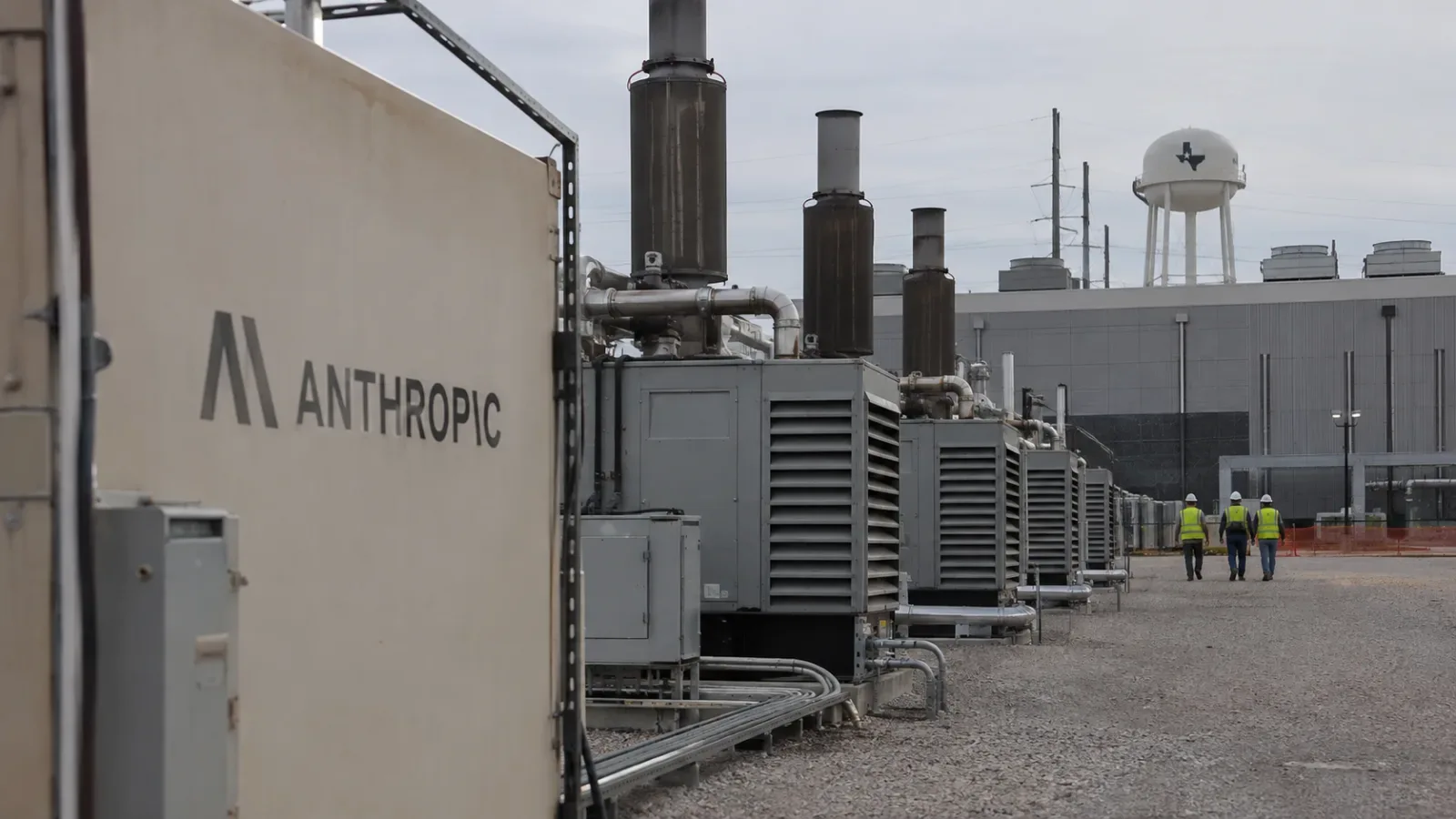
According to the FT, Anthropic has secured purchase commitments for gas generators totaling 1.7GW, at a cost of about $3.4 billion.
2
What it bought is generator orders and installation capacity. The key point is that it has gone a step beyond leaving supply to utilities and has stepped directly into the order in which equipment is secured.
3
What investors watch widens from GPUs and the cloud to power generation equipment, the grid, cooling and power management.

01 What if you buy every GPU and can't switch them on?

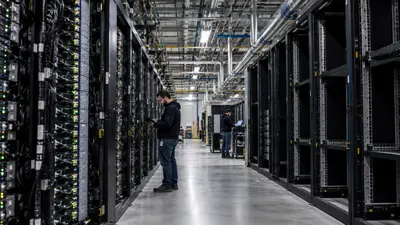
Think of an AI data center as a giant factory. Nvidia GPUs are the core machines. But even when the building is finished and the machines are installed, nothing gets produced until the power comes in.

AI works the same way. Competition so far has centered on GPUs, memory and data center construction. Actual computing, though, depends on one last condition: reliable electricity, delivered when it is needed.

That is where Anthropic reportedly made an interesting choice. Rather than wait for utility supply, it secured a generator purchase commitment of its own.

The finish line for AI infrastructure is not the day servers are installed. It is the day power reaches them and they actually run.

02 The $3.4 billion buys more than generators

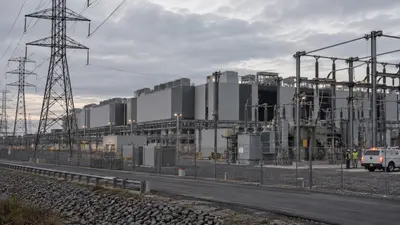
On Nov. 8, the Financial Times reported that Anthropic had secured a commitment to buy gas-fired generators from OnePWR Solutions of Texas. The deal was reportedly agreed in late September.

  • $3.4 billion: reported size of the generator purchase commitment
  • 1.7 GW: nameplate capacity of the generation equipment, which is not the same as the power it would supply around the clock

The nature of the deal matters. Anthropic did not acquire OnePWR. The deal was described as securing rights to generator orders, along with the engineering and construction capacity needed to install them.

Generators are not an off-the-shelf product. Production and installation take time, and suppliers have limited capacity. Locking in a place in an existing delivery queue is therefore a way of buying time.

Reuters said it could not independently confirm the FT report, and that neither company has confirmed it.

What Anthropic appears to be securing is not just ownership of power equipment but control over the time it takes to get the lights on.

03 Where does the AI bottleneck move next?

When GPUs were scarce, the company that secured them first had the advantage. Once GPUs and data centers are in place, a different question arises: who can run them first, and reliably?

What it takes for AI compute to run

  1. GPU procurement (compute hardware)
  2. Data center build-out (space and facilities)
  3. Power supply (actual operation)

If any one of the three slips, the whole start date slips. What matters more than the quantity of equipment is whether the pieces are ready at the same time.

AI companies have mostly depended on utilities' supply schedules. This deal reads as an attempt to reduce that schedule risk by securing generator delivery slots and installation capacity directly.

That does not make utilities irrelevant. Grid connection, supply stability and coordination with existing power systems still matter. What may be changing is that AI companies are moving from being simple buyers of electricity to customers who design how their power is secured.

The next edge may come not only from GPU order volume but from who better controls the date those GPUs can actually run.

04 Where to look beyond Nvidia

If the race for power intensifies, the investor's map changes. AI growth becomes harder to read through GPU sales alone.

The focus so far: companies that secure compute. Nvidia, memory makers, cloud providers and data center builders. The emphasis is on investment that adds AI computing hardware.

Worth watching alongside: companies that make compute run. Power equipment makers such as Caterpillar (CAT), gas turbine and generator components, grid equipment, and cooling and power management companies.

Rising demand for power equipment does not mean every stock in the group earns the same return. The key question is which companies can turn more orders into actual revenue and profit.

Even with generators in hand, fuel supply, installation, cooling and power management all have to be ready. No single company or piece of equipment fully clears the bottleneck in AI infrastructure.

Widen the AI map from the GPU supply chain to the equipment supply chain that completes operation, but keep demand growth and corporate profit growth separate.
Does this mean Anthropic will supply electricity directly in place of a utility?
  • That can't be said for certain. The core of this deal is securing generator purchase commitments and installation capacity. Connection to the existing grid and stable supply matter separately.
Is 1.7GW power that can always be supplied to a data center?
  • No. 1.7GW is the nameplate capacity of the generation equipment. The power that can actually be supplied may vary depending on installation status, operating conditions and other factors.
Is this deal immediately good news for Caterpillar (CAT) stock?
  • It is a reason to look at power equipment companies, but Anthropic's deal size alone doesn't let you calculate any increase in CAT's revenue or profit. You need to look separately at supply relationships by equipment type and at how results actually reflect them.
Will AI companies buy fewer GPUs and invest more in generators from now on?
  • They are not substitute investments. If GPUs perform the computing, power generation equipment is the condition for running them. The AI industry has to line up both areas together.

What to watch

Generator deliveries and actual installation speedThis is the indicator for whether purchase commitments turn into equipment that can actually run. The faster the schedule, the greater the value of the direct-securing strategy.
Grid connection and on-site power supplyThis shows how far securing independent generation equipment makes up for delays in the existing grid.
Equipment makers' orders and profitabilityWatch whether rising orders at makers of generation equipment, components, cooling and power management translate into actual gains in revenue and profit.
Anthropic's generator commitment suggests that when the power comes on may now matter as much as how many GPUs a company holds.

Insight Times Editorial Desk
More by topic

Starting with this story's topics, then what readers are following now

Investor psychology, decision-making and books on investing

Data Centers

This story's topic102 storiesSee all →

A building that houses servers and networking gear and supplies them with powe…

Nvidia and Palantir Put AI Inside the Supply Chain - The Real Shift Is That It's Learning Judgment

A single Vera Rubin rack holds 1.3 million parts. The real breakthrough in Nvidia and Palantir's new supply chain AI isn't automating that complexity, it's capturing the judgment calls that used to live only in planners' heads.

Tech

AI ran out of memory before it ran out of GPUs

The HBM bottleneck is spreading into DRAM prices, server costs and the price of the next laptop or phone.

Tech

Is Space Cooler for AI? Why Musk Wants Data Centers in Orbit
The next limit on AI may be power and cooling, not GPUs. Elon Musk is looking to Earth orbit for an answer, but the test is cost per hour of compute.

Tech

Musk Sees the Next Phase of AI Infrastructure: Who Can Switch GPUs On, Fast

If neoclouds struggle under financial pressure, AI demand may not shrink. It may simply favor the few operators with the capital and execution to serve it, a shift that could matter for SpaceX and Tesla.

Tech

White House Swaps AI for "SI." The Real Investment Signal Is Infrastructure, Not the Name

An executive order renames artificial intelligence "Super Intelligence" and six frontier labs sign a voluntary safety accord. What investors should watch is the data center, power, nuclear and chip policy now gathered under one national-competitiveness frame.

Tech

The Cheaper Tokens Get, the Bigger Your AI Bill Gets

As AI shifts from training to inference, the token is becoming an industrial commodity. Falling prices are not cutting demand, because agents and automation consume tokens at a scale no human chat session ever did.

Investing

Marvell's $115 Billion Lumentum Deal: Is AI's Next Bottleneck Light, Not Chips?

Marvell's purchase of Lumentum points to a contest beyond GPU speed, in data transfer and power efficiency. Whether the price is right is not yet confirmed.

Tech

NVDA

This story's topic96 storiesSee all →

Who Hits $1 Trillion Next: Reading AMD and ASML by Different Rules

One company is chasing Nvidia's GPU empire. The other sells the machine that draws the chips for every advanced chipmaker, including Nvidia. Both get floated as 2028 trillion-dollar candidates, but the numbers investors need to watch are entirely different.

Investing

GPU

This story's topic69 storiesSee all →

A chip built to draw graphics, whose ability to run thousands of identical cal…

The Next AI Chip Race Is About How Chips Connect

Applied Materials will lift its stake in Dutch equipment maker BESI from about 9% to 20%. The bet is less about control than about a new way to link chips.

Tech

Musk Borrowed $40 Billion for GPUs. He Also Warned AI Cloud Firms Could Go Bust

SpaceX's giant financing shows a new dividing line in AI: who borrows matters as much as how much is spent. Firms with other revenue may outlast those that rent out GPUs alone.

Tech

US AI Data Centers Are Headed for 90GW. Gigawatts Now Matter More Than Dollars

Goldman Sachs expects US data center capacity to grow from 64GW at the end of 2026 to 90GW at the end of 2027. The AI race is moving from buying GPUs to building power plants and transmission lines alongside them.

Tech

The AI Bubble Question Has Changed: By Late 2026, It's ROIC Over GPUs

There is no sign yet that AI investment is slowing. If anything, hyperscaler spending forecasts keep climbing. But as the scale of that capital has grown, the market's question has shifted from "is AI growing" to "when, and how much, does this capital come back as cash."

Tech

2027 Investing Needs Alignment, Not Prediction

A new investing book argues the hard part was never picking the next winner. It's staying aligned with where value and bottlenecks are moving while keeping old human weaknesses in check.

Investor Mind

Why Nebius Is Keeping Some 2027 AI Capacity Off the Shelf

Nebius mixes long-term contracts, short-term premiums and auctions. Holding back capacity pays only if the servers stay busy, and it is not yet clear the pricing will last.

Tech

Amazon Goes After Nvidia's Strongest Moat, and It Is Software, Not GPUs

Amazon's open-source TorchNeuron aims to let existing AI code run on its Trainium chips. The contest comes down to the total cost of AI compute and the return on Amazon's $220 billion in annual capital spending.

Tech

HBM

77 storiesSee all →

Memory stacked next to the GPU.

Memory Is Still Short, but Less Short: Checking for the Peak This Week

Citi trimmed its 2027 DRAM and NAND shortage forecasts together. Server pricing remains strong, while consumer markets show weakness. This week's numbers show where the memory boom may peak.

Investing

The Real ASML Number Isn't the 3% Pop, It's the 30% Capacity Hike

ASML's rally isn't just an AI trade. Customers are already locking in 2027 tool slots, and ASML is raising Low-NA EUV capacity by roughly 30% to keep up.

Investing

A 3x P/E is not a discount. It is a verdict on how long memory profits last

Nomura's buy case on Samsung Electronics and SK Hynix does not stop at higher memory prices. It argues that if AI has turned memory from a cyclical component into strategic infrastructure, the formula the market uses to value both companies has to change too.

Investing

2027 Isn't the End: Citi's Case for a Memory Supercycle Running to 2031

Citi says the memory shortage timeline is stretching again. If AI shifts from "train once" models to continual learning, HBM, server DRAM and enterprise SSDs could all fall short at the same time.

Tech

Has Memory Peaked? Prices Are Cooling, but the Shortage Looks Set to Run to 2028

Price growth has slowed and consumer demand is already breaking. Server and HBM supply remains short, and Micron says more than 75% of its 2027 volume is already committed to customers.

Tech

AI Chip Peak Check: Demand Still Rising, Risk Building in 2027-2029 Supply and Funding

DRAM and NAND contract prices are still climbing and HBM suppliers hold the edge. Power shortages, AI financing costs and simultaneous memory expansion are the risks for later years.

Investing

AI Chips Haven't Peaked. The Real Risk Sits in 2028 Supply

HBM and server DRAM shortages are now spreading into enterprise SSDs. The question isn't today's strength, it's how much new capacity these prices are pulling in and when it lands.

Investing