Why Is SpaceX Seeking Access to 80,000 US Cell Sites?
SpaceX is pairing its satellite network with low-band spectrum and ground towers to become a fourth national carrier. TD Cowen says a nationwide network could cost more than $80 billion.
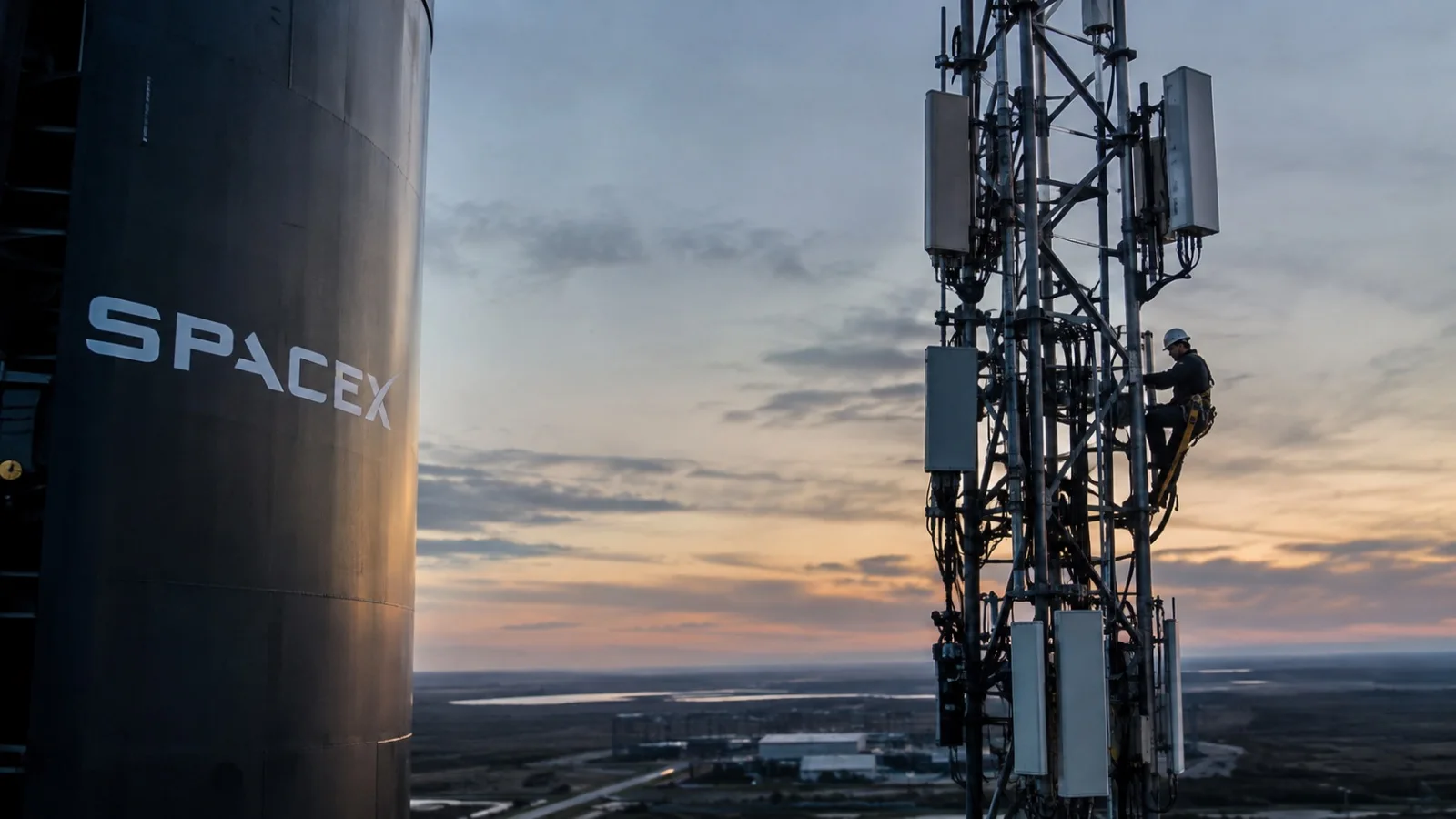
SpaceX is giving shape to a bid to become the fourth national wireless carrier in the US. The strategy combines its satellite network with low-band spectrum and ground-based cell sites. But building a nationwide mobile network could require more than $80 billion. Can a technical edge turn into a profitable business?
Why a satellite internet company wants ground towers
Reuters, citing a Bloomberg report on Oct. 22, said SpaceX is negotiating with telecom infrastructure companies for access to at least 80,000 cell sites across the US. Crown Castle, which operates about 40,000 US towers, was named as one of the companies in talks.
The Wireless Infrastructure Association (WIA) says about 158,500 dedicated cell towers operated in the US in 2025. The 80,000 sites SpaceX is seeking equal about 50.5% of that figure.
But 80,000 is the target scale of access rights under negotiation, not a count of sites SpaceX has secured. Leasing existing facilities is also different from building new ones. The final size and terms of any contract have not been disclosed.
Key chart | Scale of US mobile infrastructure
| Item | Figure |
|---|---|
| Access-rights negotiation target | 80,000+ sites |
| Share of US dedicated towers | 50.5% (simple comparison) |
| Total US dedicated towers | 158,500 |
Sources: Reuters, Wireless Infrastructure Association. Cell sites and dedicated towers are not counted in exactly the same way, so the 50.5% is a rough comparison meant to convey scale.
The point is to complement satellites, not replace them
SpaceX's Starlink uses low-Earth-orbit satellites to reach places terrestrial networks struggle to cover. But satellites alone have difficulty efficiently serving the dense data demand of many smartphones in cities and inside buildings.
Ground towers have the opposite strength. They can reuse spectrum in crowded areas and concentrate capacity there.
The model SpaceX is pursuing looks more like a division of labor between the two networks.
| Satellite network | Terrestrial mobile network | |
|---|---|---|
| Strength | Wide-area connectivity | High capacity by area |
| Best suited to | Remote areas, open water, dead zones | Cities, indoors, dense areas |
| Key constraint | Limited capacity, indoor reception | Cell sites and operating costs |
| Combined effect | Wider service area | Better quality and capacity |
Spectrum is the other pillar. On Oct. 8, SpaceX announced a definitive agreement to acquire Grain Management's nationwide 800 MHz spectrum holdings in the US. The deal needs approval from the Federal Communications Commission (FCC) to close.
Low-band spectrum such as 800 MHz covers relatively wide areas and carries signals into buildings well. But holding low-band spectrum does not by itself guarantee high data capacity.
$80 billion: the economics are harder than the technology
TD Cowen estimates that building a nationwide terrestrial mobile network could take more than $80 billion. That is not a budget SpaceX has committed to. Actual costs could differ depending on how many existing sites are leased, how fast the build goes and how work is split with the satellite network.
Still, it is clear why wireless is a hard industry. Spectrum alone does not make a business, and gaining access to towers does not complete a network. It also takes equipment, power, fiber connections, maintenance and customer support.
There is an upside. Once customers are secured, subscriptions generate recurring monthly revenue. As the subscriber base grows, the fixed costs of the network already built can be spread across more users.
In the end, the key question is how much it costs to deliver the same quality and capacity.
Who gains, and who carries the burden?
If SpaceX establishes itself as a fourth national carrier, Verizon, AT&T and T-Mobile could face new competitive pressure. Price competition or customer losses could affect their average revenue per user (ARPU) and margins.
Tower operators such as Crown Castle and American Tower, on the other hand, could see new long-term leasing demand. After the report, shares of the major US carriers fell about 4.2% to 5% in after-hours trading.
Still, the competitive landscape is unlikely to flip overnight. Incumbent carriers already have national networks, customer bases, distribution and operating experience. SpaceX would be a new customer that needs to use incumbents' infrastructure, and at the same time a potential long-term competitor.
Insight Times Editorial Desk