Why AI Data Centers Are Starting to Make Their Own Electricity
The GPUs are secured, but the power is not. In the AI data center race, how fast a builder gets electricity is becoming a bigger variable than how cheaply it buys it.
After GPUs, the bottleneck is the grid
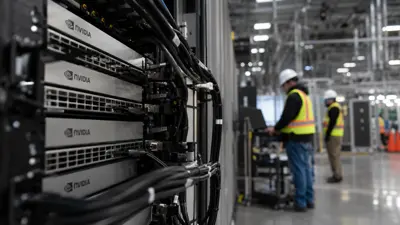
An AI data center needs more than tens of thousands of GPUs. It also needs cooling equipment and power conversion systems. The problem: a finished data center cannot open for service without enough electricity.
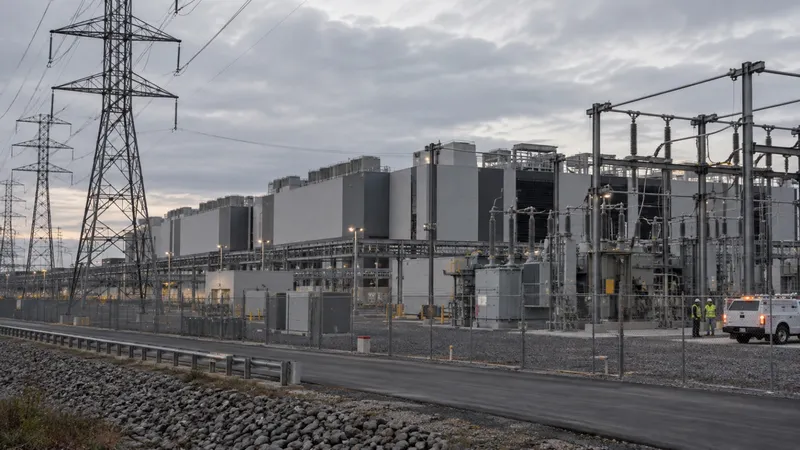
Building more power plants does not solve it right away. Transmission lines, substations and grid interconnection facilities must be secured as well. In the US, that grid connection can take three to six years.
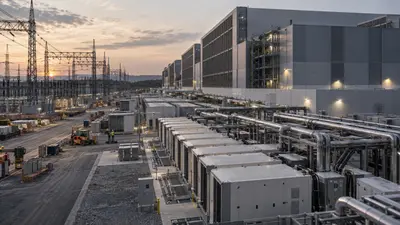
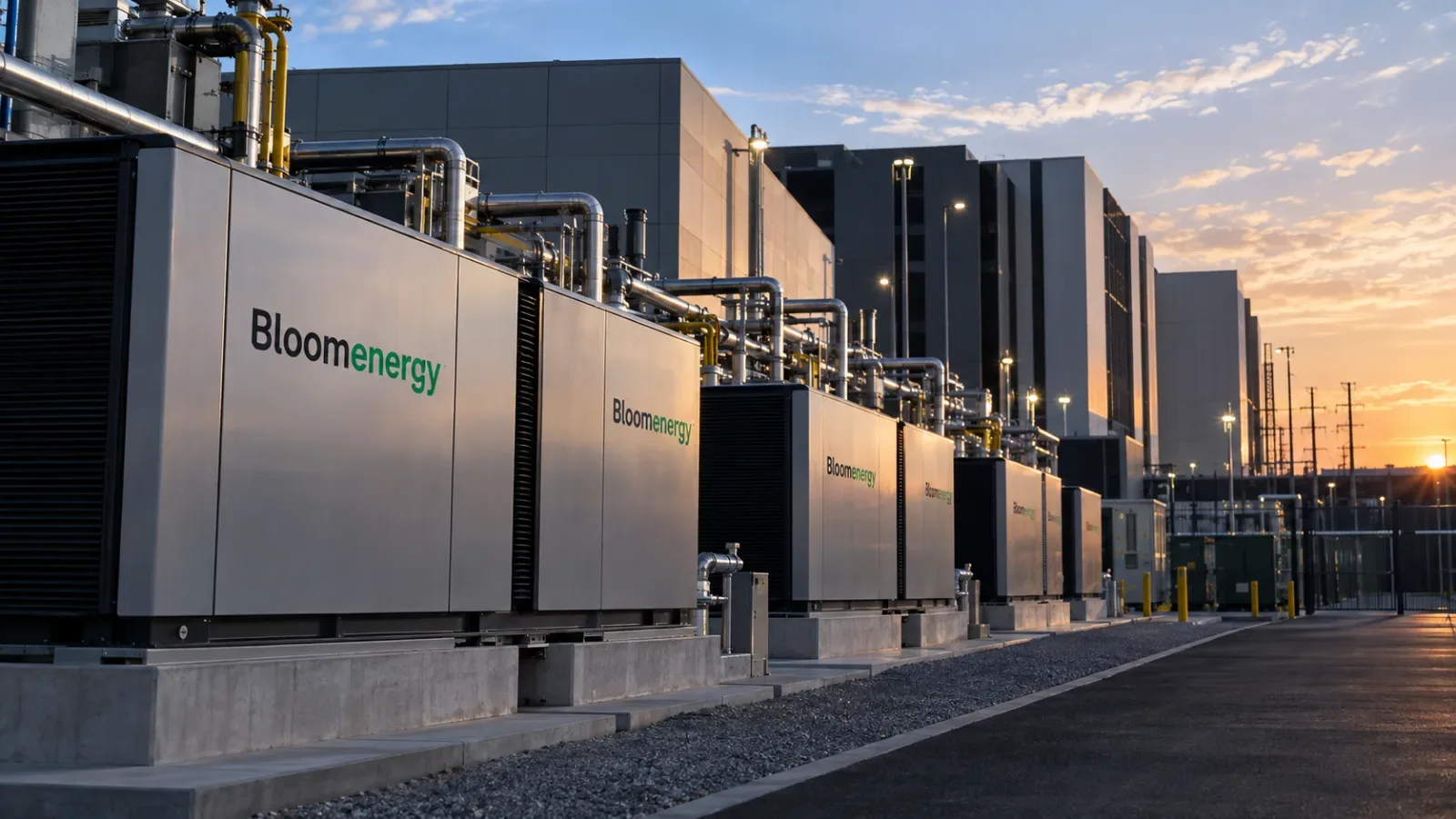
Hence the alternative: on-site generation. Instead of receiving power from far away, the operator produces electricity at or near the data center site.
Fuel cells convert the chemical energy in natural gas or hydrogen into electricity without combustion. They can be installed in modules next to a large data center and, under the right conditions, can deliver power relatively quickly.
Natural gas fuel cells do emit carbon dioxide, though. They also depend on gas supply, installation permits and power conversion equipment, so they are not a faster fix than the grid in every location.
A $30 billion market. Is there enough capacity?
Data center fuel cell market outlook
- 2025: $2.8 billion
- 2030 (forecast): $30 billion
- Growth multiple over five years: 10.7x
- Compound annual growth rate: about 60.7%
Estimates and forecasts by Rystad Energy. A future market size is not confirmed revenue.
Market demand and supply capacity grow at different speeds. Orders and framework agreements across the industry total about 9 GW, but current annual production capacity is estimated at about 1.8 GW. Rystad expects annual capacity of only about 4 GW in 2030.
That is both a demand opportunity and a delivery risk. Notably, the 9 GW includes framework agreements, not only firm orders. It should not all be converted into revenue.
Bloom Energy: growth starts to reach the bottom line
Bloom Energy, a US fuel cell maker, reported third-quarter 2026 revenue of $1,235.84 million, up 138.1% from a year earlier.
| GAAP basis | Q3 2025 | Q3 2026 |
|---|---|---|
| Revenue | $519.05 million | $1,235.84 million |
| Gross margin | 29.2% | 33.8% |
| Operating margin | 1.5% | 18.2% |
| Net income (common shareholders) | -$23.09 million | $250.27 million |
Gross margin rose 4.6 percentage points, and operating margin improved 16.7 points. The company also raised its 2026 full-year revenue guidance to $4.4 billion to $4.6 billion.
What matters is not just the growth rate but that profitability improved alongside it. Whether those margins hold as capacity expands remains to be seen.
Why would Oracle want up to 2.8 GW?
Oracle signed a framework agreement with Bloom Energy for up to 2.8 GW of fuel cell supply. Of that, 1.2 GW is under contract and being deployed, and the remaining 1.6 GW is additional capacity Oracle can choose to take.
Oracle is not buying only generating equipment. It is buying control over when power arrives and when its AI data centers can run.
Consider two companies with the same GPUs. One gets power immediately. The other waits three years. The timing of their AI service revenue and the payback period on their invested capital could differ sharply.
That is why fuel cell economics are hard to judge on electricity prices alone. If the profit from bringing a data center into commercial operation earlier outweighs a somewhat higher cost per unit of power, self-generation can be a rational choice.
Nothing guarantees that the next bottleneck in the AI buildout is chips. Without electricity, GPUs generate no revenue. But investors should keep one distinction clear: rising power demand and the return on investment of the companies that meet that demand are separate questions.
Insight Times Editorial Desk