China Can't Buy Nvidia Chips, So It Rents Them. Washington Is Eyeing That Route Next
Chinese firms are reportedly seeking overseas GPU capacity as Congress weighs a bill covering remote access. For Nvidia, the path from demand to revenue may matter more than the size of demand.
The 20-second read
If you can't buy a car, you can rent one. You don't need to own a vehicle to drive.
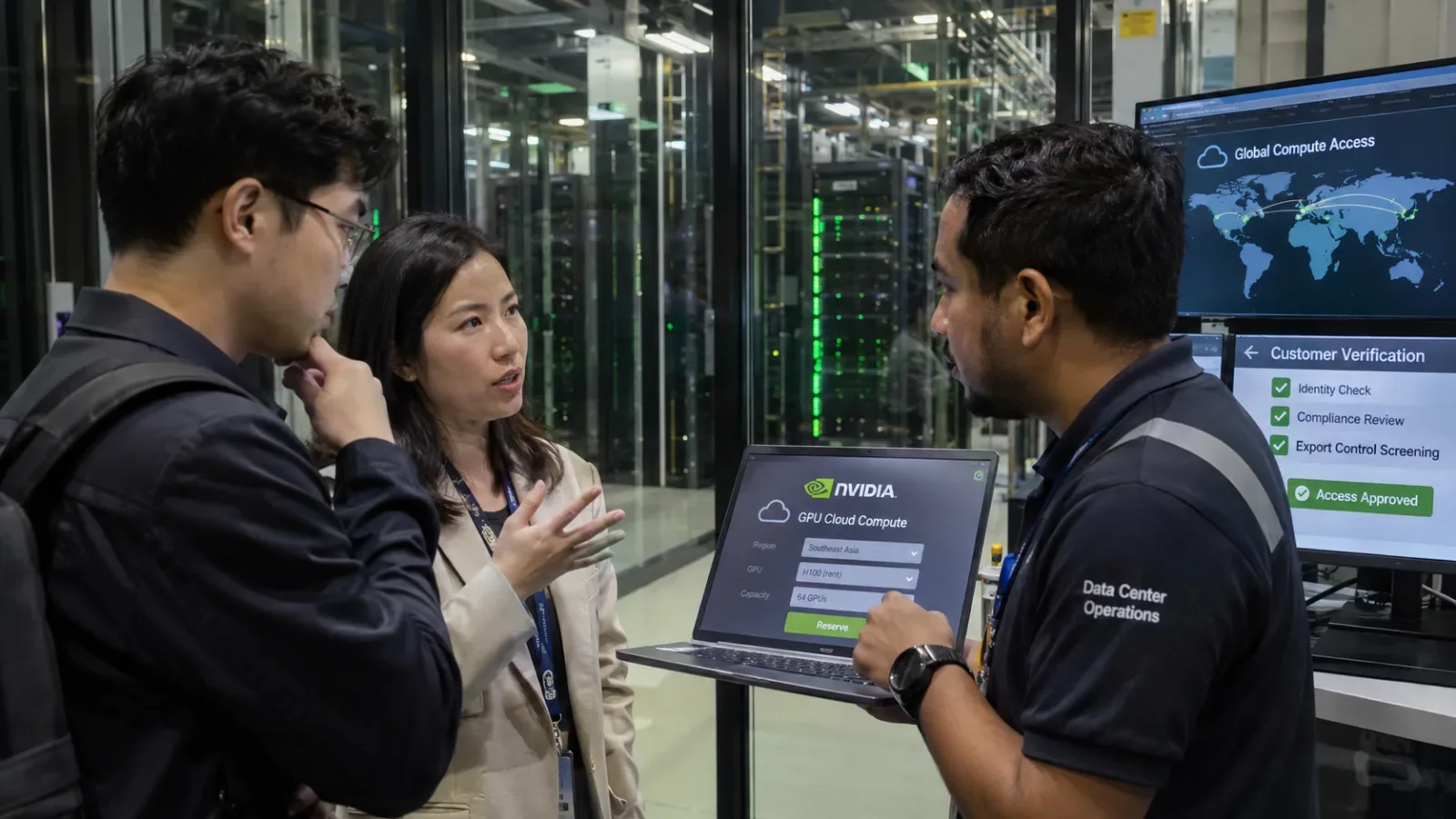
AI chips work in a similar way. A company that can't import Nvidia GPUs directly can still rent GPUs installed in overseas data centers and run AI models over the internet. That is the channel Washington is now examining.
01 What Chinese firms want is not the chip
According to a Reuters exclusive on Nov. 12, large Chinese cloud providers and smaller AI labs have been asking data center operators in Southeast Asia and elsewhere about Nvidia GPU capacity. Three people familiar with the matter described the activity. Contract sizes and values were not disclosed.
What these firms want to buy is not the chip itself but the time and ability to use it. US export controls limit the direct import of semiconductors, but remote use through an overseas cloud is a separate control question.
02 Washington now wants to look at the "renter"
The Remote Access Security Act (RASA), advanced in Congress, is a legislative effort to control remote access to high-performance computing power located abroad. The House passed the bill in January 2026 by a vote of 369 to 22. Senate consideration is still pending.
Think of it this way. Until now, the US restricted car sales. The bill would add a rule telling rental companies to "check who is driving." That helps explain why Chinese firms are moving to lock in overseas GPU access before rules tighten.

The shift in one view:
- Existing controls: limits on buying chips directly, meaning the route that brings GPUs into China.
- Workaround: renting GPUs overseas and using them remotely from data centers abroad.
- Proposed additional rules: controls on users and access, meaning who is using the compute.
03 Nvidia, GPU clouds and Chinese firms
The change could produce different outcomes inside the same GPU market.
- Nvidia (NVDA): The indirect channel through which Chinese AI demand reached Nvidia via overseas GPU rentals may narrow. Even when demand exists, the route to revenue is shaped by policy.
- GPU cloud providers: Rental demand ahead of the rules could be pulled forward. If rules tighten, the cost of verifying customer identity and use, along with contract-related risk, could rise.
- Chinese AI companies: The harder overseas compute becomes to reach, the stronger the strategic case for their own chips and domestic computing infrastructure.
04 What long-term investors may want to watch
For investors, the short-term rise in rental inquiries matters less than whether the institutional channel for that demand can keep operating.
- RASA in the Senate: whether the bill actually advances, and how its scope and effective dates are set.
- Follow-up from the Commerce Department: what control standards it applies to remote GPU use.
- GPU cloud customer-verification policies: whether checking user identity and purpose becomes a new contract condition.
- Nvidia's regional revenue commentary: how the company describes China-related demand and changes in the overseas cloud channel.
- One way is to rent, over the internet, Nvidia GPUs installed in overseas data centers.
- According to Reuters, Chinese cloud providers and AI labs have been asking operators in Southeast Asia and elsewhere about computing capacity.
- It stands for the Remote Access Security Act, a bill that aims to control remote access to high-performance computing power located overseas.
- The House passed it in January 2026 with 369 votes in favor and 22 against. Senate review is still pending.
- That has not been confirmed.
- The report describes activity relayed by three people, and the size and value of any contracts have not been disclosed.
- The channel through which Chinese demand indirectly continues via overseas rentals could narrow.
- However, the actual impact on revenue could vary depending on the content of the rules and when they take effect.
- Rather than the rise in rental inquiries, one approach is to look at whether there is an institutional channel through which that demand can keep being traded.
- Things to check include the Senate's handling of RASA, follow-up steps by the US Commerce Department, GPU cloud customer verification policies, and how Nvidia explains its revenue by region.
What to watch
Insight Times Editorial Desk