China Wants to Replace Nvidia, but Its Tech Giants Ordered $35 Billion of Its Chips

A huge order for the RTX PRO 5500 shows where AI inference demand stands, and what Nvidia can and cannot turn into revenue.
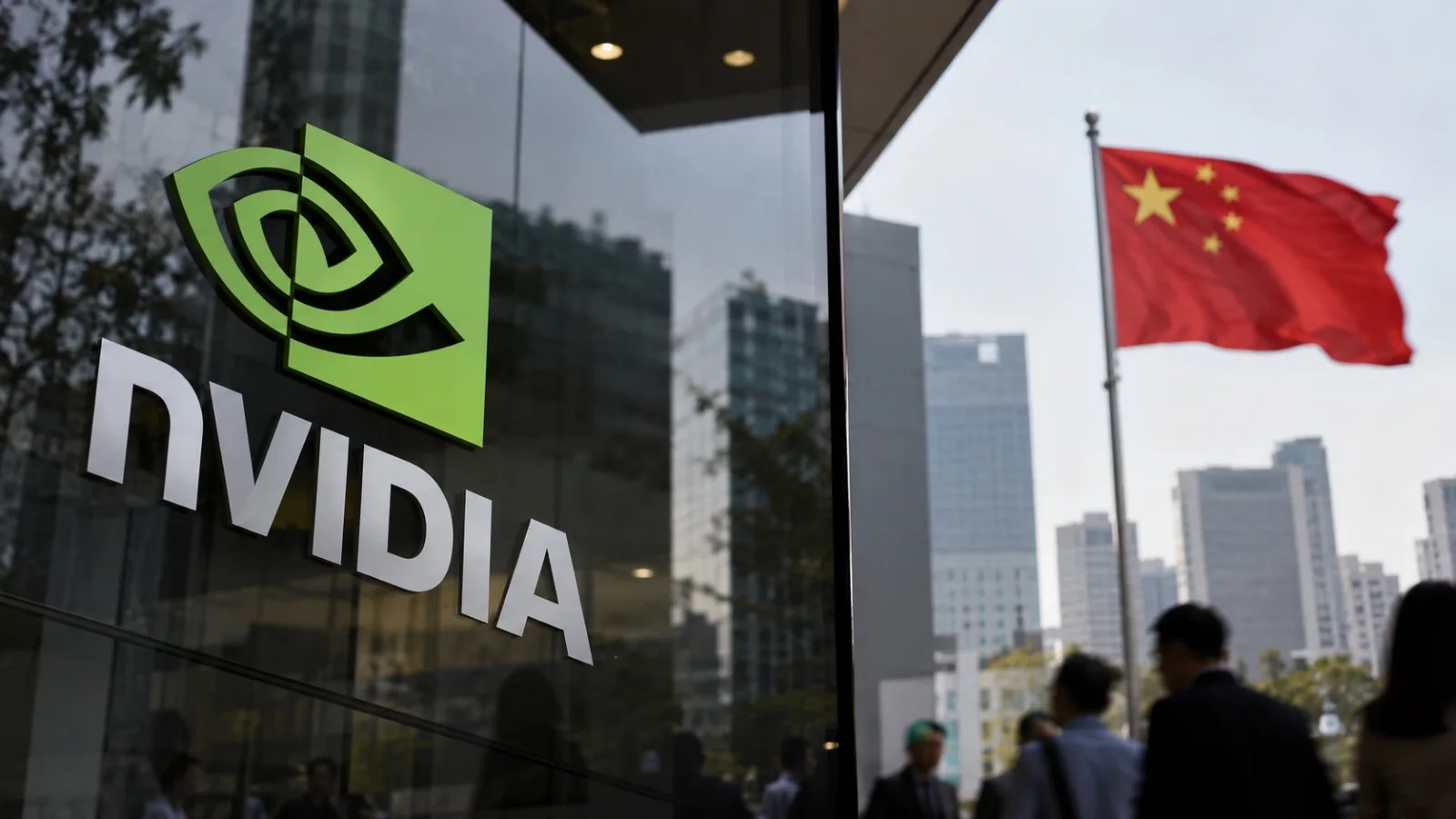
China is nurturing Huawei and other domestic chipmakers to cut its reliance on US semiconductors. Yet its leading tech companies are lining up to secure Nvidia chips.

According to Reuters on Oct. 20, ByteDance, Alibaba and Tencent ordered more than 3 million Nvidia RTX PRO 5500 graphics cards, worth $35 billion at list prices.

The product is not Nvidia's top AI chip. It is a lower-performance part that meets US export rules.

Why would Chinese companies want it in such volume? The answer says something about how AI chip demand is structured.

Orders of 6 million, production plans of up to 3 million

RTX PRO 5500 demand vs. supply plan

  • Total Chinese orders: more than 6 million units
  • Global production ceiling in 2027: up to about 3 million units

The two figures are a floor for orders and a ceiling for production plans. Neither is a confirmed shipment count. Source: Reuters.

ItemFigure
Main buyersByteDance, Alibaba, Tencent
Orders from the threeMore than 3 million units
List-price value of ordersMore than $35 billion
Price per unitAbout $11,400
Total Chinese ordersMore than 6 million units
Global production plan, 2027Up to about 3 million units
Sample supply planDecember 2026
Full-scale supply planQ1 2027

There are also reports that Nvidia told some customers it could supply only 5% to 10% of requested volumes.

That ratio cannot be applied across all orders. The production plan is global, and China's actual allocation has not been confirmed. An order for 6 million units should not be read as 3 million sales, and a $35 billion order should not be read as $35 billion in revenue.

Why does China want a GPU that isn't the best?

AI chips do two broad jobs.

The first is training: teaching a huge AI model with data. Raw compute and the ability to link large numbers of GPUs matter most.

The second is inference: the trained model answering user questions, analyzing documents or generating video.

Training is an investment to develop a model. Inference is a cost that recurs as long as the service runs.

The difference matters most for companies with vast user bases and cloud businesses, such as ByteDance, Alibaba and Tencent.

Not every inference job needs a top-tier GPU. Depending on the task, it can be cheaper to run several less expensive chips.

That does not mean inference is always light. Large language models, long context windows, fast responses and real-time multimodal services need substantial compute and memory bandwidth.

What an AI company must ultimately calculate is not the peak performance of a single GPU but the total cost of handling one user request (cost per token or cost per request).

The real economics of the RTX PRO 5500 depend not only on its purchase price but on throughput, memory performance, power use and software optimization.

Export controls blocked Nvidia, but not the demand

The US restricts China's access to cutting-edge AI chips.

High-end data center GPUs such as Nvidia's B300 face sales limits in China, and the H200 is subject to individual export licenses. The RTX PRO 5500, by contrast, was reported to be a workstation product that complies with current rules.

That gives Chinese companies two options: use domestic products that still trail in performance and software ecosystem, or buy the Nvidia products they can get.

In practice, companies need not choose one. They can increase spending on Chinese chips while also securing Nvidia's.

It is hard to conclude from this that US export controls have failed. The fact that Chinese companies cannot get the products they want in the quantities they want is itself evidence the controls are working.

Nvidia has also said in an SEC filing that, because of approval issues in both the US and China, it is effectively unable to compete in China's data center computing market.

Strong demand for workstation GPUs and constraints on the China data center business can exist at the same time.

Does Nvidia gain $35 billion in revenue?

There is a long way to go.

From order to revenue

  1. Order demand: the customer's intent to buy
  2. Supply allocation: securing production capacity
  3. Export and delivery: meeting regulations and handing over the product
  4. Revenue recognition: accounting under contract terms

The $35 billion is a list-price figure for the first step. It does not mean the other steps are complete.

To book revenue, Nvidia must build the GPUs and be able to supply them to Chinese customers. Delivery could be affected if export licenses or Chinese government policy change.

Nvidia must also allocate capacity to its next-generation Rubin platform.

How resources are divided across TSMC's advanced production capacity, packaging, memory and final assembly could change the supply of RTX PRO 5500 units.

This news does not mean Nvidia earned $35 billion in China. It is closer to evidence that large demand still exists in China, while whether it can be converted into revenue is a separate question.

Takeaway

China wants to run its AI industry without Nvidia one day. Running today's AI services may still require Nvidia.

The key point is less the $35 billion figure than the fact that AI chip competition is widening from who builds the highest-performance chip to who can supply the needed computing power, and how economically.

The $35 billion is an order size, not revenue, and China's interest likely reflects the cost of running AI services more than peak performance.

Insight Times Editorial Desk

More by topic

Starting with this story's topics, then what readers are following now

Investor psychology, decision-making and books on investing

Chinese Economy

This story's topic21 storiesSee all →

The Real ASML Number Isn't the 3% Pop, It's the 30% Capacity Hike

ASML's rally isn't just an AI trade. Customers are already locking in 2027 tool slots, and ASML is raising Low-NA EUV capacity by roughly 30% to keep up.

Investing

China's AI Labs Went Open Source Because They Had to, Not Because They Wanted To

A GPU shortfall pushed Chinese AI labs toward efficiency and open weights, and that constraint is now reshaping the global competition over who controls AI's basic infrastructure.

Tech

DeepSeek's $15 Billion Raise: Model Makers May Feel It Before Nvidia Does

China's DeepSeek is closing a round about twice its original target. For US investors, the question is less the size of the check than where the money goes and whose profits it could erode.

Tech

AI's Next Bottleneck Is Power, Not GPUs

Jensen Huang and Elon Musk sent the same warning in Washington. The AI race is widening from building better models to supplying power and chips at industrial scale.

Tech

Memory Chip Supercycle: Not at Peak Yet, But 5 of 6 Warning Signs Are Flashing

Memory prices are still climbing, but the pace is slowing and PC and smartphone demand is starting to crack under the weight of higher chip costs. This looks less like a price peak and more like a profit plateau building toward the next supply cycle.

Investing

Lam Research Falls 12%: The Problem Is the Timing of AI Growth, Not Its End

Revenue up 54%, an operating margin above 40% and $3.2 billion in free cash flow were not enough. The selloff likely reflects worry that revenue arrives later than hoped.

Investing

Weekly Check: The AI Bull Market Isn't Over, It's Just Gotten Harder

A 5% 10-year yield, 470 gigawatts stacked up in Texas, Chinese DRAM, and whether data centers actually get switched on are starting to decide who wins the AI trade through 2027.

Tech

HBM

77 storiesSee all →

Memory stacked next to the GPU.

Memory Is Still Short, but Less Short: Checking for the Peak This Week

Citi trimmed its 2027 DRAM and NAND shortage forecasts together. Server pricing remains strong, while consumer markets show weakness. This week's numbers show where the memory boom may peak.

Investing

A 3x P/E is not a discount. It is a verdict on how long memory profits last

Nomura's buy case on Samsung Electronics and SK Hynix does not stop at higher memory prices. It argues that if AI has turned memory from a cyclical component into strategic infrastructure, the formula the market uses to value both companies has to change too.

Investing

2027 Isn't the End: Citi's Case for a Memory Supercycle Running to 2031

Citi says the memory shortage timeline is stretching again. If AI shifts from "train once" models to continual learning, HBM, server DRAM and enterprise SSDs could all fall short at the same time.

Tech

AI ran out of memory before it ran out of GPUs

The HBM bottleneck is spreading into DRAM prices, server costs and the price of the next laptop or phone.

Tech

Has Memory Peaked? Prices Are Cooling, but the Shortage Looks Set to Run to 2028

Price growth has slowed and consumer demand is already breaking. Server and HBM supply remains short, and Micron says more than 75% of its 2027 volume is already committed to customers.

Tech

AI Chips Haven't Peaked. The Real Risk Sits in 2028 Supply

HBM and server DRAM shortages are now spreading into enterprise SSDs. The question isn't today's strength, it's how much new capacity these prices are pulling in and when it lands.

Investing

AI Chip Peak Check: Demand Still Rising, Risk Building in 2027-2029 Supply and Funding

DRAM and NAND contract prices are still climbing and HBM suppliers hold the edge. Power shortages, AI financing costs and simultaneous memory expansion are the risks for later years.

Investing

A building that houses servers and networking gear and supplies them with powe…

Nvidia and Palantir Put AI Inside the Supply Chain - The Real Shift Is That It's Learning Judgment

A single Vera Rubin rack holds 1.3 million parts. The real breakthrough in Nvidia and Palantir's new supply chain AI isn't automating that complexity, it's capturing the judgment calls that used to live only in planners' heads.

Tech

Is Space Cooler for AI? Why Musk Wants Data Centers in Orbit

The next limit on AI may be power and cooling, not GPUs. Elon Musk is looking to Earth orbit for an answer, but the test is cost per hour of compute.

Tech

Musk Sees the Next Phase of AI Infrastructure: Who Can Switch GPUs On, Fast

If neoclouds struggle under financial pressure, AI demand may not shrink. It may simply favor the few operators with the capital and execution to serve it, a shift that could matter for SpaceX and Tesla.

Tech

White House Swaps AI for "SI." The Real Investment Signal Is Infrastructure, Not the Name

An executive order renames artificial intelligence "Super Intelligence" and six frontier labs sign a voluntary safety accord. What investors should watch is the data center, power, nuclear and chip policy now gathered under one national-competitiveness frame.

Tech

The Cheaper Tokens Get, the Bigger Your AI Bill Gets

As AI shifts from training to inference, the token is becoming an industrial commodity. Falling prices are not cutting demand, because agents and automation consume tokens at a scale no human chat session ever did.

Investing

Marvell's $115 Billion Lumentum Deal: Is AI's Next Bottleneck Light, Not Chips?

Marvell's purchase of Lumentum points to a contest beyond GPU speed, in data transfer and power efficiency. Whether the price is right is not yet confirmed.

Tech

Workers in hard hats beside a communications equipment cabin, with a Starship rocket on its launch tower at dusk in the background

SpaceX Forecast at About $730 Billion in 2028 Revenue: The Bigger Opportunity Musk Sees

Sequoia Capital made a bold forecast, and Elon Musk replied, "I think we can do better." The future SpaceX is looking at is far bigger than the rocket launch business. The plan is to link satellite communications, AI data centers and orbital computing into one giant business.

TechEXPLAIN

NVDA

97 storiesSee all →

Who Hits $1 Trillion Next: Reading AMD and ASML by Different Rules

One company is chasing Nvidia's GPU empire. The other sells the machine that draws the chips for every advanced chipmaker, including Nvidia. Both get floated as 2028 trillion-dollar candidates, but the numbers investors need to watch are entirely different.

Investing

Box Shows AI Its Manuals, and the AI Starts Redesigning the Workflow

Box Architect, built with NVIDIA, moves AI from reading documents to designing how work gets done. It has not yet reached beta, so the real-world payoff remains to be seen.

Tech

Dark navy cover. Flow diagram: Nvidia to Nscale (credit guarantee, in talks) to Anthropic (~$45B compute lease signed in August plus a separate ~$45B, ~460MW deal in talks). Title: Why Would Nvidia Back a Customer's Loan?

Why Would Nvidia Guarantee Its Customers' Data Center Loans?

Nvidia is reportedly in talks to back financing for Nscale's West Virginia data center. Nothing is signed, and the terms are not public.

Tech

Before Robots Sell, Chips Sell First: Following the Money in the Humanoid Race

Billions of dollars are moving before humanoid robots reach mass sales. Compute suppliers may see revenue first, but that does not guarantee stock returns.

Tech

Tech Selloff: Is the Bull Market Over? Wall Street's Four-Year Chart Says Not Yet

The uptrend has survived five double-digit pullbacks in four years. This time, AI companies' debt and cash flow are the new variables.

Investing

The AI Bubble Question Has Changed: By Late 2026, It's ROIC Over GPUs

There is no sign yet that AI investment is slowing. If anything, hyperscaler spending forecasts keep climbing. But as the scale of that capital has grown, the market's question has shifted from "is AI growing" to "when, and how much, does this capital come back as cash."

Tech

2027 Investing Needs Alignment, Not Prediction

A new investing book argues the hard part was never picking the next winner. It's staying aligned with where value and bottlenecks are moving while keeping old human weaknesses in check.

Investor Mind