Nvidia Slides After Huang Exit, but the AI Spending Data Hasn't Cracked
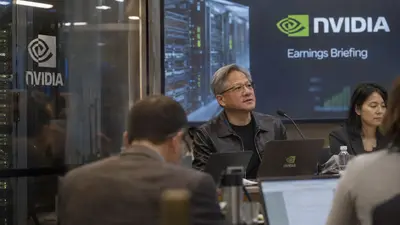
Nvidia fell about 12.75% in a week after Jensen Huang's immediate resignation, while the S&P 500 rose. The numbers so far point to a leadership risk at one company, not a halt in AI investment.
The 20-second read
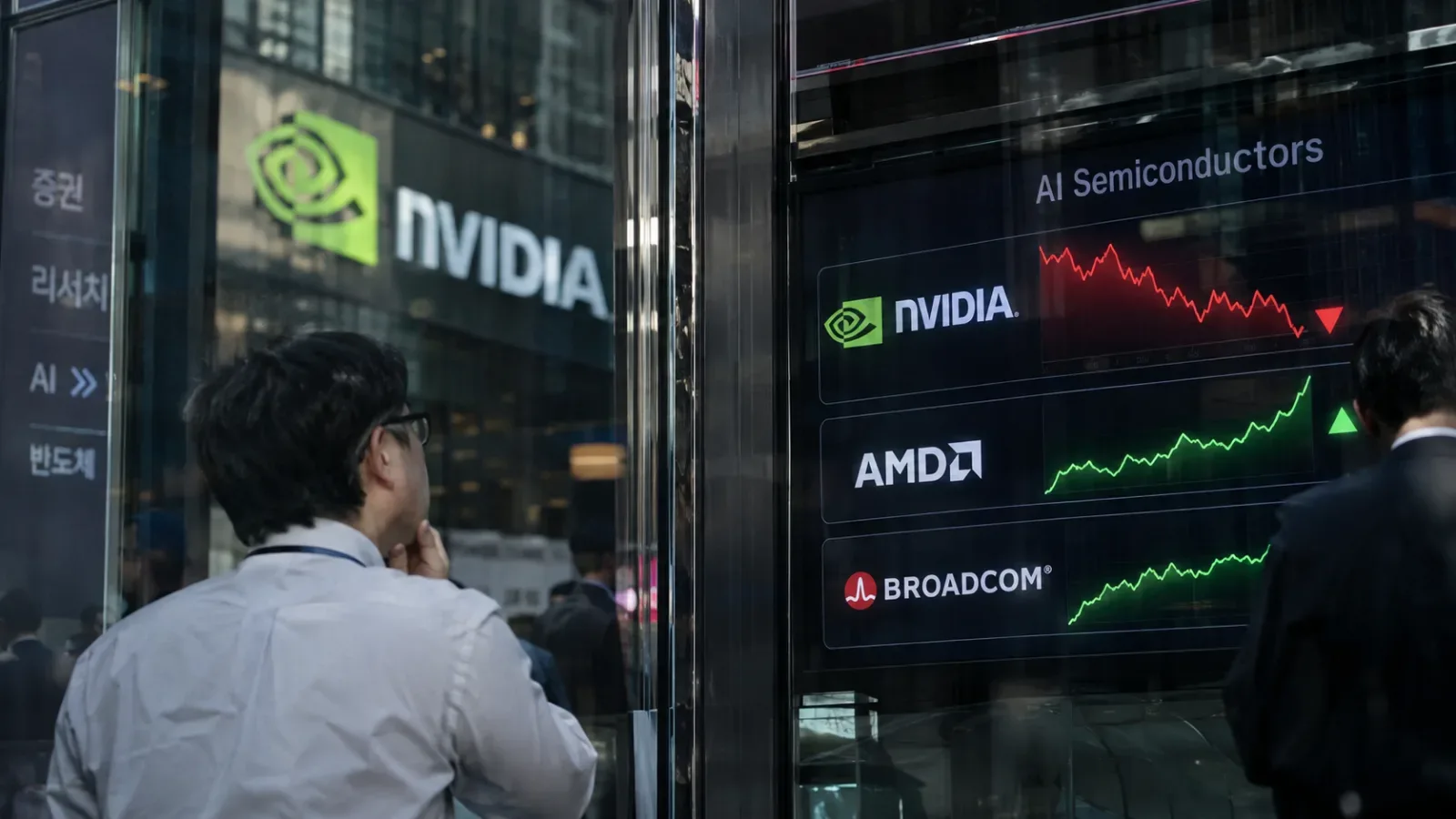
Nvidia's stock dropped sharply in the week after it announced Jensen Huang's immediate resignation. Over the same stretch, the S&P 500 rose, and AMD and Broadcom were strong. With earnings due Tuesday, Nov. 17, it helps to separate one man's exit from the direction of AI investment.
1. Will AI spending shrink without Jensen Huang?
It is the natural question for anyone holding Nvidia shares. If Huang is gone, will AI and chip investment fall, and will AI spending itself take a hit?
Nvidia announced Huang's immediate resignation on Thursday, Nov. 12. Chief Financial Officer Colette Kress will serve as interim CEO until a permanent successor is found.
But a person leaving and customers halting investment are very different events. Treat them as the same news, and investment decisions get shaky. So instead of alarming headlines, look at where money actually moved and what companies have said.
2. Nvidia plunged, but the market went the other way
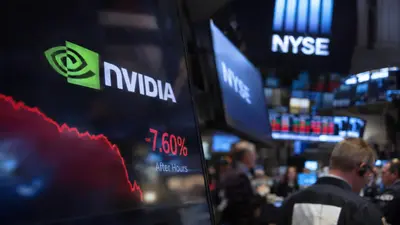
Nvidia closed at $186.64 on Friday, Nov. 6, and at $162.85 on Friday, Nov. 13. That is a one-week drop of about 12.75%, a harsh verdict on the founder's absence.
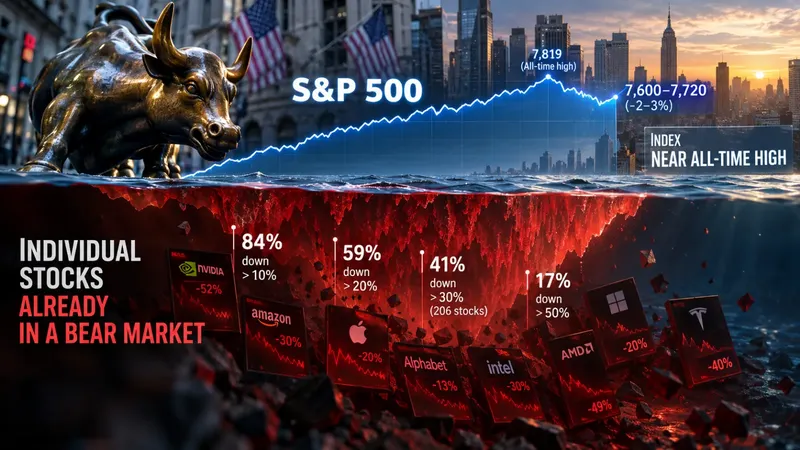
Yet the S&P 500 rose about 2.51% over the same period. While Nvidia sank, the broader US market rebounded.
TheStreet's tally on Nov. 13 also showed 399 S&P 500 members rising over the week. That does not fit the idea that worry centered on a few big tech names spread across the whole market.
A rising index does not mean Nvidia's problem is solved. The point is that the market judged Nvidia separately from US companies as a whole.
3. Did money leave AI, or move to other chips?
AMD rose about 18.9% that week and Broadcom about 18.2%. Both gave back part of their gains on Friday, Nov. 13, but their weekly performance was still strong.
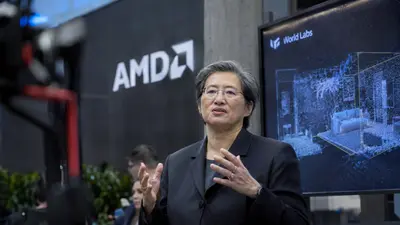
AMD competes with Nvidia in AI graphics processing units (GPUs). Broadcom supplies custom AI chips tailored to customers such as Google. The market appears to be treating Nvidia's leadership gap as a possible opening for rivals.
Wedbush's Matthew Bryson, cited by CNBC, also named AMD as a candidate beneficiary. But higher share prices do not mean Nvidia customers have actually moved orders to competitors.
The shift this week is less about interest in AI chips vanishing. It is more about investors starting to recalculate which company that interest will concentrate on.
4. Have the biggest customers changed their spending plans?
The story would change if the big tech companies that are the end customers for AI chips had actually cut spending. Their capital expenditure plans are a more direct demand signal than chip stock prices.
In its October report, Meta gave a 2026 capex outlook of $135 billion to $145 billion. Amazon held its 2026 cash capex at about $220 billion. Both announcements came before Huang's resignation.
Alphabet also kept its October outlook. Microsoft had trimmed its annual investment outlook from $175 billion to $170 billion, but CNBC reported the reason was delayed supply of outside AI chips. It was not a cut made because of the resignation.
No formal further cut to AI capex plans by these companies has been confirmed since the Nov. 12 resignation.
So the data so far does not support the claim that big tech cut AI investment first once Huang left. The direction of spending can be judged again through customers' earnings and actual outlays.
5. Why Wall Street cut Nvidia price targets
Wall Street's reaction was clearly cold. Melius Research and Evercore ISI lowered their ratings and price targets on Nvidia. HSBC also moved from buy to hold on Friday, Nov. 13.
That does not mean all of them concluded demand for AI chips had disappeared. Bernstein said the underlying business remains intact but cut its rating because of the management vacuum. KeyBanc also separated its near-term business outlook from the management risk.
A stock price reflects not only future profit but also how far that profit can be trusted. Even for a company with the same revenue, weaker confidence in management and execution can lower the price investors are willing to pay.
The Milk's piece "Nvidia Without Jensen" likewise stressed that the chips, software and customer contracts remain, but that the leadership tying them together is gone. That is a different story from Nvidia having lost its competitive edge.
6. Look past the headlines to Tuesday's earnings
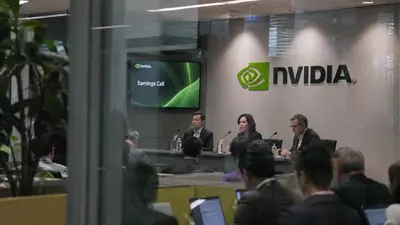
Nvidia's next scheduled event is its quarterly report on Tuesday, Nov. 17. It is the first earnings release since Huang's resignation, which makes it significant.
The company's earlier revenue guidance was $108 billion, plus or minus 2%. The market consensus cited by CNBC on Nov. 13, from LSEG, is $109.9 billion in revenue...
Correction for accuracy: the LSEG consensus is $108.9 billion. The two figures are not far apart.
Investors should look at more than whether Nvidia meets the revenue estimate. The next-quarter outlook, product supply schedules and commentary on customer demand matter more. Nvidia's board has said it will keep its commitments to customers and its product development plans. Now the question is whether those commitments carry through to results and the business narrative.
If evidence emerges that future demand has weakened, the market is likely to mark Nvidia down again. If the business proceeds as planned, concern over leadership and actual results could move at different speeds.
7. What long-term investors can weigh
The week's data points to a fairly clear conclusion. Huang's exit is a major shock for Nvidia, but it does not mean AI investment as a whole has stopped.
Nvidia's stock fell sharply and rival chip stocks rose. Customers' large investment plans remain an important support for the market. For now, it is more accurate to distinguish one company's leadership risk and a reshuffling of chip leadership from the end of the AI industry.
Nor does it follow that investors should buy the beaten-down Nvidia all at once. Long-term investors can keep their pace of staged buying and ask whether the change in the business is as large as the drop in price. Conviction in one stock and conviction in the AI industry as a whole are separate questions.
Fear-driven headlines change daily. An investor's standards have little reason to change as often. At the next earnings report, check customer orders and the company's execution. Verifying the business comes before reacting to the news.
- Based on the data confirmed so far, there is no evidence of that.
- Meta and Amazon announced large capital spending plans before the resignation, and no formal further cuts have been confirmed since.
- It dropped from $186.64 on Friday, 11/6, to $162.85 on Friday, 11/13.
- That is a weekly decline of about 12.75%.
- Over the same period, the S&P 500 rose about 2.51%.
- According to TheStreet's tally, 399 S&P 500 components rose during the week.
- The market may have seen Nvidia's leadership gap as an opportunity for its rivals.
- However, there is not yet any evidence that customer orders have actually shifted to competitors.
- Some cited the leadership gap, not the underlying strength of the business.
- Bernstein downgraded its rating because of the leadership gap, even though it believes the business remains strong.
- Beyond whether it hits expected revenue, the next-quarter outlook, product supply schedule and explanation of customer demand are worth watching.
- The company's guidance is $108 billion in revenue, and the LSEG market estimate is $108.9 billion.
What to watch
Insight Times Editorial Desk