TSMC vs. ASML: Two AI Chip Chokepoints, but Which Is the Better Bet?
Both companies hold technical leads rivals struggle to close. A great business is not the same as a great five-year return.
Both companies hold technical advantages that competitors find hard to match. But being a good company is a different matter from delivering good returns over the next five years.
The key question is not which one is more of a monopoly. It is which one can turn rising AI investment into higher profit and cash flow.
The bigger AI gets, the more both companies matter
The World Semiconductor Trade Statistics organization (WSTS) forecasts that the global chip market will reach about $975 billion in 2026, growth of more than 25% from a year earlier. That is a forecast, not confirmed revenue. Still, it is clear that AI infrastructure is lifting growth expectations across the whole industry.
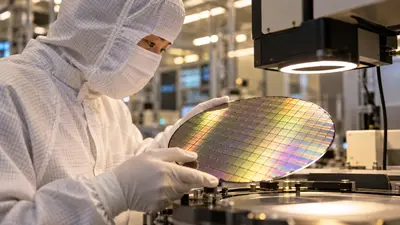
TSMC's edge comes from yield, production scale and its customer ecosystem. In the third quarter of 2026, 2-nanometer processes made up 8% of wafer revenue, and advanced nodes of 7 nanometers and below made up 79%. For customers, good chip design is not enough. They need chips delivered on schedule and at high yield.
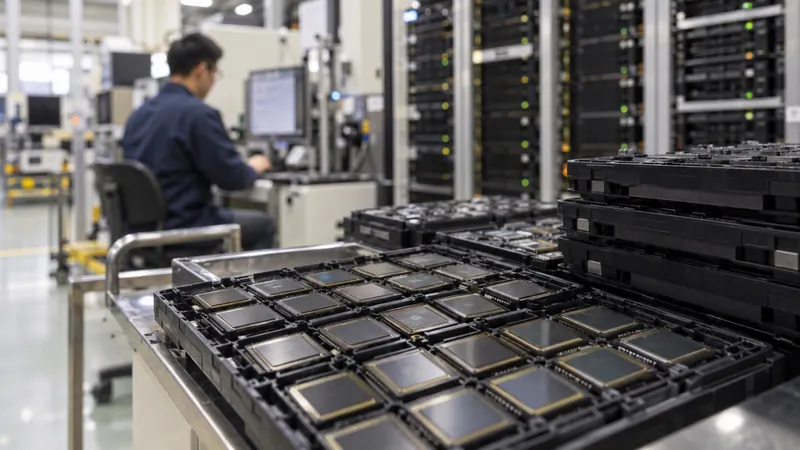
In AI accelerators, advanced packaging matters as well. CoWoS is a technology that links multiple compute chips and HBM (high-bandwidth memory) in a single package. That lets TSMC earn money not only from fine-line manufacturing but also from the stage where chips are integrated.
ASML's revenue model is different. Chipmakers' capital spending turns into orders for new lithography tools, and the tools it sells then generate maintenance and upgrade revenue. Installed base management (IBM) revenue in the third quarter was 3.289 billion euros, about 28.2% of the total. Service revenue is not necessarily all fixed or immune to the business cycle, however.
Does more investment mean more profit?
| TSMC (Q3 2026) | ASML (Q3 2026) | |
|---|---|---|
| Gross margin | 66.4% | 57.5% |
| Quarterly revenue | $46.72 billion | 11.662 billion euros |
The two companies have different business models and revenue recognition, so margins alone do not allow a direct comparison of investment appeal. Source: each company's Q3 2026 results.
TSMC kept its 2026 capital spending budget at $60 billion to $64 billion. Expanding production capacity is an investment in future earnings, but it comes with depreciation and cash outflow. Third-quarter gross margin did slip, to 66.4% from 67.7% in the prior quarter, a drop of 1.3 percentage points. Early-stage 2-nanometer production costs were the main cause.
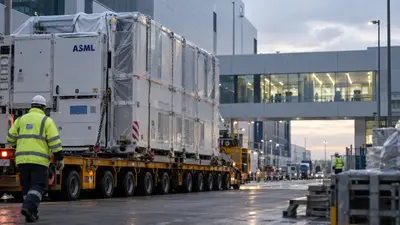
ASML faces investment burdens and supply limits too. High-performance lithography tools need precision components such as optics and light sources, so output is hard to raise quickly even when demand is strong.
One change is worth noting. In September, ASML and TSMC announced a collaboration on large photomasks for High-NA EUV. TSMC said it plans to use High-NA in advanced-node volume production from 2030. Adoption of the technology is leading to cooperation rather than competition. Even so, the planned adoption date should be kept separate from actual production scale.
Bottom line
In the AI chip industry, TSMC holds the bottleneck in production, and ASML holds the bottleneck in advanced manufacturing technology. Their advantages may well last, but that alone does not guarantee future returns.
The standard a long-term investor needs is to keep finding a good company and buying at a good price firmly separate.
Insight Times Editorial Desk