Year Four of the AI Revolution: The Real Winners May Emerge After the Highway Is Built

Railroads, the internet and mobile show that a technology can succeed while many investors lose money. The question for AI is whether the current pullback is the end of the boom or a handoff of wealth to new owners.
1. Where are we in the AI revolution?

It has been about three years and 11 months since ChatGPT launched on Nov. 30, 2022. The question has changed along the way. First, people asked what AI could do. Then companies competed over how many GPUs they could secure. Now the question is: after spending so much, how much is AI actually earning?

In Technological Revolutions and Financial Capital, the economist Carlota Perez divides technological revolutions into an installation period and a deployment period. Capital rushes into a new technology first and builds the infrastructure. Economic value expands later, as society and business put it to use.

The sequence of introduction, frenzy, turning point and deployment is a useful framework. It is not a formula with fixed dates or durations. In 2026, AI is in a phase where infrastructure installation and commercial rollout are happening at the same time. There is little basis to say the industry as a whole has already passed its turning point.

Perez's cycle, simplified for investors

  1. Introduction: early demand
  2. Frenzy: capacity expansion
  3. Turning point: profitability tested
  4. Deployment: productivity spreads

This is a simplified concept based on Perez's theory. It does not indicate actual years or durations.

2. Railroads and the internet succeeded. Did every investor?

Nineteenth-century American railroads cut logistics costs and linked a national market. But the railroad companies had to carry heavy construction costs and debt, and many went bankrupt or were restructured.

In the 1990s, telecom carriers poured huge sums into fiber-optic cable in anticipation of the internet's future. Those that overestimated demand and the speed of payback took heavy losses when the dot-com bubble burst. Yet search, e-commerce, video and the cloud grew on top of that network.

Mobile followed the same path. Once networks and smartphone operating systems spread after the iPhone, new services such as Uber and Instagram grew. The point is the same each time: a technology's success is different from the return on any single stock. Long-term investing does not mean holding every company for a long time. It means continually selecting the companies that can defend their competitive position.

3. The productivity J-curve: when costs and benefits are out of sync

Research on the productivity J-curve by Erik Brynjolfsson, Daniel Rock and Chad Syverson explains why the economic effects of a general-purpose technology arrive with a lag. Adopting AI takes more than buying GPUs. It requires complementary investment such as cleaning data, redesigning work, training staff and developing products. The costs show up first, while productivity gains may be measured later.

But the J-curve does not guarantee "three years of losses, then a profit explosion in year four." Nor is it empirical proof that AI as a whole has already passed its low point. Fast-adopting areas such as coding and customer support should be separated from areas that need time to validate, such as healthcare, finance and robotics.

The real question is not how many years have passed since launch. It is how much AI adoption is converting into actual customer spending and corporate profit.

The productivity J-curve (theoretical concept)

The chart plots effect against time. It dips during the period of complementary investment, then rises as the effects are realized. It is a conceptual illustration, not year-by-year data or a return forecast.

4. Why AI may spread faster than past technologies

The internet required a network to be built. Mobile required smartphones and wireless networks. AI can be distributed relatively quickly through smartphones, browsers, cloud services and business software that already exist. Stanford's AI Index 2026 counted generative AI reaching 53% of the surveyed population in about three years.

But adoption of a service is separate from profit for shareholders. Free users can grow, yet profitability may stay low if inference costs are high. Conversely, if paying enterprise customers sign long-term contracts, a business can be a good one even with relatively slower growth.

AI could be used in finance, healthcare, law, customer support, manufacturing, autonomous driving and robotics. Still, the global labor market should not be treated as an instant AI revenue market. The analysis has to account for which tasks can actually be automated, adoption rates, customers' willingness to pay, regulation and cost.

5. Was the worry about too much spending wrong?

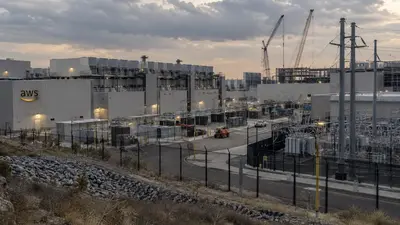
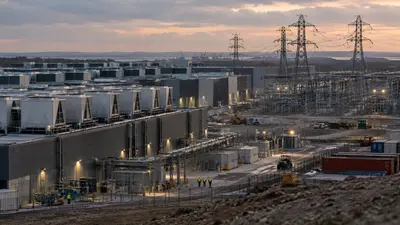
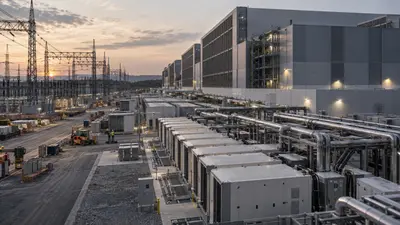
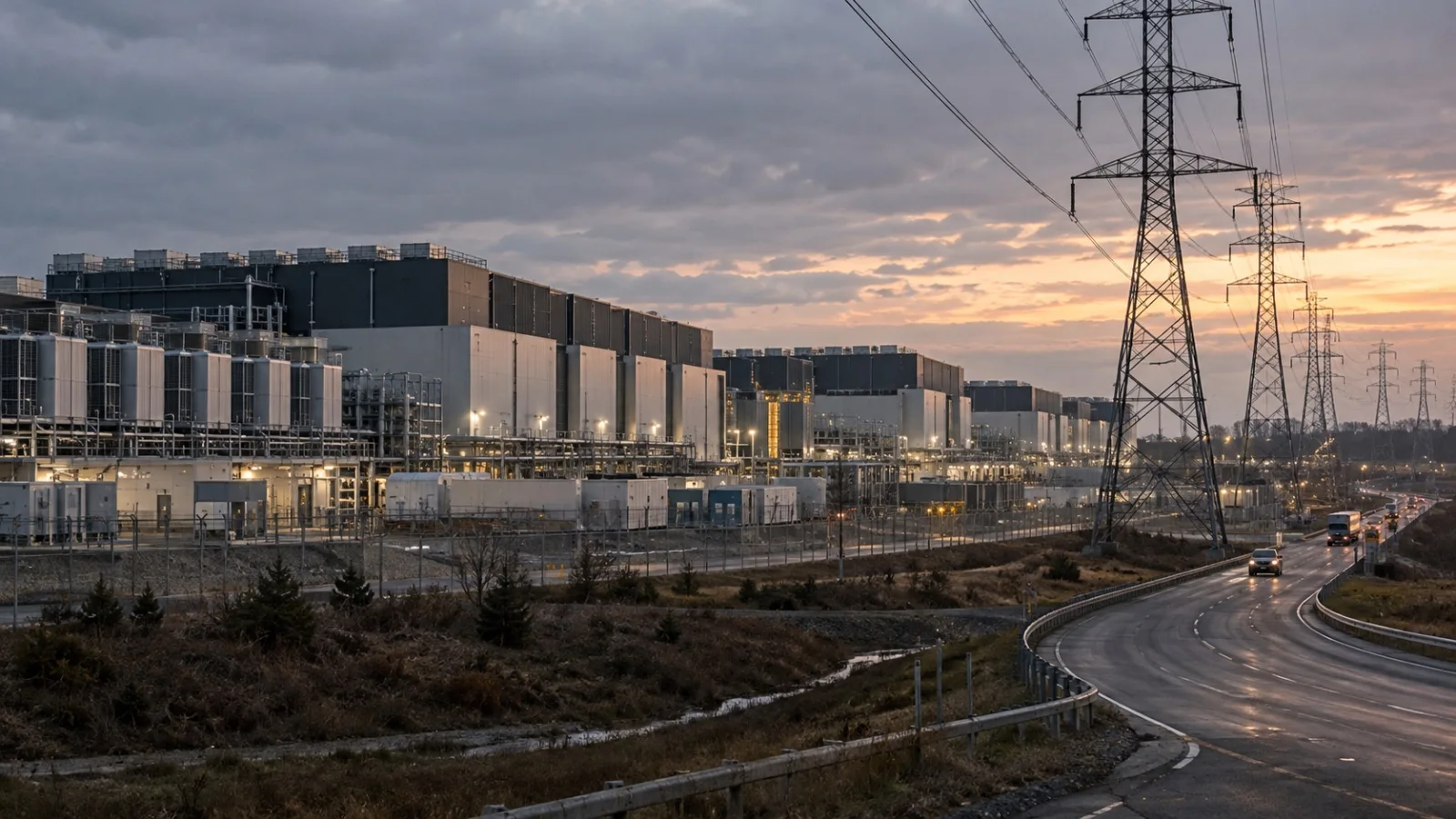
The absolute scale should not be downplayed. Major AI infrastructure spending plans for 2026 are reported to exceed $700 billion. But companies' total capital expenditure includes non-AI businesses, so that sum should not be described as entirely AI-specific.

Comparisons can also mislead. Dividing global corporate investment by U.S. GDP, or comparing 19th-century railroad construction costs with today's Big Tech capex on different scopes, creates an illusion. An accurate historical comparison needs the same country, the same investment scope, GDP for the same period and conversion to real prices. That is why figures of 3% to 6% and 1.2% to 1.6% should not be treated as confirmed comparisons.

Companies with large operating cash flow, such as Microsoft, Alphabet, Amazon and Meta, are better able to endure than the speculative telecom carriers of the past. That does not mean the whole industry is built on cash. Debt-reliant AI infrastructure companies such as CoreWeave are far more sensitive to interest rates and funding conditions. In fact, CoreWeave's large debt load was at the center of the market jitters in October 2026.

In the end, investors should look at how the spending is financed as much as how large it is. If capex grows faster than revenue and depreciation accumulates, even a company with excellent technology can come under cash-flow pressure.

6. Who makes money once the AI highway opens?

For Nvidia and AMD, what matters is demand for AI accelerators, product competitiveness and total cost per system. Ecosystem lock-in such as CUDA helps defend profitability, but customers' expanding in-house chips and a slowing growth rate of orders are risks.

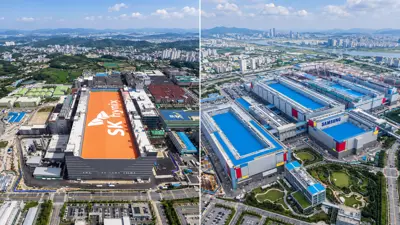
For Micron, SK hynix and Samsung Electronics, what matters is not only HBM shipments but also the pace of supply expansion, conventional DRAM prices, yields and customer concentration. Even if AI demand grows, product prices can fall if supply grows faster.

TSMC benefits from manufacturing advanced chips for many designers. But it cannot avoid capital spending, advanced-packaging bottlenecks, utilization rates and the cost of moving to new process nodes.

For Microsoft, Alphabet and Amazon, the test is how quickly cloud AI revenue growth catches up with the burden of capex and depreciation. For Meta, the key is whether AI improves ad efficiency and user engagement enough to offset the investment.

Software companies can benefit from falling inference costs. But the same savings apply to their competitors. Without paying-customer retention, net revenue retention and operating margin improvement, the spread of the technology alone cannot justify high share prices.

Tesla and robotics companies hold a long-term option on AI's physical spread. But self-driving and humanoids need to be assessed separately on technology demonstrations, regulatory approval, production scale-up and unit economics.

Conclusion

A short-term pullback does not mean the AI revolution is over. At the same time, the fact that the revolution continues does not mean every AI stock is worth buying at current prices. The histories of railroads, the internet and mobile support both statements.

The highway will likely keep getting longer. But what investors need to keep checking is not construction progress. It is the road's demand, its construction cost, how it is financed and the tolls actually collected. A long-term investor's edge is not unshakable conviction. It is that facts become easier to verify as time passes.

This analysis is for informational purposes and is not a recommendation to buy or sell any security.

AI technology can keep growing without every AI stock rising, so investors should watch tolls, not construction progress.

Insight Times Editorial Desk

More by topic

Starting with this story's topics, then what readers are following now

Investor psychology, decision-making and books on investing

CapEx

This story's topic60 storiesSee all →

Money a company spends on things it will use for years — plants, equipment, bu…

Why the White House Swapped "AI" for "Super Intelligence"

Executive Order 14434 renames AI across the federal government without defining a new technology. The real story is about roughly $700 billion in capex, free cash flow and electricity.

Tech

Memory Chip Supercycle: Not at Peak Yet, But 5 of 6 Warning Signs Are Flashing

Memory prices are still climbing, but the pace is slowing and PC and smartphone demand is starting to crack under the weight of higher chip costs. This looks less like a price peak and more like a profit plateau building toward the next supply cycle.

Investing

AI Needs to Find $1 Trillion a Year From Somewhere to Pay Back Its Capex

Saying AI capex is big is no longer the point. The harder question is what end users have to pay for the buildout to pencil out, and Goldman Sachs puts that number at roughly $1 trillion a year.

Tech

Meta's Muse Wonder Is a Bid for the AI Operating System, Not Just a Model

An AI agent that remembers, decides and acts is Meta's next platform bet. Whether it pays off depends on user trust and sustainable profit, not just model quality.

Tech

AI Can Lift More Than Stocks: It May Push Long-Term Yields Higher Too

The AI boom can grow the numerator of corporate earnings while also growing the denominator of the discount rate. Investors watching long-term Treasury yields now need to add "AI capital demand" to the Fed, inflation and the deficit.

Tech

Why Tesla Lined Up $30 Billion in Credit It Says It Won't Use This Year

Tesla's 2026 capex is set to nearly triple. The question is less about debt than about when spending on AI, robotaxis, chips and energy turns into cash flow.

Tech

The AI Bubble Question Has Changed: By Late 2026, It's ROIC Over GPUs

There is no sign yet that AI investment is slowing. If anything, hyperscaler spending forecasts keep climbing. But as the scale of that capital has grown, the market's question has shifted from "is AI growing" to "when, and how much, does this capital come back as cash."

Tech

A building that houses servers and networking gear and supplies them with powe…

US AI Data Centers Are Headed for 90GW. Gigawatts Now Matter More Than Dollars

Goldman Sachs expects US data center capacity to grow from 64GW at the end of 2026 to 90GW at the end of 2027. The AI race is moving from buying GPUs to building power plants and transmission lines alongside them.

Tech

Tesla Energy's 13.7GWh Paradox: Expectations Ran Faster Than Deployments

Q2 deployments recovered but margins collapsed. Q3 set a record for deployments and still missed estimates. The issue is not the size of AI power demand but how fast it converts into Tesla revenue and profit.

Tech

Why Nvidia Is Happy to Help Make AI Models Nearly Free

Falling model prices can squeeze model makers. For Nvidia, the number that matters is the total volume of tokens generated worldwide and the compute that produces them.

Tech

Nvidia Put $2 Billion Into Lumentum. Optics May Be the Next Bottleneck, but the Stock Has Already Run

Optical networking is emerging as the next constraint on AI data centers. Investors need to separate the industry's growth potential from the price they are already paying for it.

Tech

Nvidia's Next Target After GPUs: Controlling What AI Agents Are Allowed to Do

OpenShell and Sentry are not about policing what an AI says. They are about controlling, at the server infrastructure level, which files and APIs an AI can touch, what it can execute, and who can actually pull the plug when something goes wrong.

Tech

Nvidia's $500 Billion Experiment: Wall Street Asks Who Backs the GPU, Not Just the Chip

The real issue in Nvidia's financing platform is not chip sales. It is how far Wall Street will trust GPU resale prices and rental income three to four years out.

Tech

2027 Investing Needs Alignment, Not Prediction

A new investing book argues the hard part was never picking the next winner. It's staying aligned with where value and bottlenecks are moving while keeping old human weaknesses in check.

Investor Mind

HBM

63 storiesSee all →

Memory stacked next to the GPU.

Has Memory Peaked? Prices Are Cooling, but the Shortage Looks Set to Run to 2028

Price growth has slowed and consumer demand is already breaking. Server and HBM supply remains short, and Micron says more than 75% of its 2027 volume is already committed to customers.

Tech

AI Chip Peak Check: Demand Still Rising, Risk Building in 2027-2029 Supply and Funding
DRAM and NAND contract prices are still climbing and HBM suppliers hold the edge. Power shortages, AI financing costs and simultaneous memory expansion are the risks for later years.

Investing

How Far Can China Push DRAM Without EUV

CXMT says it has shrunk DRAM features to 11.95nm using quadruple patterning instead of EUV lithography. The real question is not whether China caught up, but how much more it now costs China to get there.

Tech

The Real ASML Number Isn't the 3% Pop, It's the 30% Capacity Hike

ASML's rally isn't just an AI trade. Customers are already locking in 2027 tool slots, and ASML is raising Low-NA EUV capacity by roughly 30% to keep up.

Investing

2027 Isn't the End: Citi's Case for a Memory Supercycle Running to 2031

Citi says the memory shortage timeline is stretching again. If AI shifts from "train once" models to continual learning, HBM, server DRAM and enterprise SSDs could all fall short at the same time.

Tech

Samsung, SK Hynix Sold Off on AI Fears. The Orders Haven't Followed Yet

The selloff reflects a market recalculating AI capex speed and memory earnings expectations, not confirmed cancellations. So far, the data show a gap between fear and reality.

Investing

China's DRAM Push Tests the Memory Supercycle for SK hynix, Samsung and Micron

Memory looks tight through 2027, with oversupply a risk from 2028. Investors in AI chips need to keep the two timelines apart.

Tech

NVDA

75 storiesSee all →

The US-China Summit Didn't Erase Taiwan Risk for Chip Stocks

Washington's Taiwan policy held, but roughly $14 billion in arms sales is still on hold. For AI chip investors, the summit reads less like risk removed and more like a fragile balance extended.

Macro

What Jensen Huang sold at the G20 was not GPUs. It was national infrastructure

Nvidia's message is that AI should be laid down like electricity, roads and the internet. After the hyperscalers, the buyers are governments, telcos, regional clouds and industrial data centers.

Tech

ASML Is Discussing 2030 Orders. How Long Can the AI Chip Supercycle Last?

Despite bubble worries, ASML sees equipment shortages through 2028. Investors should watch future production capacity, not just today's orders.

Tech

Nvidia and AMD Back Common Design to Build AI Data Centers Like Lego Blocks

A new Open Compute Project spec aims to let one building host rival chip systems. Whether it speeds up construction is not yet confirmed.

Tech

AI Data Centers in Space? The Real Test Launches This Week

On October 1, a SpaceX rocket carries a sub-50kg satellite with a Nvidia Orin NX chip and Google TPU test hardware into orbit. It is too early to call this a "space data center," but the signal is clear: the AI industry is rethinking where computing should physically sit.

Tech

Samsung's HBM4 Yield Hits 80% - Now the Real Fight Is Production Volume

Reports confirm Samsung's HBM4 yield has climbed to roughly 80 percent, but the bigger number is capacity: HBM wafer input is projected to jump nearly 40 percent next year, from about 180,000 to 250,000 wafers a month.

Tech

AMD Crossed $1 Trillion, and the Market Started Looking at CPUs Again

AMD's stock topped a $1 trillion market cap for the first time. The rally isn't just about being an Nvidia alternative. It reflects a reassessment of AMD as a full-stack AI infrastructure vendor, one that bundles CPUs, GPUs and networking, as AI shifts from chatbots to agents and reignites data center demand for CPUs.</deck> <parameter name="oneline">As AI moves from chatbots to agents, the market has started counting the CPU sitting next to the GPU again.

Tech