Musk's Terafab: What a $119 Billion Chip Plant Is Really For

From Tesla's robots to SpaceX's orbital data centers, Musk wants to control chip production itself. The open question is whether he can make advanced chips at high yield.
1. Terafab's real purpose is not selling chips

Elon Musk is probably not trying to enter the chip market and compete head-on with TSMC.

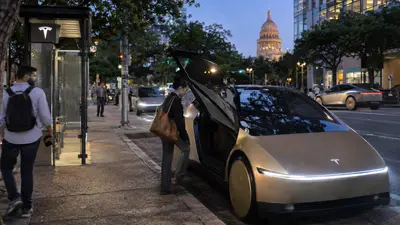
Tesla needs AI chips for its self-driving vehicles and Optimus robots. SpaceX needs dedicated compute chips that can run in space. As AI models advance and production volumes rise, reliance on outside chipmakers could become a long-term constraint.

That is the economic logic behind Terafab.

The question is less how much profit the chips themselves earn than how much loss Tesla avoids when a chip shortage keeps it from building cars and robots on time.

Making chips in-house is not always cheaper, though. Advanced foundries demand huge upfront investment, high fixed costs and the burden of stabilizing yields. Without enough volume, costs could end up higher than with contract manufacturing.

2. The $119 billion: what is actually under way

  • Long-term planned investment assets: $119.39 billion (about $119.4 billion)
  • Planned investment phases: 4, an expansion concept laid out in the filings

Figure combines school-district JETI filings tied to Grimes County. It does not represent actual spending or a confirmed final budget.

Terafab splits into two roles.

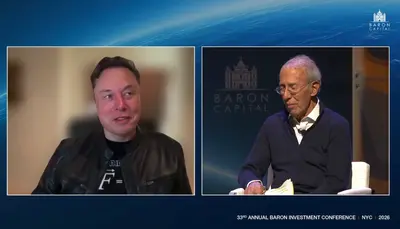
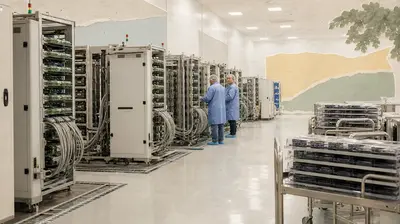
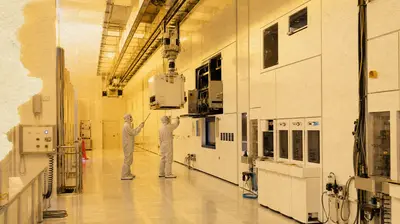
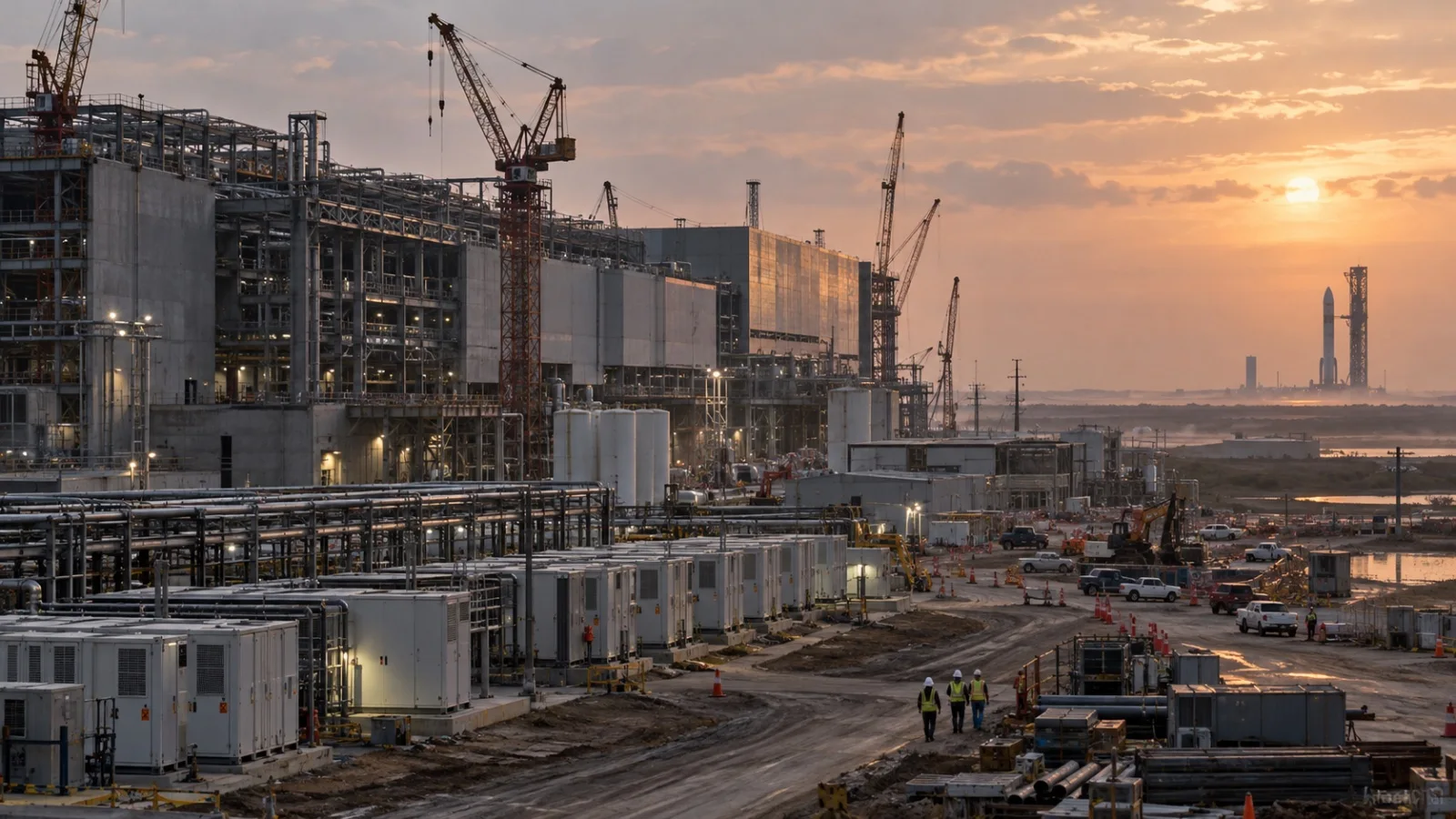
The Austin research fab would validate new chip processes and shorten the development cycle from design to testing. On an earnings call, Musk described a plan in which Tesla runs the research facility and SpaceX leads the initial buildout of the large-scale production site.

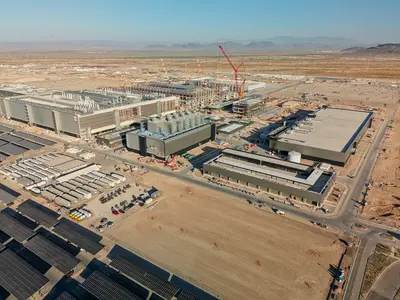
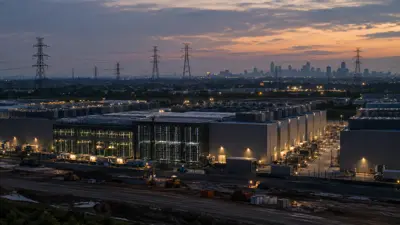
The Grimes County production site is an investment project for large-scale manufacturing. It aims to use the power, water and industrial land around the Gibbons Creek power plant site, and local tax-incentive procedures have moved forward. Still, the size of the filing should not be read as secured funding or as capacity that will be built.

3. Why Intel and equipment suppliers matter

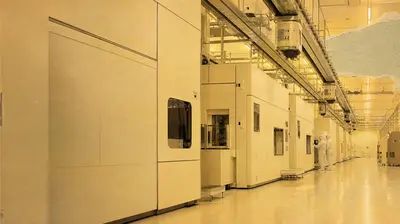
Building a chip plant is nothing like putting up a building.

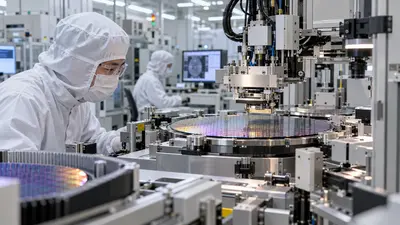
Thousands of process conditions must be stabilized, defect rates lowered, and chips of the same quality produced again and again. That takes process know-how built up over decades.

This is why Musk has described plans to use Intel's 14A process. Even with its own fab, a company need not develop every manufacturing technology from scratch. Leaning on Intel's technology and the existing equipment industry could cut some development risk.

But 14A itself still needs validation and production stabilization. A technology partnership does not guarantee Terafab's success.

Reports also point to South Korean equipment and materials suppliers getting involved, including HPSP (high-pressure hydrogen annealing test equipment), Hanmi Semiconductor (advanced packaging equipment) and several materials, piping and gas-handling firms. Reports of firm orders need to be separated from companies still in talks or at the NDA stage. Linking deals with undisclosed order values and delivery dates to a big jump in earnings is premature.

4. Robots for Tesla, space computing for SpaceX

For Tesla, the key metrics are performance per watt and cost per finished product, more than peak compute. A saving of a few dozen dollars per robot becomes meaningful money if output grows to millions of units.

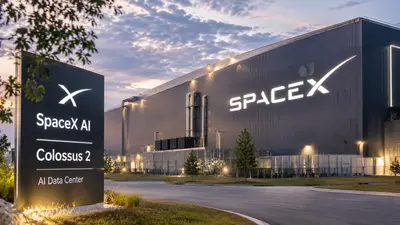
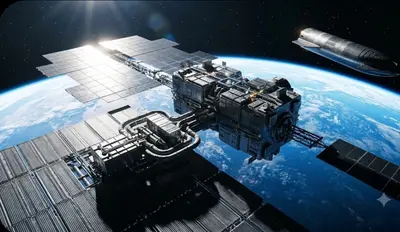
SpaceX has a longer-term idea: combining launch vehicles, satellite communications and its own compute chips to build orbital data centers.

Putting data centers in space does not by itself make them economical. Even if an orbit with favorable solar conditions can be chosen, constraints remain: Earth's shadow, radiation, waste-heat rejection and satellite replacement costs.

The view that space computing will become cheaper than ground-based data centers is a hypothesis that needs testing, not a proven business result.

  • Tesla: low-power AI inference chips tailored to self-driving vehicles, Cybercab and Optimus
  • SpaceX: AI compute chips for space, designed for radiation tolerance and power efficiency

5. A Tesla-SpaceX merger cuts both ways for investors

On SpaceX's Oct. 20 earnings call, Musk said independent directors of both companies have formed a special committee to examine a possible merger. Terms have not been agreed, and whether a deal happens is undecided.

If a merger happened, Terafab's cost sharing, ownership of chip design assets and allocation of production capacity could be coordinated within one corporate structure.

On the other hand, Tesla shareholders could end up sharing the heavy investment burden of the space infrastructure business. New share issuance, the exchange ratio and the valuation would all change existing shareholders' economic stake.

So the merger announcement itself matters less than what Tesla shareholders would gain, and what new costs and risks they would take on.

The bottom line

The most important thing about Terafab is not the $119 billion figure. It is whether, after pouring in that much capital, Musk can actually produce the chips he wants faster and more efficiently than outside foundries.

Musk has succeeded before in changing how established industries make things. But in semiconductors, building a new plant quickly and producing leading-edge chips at high yield are separate challenges.

Terafab's future will be proven not by the grand factory plan but by the first small test chips made inside it.

Terafab looks less like a chip business and more like a way to secure chips for Tesla and SpaceX, and its fate will turn on the yield of its first test chips.

Insight Times Editorial Desk
More by topic

Starting with this story's topics, then what readers are following now

Investor psychology, decision-making and books on investing

Semiconductors

This story's topic61 storiesSee all →

The whole business of designing, fabricating and testing chips.

A 3x P/E is not a discount. It is a verdict on how long memory profits last

Nomura's buy case on Samsung Electronics and SK Hynix does not stop at higher memory prices. It argues that if AI has turned memory from a cyclical component into strategic infrastructure, the formula the market uses to value both companies has to change too.

Investing

Who Hits $1 Trillion Next: Reading AMD and ASML by Different Rules

One company is chasing Nvidia's GPU empire. The other sells the machine that draws the chips for every advanced chipmaker, including Nvidia. Both get floated as 2028 trillion-dollar candidates, but the numbers investors need to watch are entirely different.

Investing

AI ran out of memory before it ran out of GPUs

The HBM bottleneck is spreading into DRAM prices, server costs and the price of the next laptop or phone.

Tech

Tech Selloff: Is the Bull Market Over? Wall Street's Four-Year Chart Says Not Yet

The uptrend has survived five double-digit pullbacks in four years. This time, AI companies' debt and cash flow are the new variables.

Investing

The Real ASML Number Isn't the 3% Pop, It's the 30% Capacity Hike

ASML's rally isn't just an AI trade. Customers are already locking in 2027 tool slots, and ASML is raising Low-NA EUV capacity by roughly 30% to keep up.

Investing

White House Swaps AI for "SI." The Real Investment Signal Is Infrastructure, Not the Name

An executive order renames artificial intelligence "Super Intelligence" and six frontier labs sign a voluntary safety accord. What investors should watch is the data center, power, nuclear and chip policy now gathered under one national-competitiveness frame.

Tech

The Next AI Chip Race Is About How Chips Connect

Applied Materials will lift its stake in Dutch equipment maker BESI from about 9% to 20%. The bet is less about control than about a new way to link chips.

Tech

TSLA

This story's topic50 storiesSee all →

The Cybercab is not a $30,000 car. Tesla is selling hours, not vehicles

No steering wheel, no pedals. The economics of Tesla's robotaxi turn on how many paid hours a day it runs, not on what it costs to build.

Tech

Why Tesla Jumped: Barclays Sets a $450 Target on SpaceX Merger Hopes

Hopes for a SpaceX merger moved the stock. Whether the rally lasts likely depends on how robotaxis turn into profit and cash flow.

Investing

Tesla Semi's Real Bottleneck Is Starting to Clear

A new 30-megawatt heavy-truck charging buildout in California is too small to move Tesla's earnings on its own. But it marks real progress on one of the Semi business's hardest problems: charging infrastructure that has to exist before the trucks do.

Investing

Musk Sees the Next Phase of AI Infrastructure: Who Can Switch GPUs On, Fast

If neoclouds struggle under financial pressure, AI demand may not shrink. It may simply favor the few operators with the capital and execution to serve it, a shift that could matter for SpaceX and Tesla.

Tech

If You Only Watch Tesla, You May Be Missing Half the AI Story

Nvidia builds the AI brain. Who supplies the electricity to run it? Six power companies Tesla investors should know, and why Tesla's storage business is just one link in the chain.

Investing

When Will Tesla's Rally Finally Hold? The Case for 2027

The next leg up for Tesla will not come from another product reveal. It will come when self-driving, AI investment and Optimus stop being "future stories" and start showing up as real profit and cash flow. The first real test window is likely 2027.

Investing

The Number That Matters More Than 0.81 Seconds: 2028 and Tesla's Roadster

The second-generation Roadster has flown, using SpaceX-derived thrusters. For investors, the better question is not whether it can fly but what it can change in Tesla's value.

Tech

Semiconductor Foundry

This story's topic6 storiesSee all →

A building that houses servers and networking gear and supplies them with powe…

Why Nebius Is Keeping Some 2027 AI Capacity Off the Shelf

Nebius mixes long-term contracts, short-term premiums and auctions. Holding back capacity pays only if the servers stay busy, and it is not yet clear the pricing will last.

Tech

Is Space Cooler for AI? Why Musk Wants Data Centers in Orbit

The next limit on AI may be power and cooling, not GPUs. Elon Musk is looking to Earth orbit for an answer, but the test is cost per hour of compute.

Tech

Weekly Check: The AI Bull Market Isn't Over, It's Just Gotten Harder

A 5% 10-year yield, 470 gigawatts stacked up in Texas, Chinese DRAM, and whether data centers actually get switched on are starting to decide who wins the AI trade through 2027.

Tech

Is Memory Peaking? In the AI Era, Watch the Bottleneck, Not the Demand

Demand still outruns supply. But memory stocks can peak before demand does. The real question is how long HBM4, server DRAM, CXL and Big Tech capex keep the cash flowing.

Tech

Marvell's $115 Billion Lumentum Deal: Is AI's Next Bottleneck Light, Not Chips?

Marvell's purchase of Lumentum points to a contest beyond GPU speed, in data transfer and power efficiency. Whether the price is right is not yet confirmed.

Tech

Nvidia and Palantir Put AI Inside the Supply Chain - The Real Shift Is That It's Learning Judgment

A single Vera Rubin rack holds 1.3 million parts. The real breakthrough in Nvidia and Palantir's new supply chain AI isn't automating that complexity, it's capturing the judgment calls that used to live only in planners' heads.

Tech

SoftBank Bet $64.6 Billion on AI. Why Is the Market Pricing Default Risk?

Believing in AI's future is not the same as backing a company that can survive until it arrives. SoftBank's credit spike raises that question for long-term investors.

Tech