SpaceX Is Worth $2 Trillion. Three Bets Will Decide Whether It Gets Bigger

The company that dominates space now eyes ground-level wireless and AI data centers. The question is not whether the businesses can work. It is how much more value can be added to a company already above $2 trillion.
1. Why value a rocket company at more than $2 trillion?

Anyone who still thinks of SpaceX as a rocket company will struggle to understand the stock. It listed on the Nasdaq on June 12, 2026. On Oct. 9 it closed at $162.57, about 20.4% above the $135 IPO price.

Investors are paying a high premium for Elon Musk's plan to combine space transport, a global communications network and AI computing.

MetricFigure
Q2 2026 revenue$7.8 billion, up 92% year over year
Adjusted EBITDA$3.5 billion, up 191% year over year
GAAP net loss$541 million
Market cap on Oct. 9About $2.1 trillion

A fast-growing company is not the same thing as a cheap stock. Adjusted EBITDA is not net income or free cash flow.

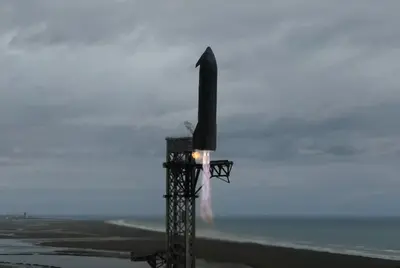
2. Growth engine one: why Starship matters

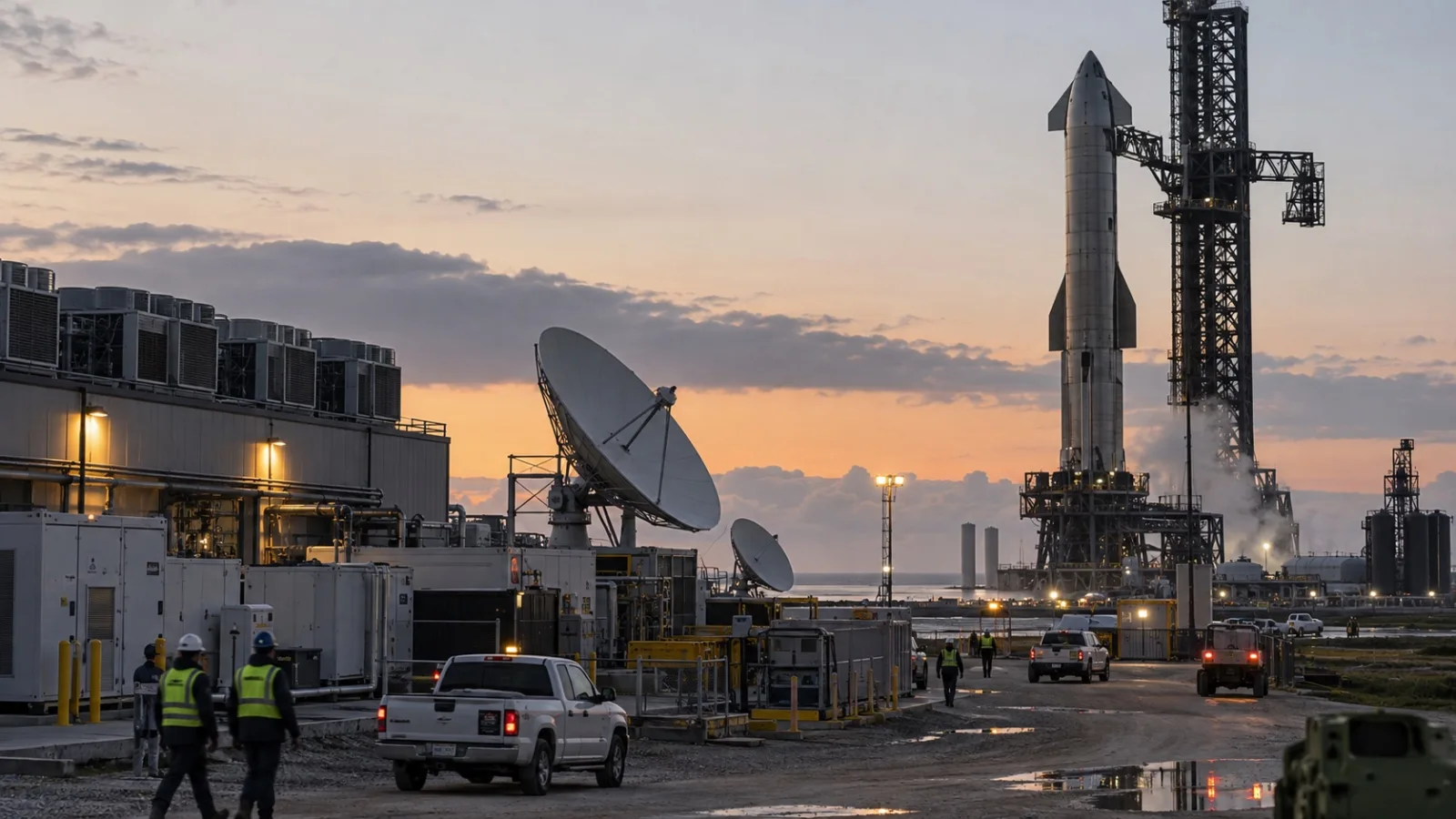
If a delivery company cut shipping costs by 90%, businesses that never made sense could suddenly work. SpaceX is aiming for something similar with Starship.

Reusing Falcon 9 changed the cost structure of rockets. Starship aims to reuse an entire heavy-lift vehicle over and over, launching more satellites faster.

But a launch cost of $100 per kilogram or less is not a proven commercial result. It requires repeated launches, shorter turnaround times and enough demand. The key is how cheaply and quickly the same rocket can fly again.

3. Growth engine two: Starlink threatens US carriers

On Oct. 8, SpaceX signed an agreement to acquire a nationwide portfolio of 800 MHz spectrum. The reported deal size is about $8 billion, but the official announcement did not disclose the price, and the deal needs FCC approval.

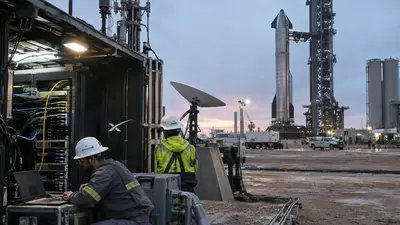
Starlink Mobile lets ordinary smartphones connect directly to satellites. The 800 MHz low band has relatively good range and indoor reach, and could complement the existing 2 GHz band.

That does not mean satellites will soon replace terrestrial 5G. A reasonable view is that the service starts as a supplement in coverage gaps and may over time compete in some markets. The important numbers are not just subscribers but revenue and profit per customer.

4. Growth engine three: SpaceX bets on AI data centers too

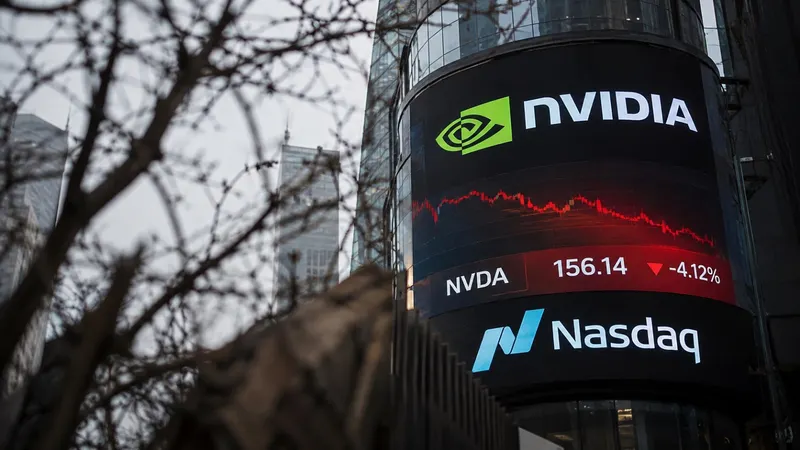
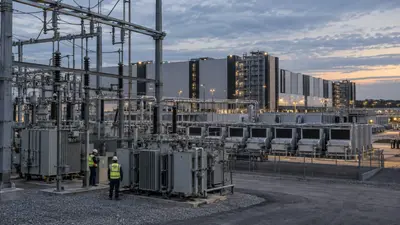
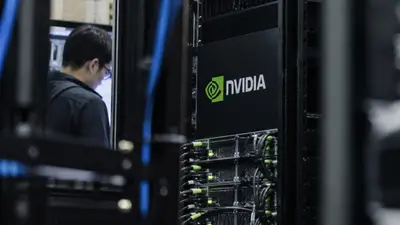
SpaceX has reportedly been pursuing about $40 billion in financing to buy Nvidia AI chips. The reported plan, roughly $10 billion in bank loans and $30 billion in bonds, is not a completed deal.

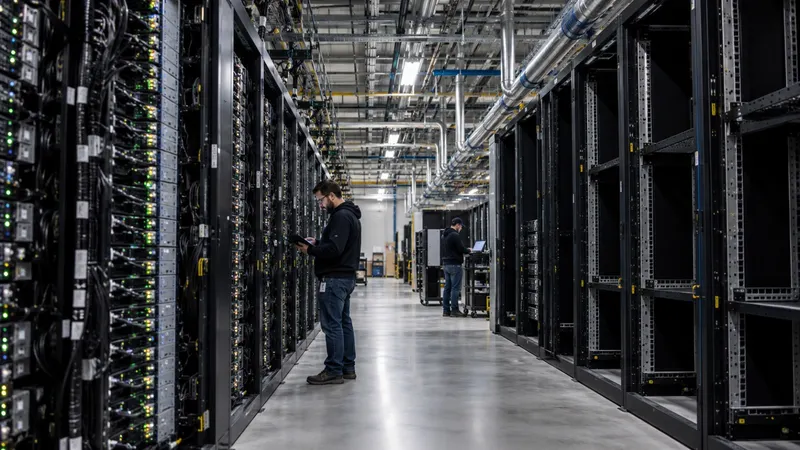
SEC filings include a contract to provide Google with computing capacity equivalent to about 110,000 Nvidia GPUs. The contract specifies fees of $920 million a month starting in October 2026. Supply and termination conditions apply, so not all of it can be treated as locked-in profit.

If $40 billion were borrowed entirely at 6%, annual interest alone would be $2.4 billion. Depreciation, power and operating costs come on top. What matters more than the contract value is how much cash is actually left.

5. Value emerges when the three businesses connect

  • Starship: lower space transport costs
  • Starlink: expanding communications revenue
  • Cash flow and the ability to raise capital
  • New growth opportunities in communications and AI

Rockets lower the cost of putting satellites in orbit, and satellites add communications customers. Cash from the communications business can be reinvested, and if AI infrastructure also earns high returns, growth opportunities could widen.

But AI data centers require enormous amounts of power and capital of their own. Whether the links between the businesses actually raise returns on capital remains to be proven.

6. 2027 price outlook: $100 or $250?

Earlier valuation estimates of $280 billion to $600 billion sit far below the current market cap of about $2.1 trillion and cannot serve as an upside forecast. The calculation has to be redone using the actual share count and valuation.

ScenarioPriceChangeValuationAssumptions
Bear$114-30%$1.5 trillionStarship delays, mobile regulatory burden, worsening AI returns
Base$190+17%$2.5 trillionStarlink growth, AI contract revenue realized, financing burden managed
Bull$266+64%$3.5 trillionBetter Starship economics, mobile expansion, rapid AI cash flow growth

This is Insight Times' assumption-based analysis, not an official Wall Street price target. It holds the share count fixed at about 13.182 billion and does not reflect new issuance, mergers or dilution. The reference close is $162.57 on Oct. 9, 2026.

The bear case is not a bankruptcy forecast. It describes high expectations coming down and the valuation shrinking. The average 12-month price target among 38 analysts tracked by Stock Analysis is about $221.97, but that should not be read as a firm forecast for the end of 2027.

7. Another risk in the stock: lockup expirations

Selling restrictions on employees, early investors and insiders who held shares before the IPO lift in stages from the second half of 2026 through 2027. Terms differ by holder, so no single date explains it.

A lockup expiration does not automatically mean a price collapse. Investors should watch actual selling volume, the market's capacity to absorb shares and whether insiders keep selling.

8. Who gains and who gets squeezed if SpaceX grows?

  • Nvidia (NVDA): could benefit if the large GPU purchases go ahead.
  • AI data center and power infrastructure: demand for power, cooling and networking could expand.
  • AT&T (T), Verizon (VZ), T-Mobile (TMUS): profitability could come under pressure from tougher mobile competition.
  • Existing satellite operators: more competition over coverage and launch costs.
  • Telecom equipment and infrastructure: opportunity and threat both exist, depending on how terrestrial and satellite networks combine.

Shares of the major US carriers fell sharply right after the 800 MHz deal was announced. Still, delivering a ground-network-quality experience will take considerable time and investment.

9. Five numbers to track in 2027

  • Starship reuse cost and launch cadence: actual turnaround time and cost of customer missions
  • Starlink subscribers and ARPU: whether customer growth keeps profitability intact
  • 800 MHz approval and real service quality: indoor connectivity, capacity, paid service areas
  • AI revenue and free cash flow: contract revenue recognition and cash left after interest and capital spending
  • Debt, interest coverage and share count: financial risk and dilution

How remarkable a future Musk describes matters less than whether that future has begun to earn real cash. The speed at which the answer shows up in quarterly results will likely shape the direction of the stock.

SpaceX's 2027 share price likely hinges on how much cash Starship, Starlink and AI data centers actually leave behind.

Insight Times Editorial Desk

More by topic

Starting with this story's topics, then what readers are following now

Investor psychology, decision-making and books on investing

Data Centers

This story's topic106 storiesSee all →

A building that houses servers and networking gear and supplies them with powe…

Why Nebius Is Keeping Some 2027 AI Capacity Off the Shelf

Nebius mixes long-term contracts, short-term premiums and auctions. Holding back capacity pays only if the servers stay busy, and it is not yet clear the pricing will last.

Tech

AI ran out of memory before it ran out of GPUs

The HBM bottleneck is spreading into DRAM prices, server costs and the price of the next laptop or phone.

Tech

Is Space Cooler for AI? Why Musk Wants Data Centers in Orbit

The next limit on AI may be power and cooling, not GPUs. Elon Musk is looking to Earth orbit for an answer, but the test is cost per hour of compute.

Tech

White House Swaps AI for "SI." The Real Investment Signal Is Infrastructure, Not the Name

An executive order renames artificial intelligence "Super Intelligence" and six frontier labs sign a voluntary safety accord. What investors should watch is the data center, power, nuclear and chip policy now gathered under one national-competitiveness frame.

Tech

Musk Sees the Next Phase of AI Infrastructure: Who Can Switch GPUs On, Fast

If neoclouds struggle under financial pressure, AI demand may not shrink. It may simply favor the few operators with the capital and execution to serve it, a shift that could matter for SpaceX and Tesla.

Tech

Weekly Check: The AI Bull Market Isn't Over, It's Just Gotten Harder

A 5% 10-year yield, 470 gigawatts stacked up in Texas, Chinese DRAM, and whether data centers actually get switched on are starting to decide who wins the AI trade through 2027.

Tech

Is Memory Peaking? In the AI Era, Watch the Bottleneck, Not the Demand

Demand still outruns supply. But memory stocks can peak before demand does. The real question is how long HBM4, server DRAM, CXL and Big Tech capex keep the cash flowing.

Tech

Valuation

This story's topic38 storiesSee all →

Measuring where a share price sits relative to the company’s results.

A 3x P/E is not a discount. It is a verdict on how long memory profits last

Nomura's buy case on Samsung Electronics and SK Hynix does not stop at higher memory prices. It argues that if AI has turned memory from a cyclical component into strategic infrastructure, the formula the market uses to value both companies has to change too.

Investing

Marvell's $115 Billion Lumentum Deal: Is AI's Next Bottleneck Light, Not Chips?

Marvell's purchase of Lumentum points to a contest beyond GPU speed, in data transfer and power efficiency. Whether the price is right is not yet confirmed.

Tech

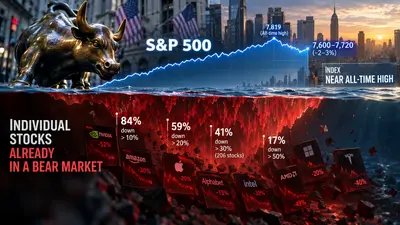
The S&P 500 Looks Fine. So Why Do Most Stocks Hurt?

The index sits near its high, yet most of its members are down 20% to 30% or more from their own peaks. A look at the "stealth bear market" and the numbers long-term investors should watch.

Investing

Are AI Chips Really Undervalued? Why Market Doubts Persist

Demand is strong and earnings are record-setting, yet shares remain jittery. The question for investors is now the durability of profits and the ability to recoup capital, more than the growth rate.

Tech

Year Five of the Bull Market: Why U.S. Stocks Aren't Expensive Yet, and What AI Chips and Power Must Deliver

U.S. stocks have gained about 117% since the October 2022 low. What happens next depends less on the bull market's age than on whether expected earnings, which lean heavily on AI semiconductors, turn into reality.

Investing

Anthropic's IPO: The Number That Matters More Than $100 Billion Is $2 Trillion

Claude-maker Anthropic is growing at a stunning pace, but the real question for investors is not how fast, only how long, and how much cash is left after GPUs and data centers.

Tech

Why a Wobbly Yen Carry Trade Hits US AI Stocks First

It is not just dollar-yen at 160. Watch the US-Japan rate gap, yen direction, volatility, and US long-term rates together, because AI and high-valuation growth stocks get squeezed first when all four move at once.

Macro

IPO

This story's topic21 storiesSee all →

SoftBank Bet $64.6 Billion on AI. Why Is the Market Pricing Default Risk?

Believing in AI's future is not the same as backing a company that can survive until it arrives. SoftBank's credit spike raises that question for long-term investors.

Tech

Anthropic Started Late but Took the Lead in Enterprise AI Revenue

Claude Code changed the game. But understanding the $2 trillion IPO story means looking past explosive revenue growth to $518 billion in compute commitments and customer concentration.

Tech

Consumers Built ChatGPT, but Businesses Now Supply Over Half of OpenAI's Revenue

Individual users made ChatGPT a household name, yet most of OpenAI's revenue now comes from companies. The yardstick for valuing AI firms may shift from user counts to the work they actually do and what it earns.

Tech

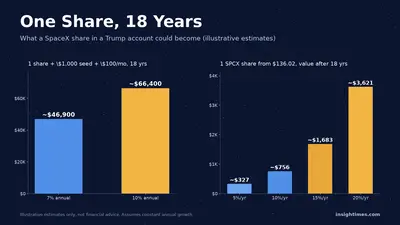
Editorial chart cover: illustrative 18-year growth of one SpaceX (SPCX) share in a Trump account, comparing 7% vs 10% returns and 5-20% share growth scenarios.

Why Musk wants to give 72 million US children a share of SpaceX

Elon Musk says he will gift one SpaceX share to every American child. The plan is not yet detailed, and the bigger driver of a child's wealth may be 18 years of steady saving.

Investing

SK hynix Shelves Solidigm IPO, but the Funding Question Remains

SK hynix dropped a plan to raise up to $15 billion in a Solidigm US listing. Dilution fears eased, but the cost of new US NAND and SSD capacity now lands back on the parent's balance sheet.

Investing

Anthropic Talked Slowdown. Its Actions Say Otherwise

A next-gen Claude model, an IPO push, and an actual biology lab. Put the three together and Anthropic's message isn't "stop AI." It's build stronger models while scaling up verification and control at the same pace.

Tech

The AI Race Just Got Its First Brake: What Amodei, Altman and Musk's Slowdown Signals

For the first time, AI safety concerns are shaping both model release schedules and IPO timing at once. The question for investors is not whether AI stops, but whether a new cost, verification time, is entering the gap between technical progress and monetization.

Tech

NVDA

101 storiesSee all →

Who Hits $1 Trillion Next: Reading AMD and ASML by Different Rules

One company is chasing Nvidia's GPU empire. The other sells the machine that draws the chips for every advanced chipmaker, including Nvidia. Both get floated as 2028 trillion-dollar candidates, but the numbers investors need to watch are entirely different.

Investing

Box Shows AI Its Manuals, and the AI Starts Redesigning the Workflow

Box Architect, built with NVIDIA, moves AI from reading documents to designing how work gets done. It has not yet reached beta, so the real-world payoff remains to be seen.

Tech

Tech Selloff: Is the Bull Market Over? Wall Street's Four-Year Chart Says Not Yet

The uptrend has survived five double-digit pullbacks in four years. This time, AI companies' debt and cash flow are the new variables.

Investing

Nvidia and Palantir Put AI Inside the Supply Chain - The Real Shift Is That It's Learning Judgment

A single Vera Rubin rack holds 1.3 million parts. The real breakthrough in Nvidia and Palantir's new supply chain AI isn't automating that complexity, it's capturing the judgment calls that used to live only in planners' heads.

Tech

If You Only Watch Tesla, You May Be Missing Half the AI Story

Nvidia builds the AI brain. Who supplies the electricity to run it? Six power companies Tesla investors should know, and why Tesla's storage business is just one link in the chain.

Investing

Nvidia Moves From GPUs to CPUs as AI Agents Reshape a $200 Billion Chip Market

A customer's early test found Nvidia's Vera CPU handled about twice the AI agent workload of its existing chips. The bigger story is where the money in semiconductors is heading as AI shifts from answering questions to doing work.

Tech

Nvidia's $500 Billion Experiment: Wall Street Asks Who Backs the GPU, Not Just the Chip

The real issue in Nvidia's financing platform is not chip sales. It is how far Wall Street will trust GPU resale prices and rental income three to four years out.

Tech