Retail Investors Have Bought US Stocks 22 Days Straight. Why Wall Street Eyes a Year-End Bounce

Stocks are falling and retail investors keep buying. Corporate buybacks are about to reopen. If institutions that have been selling turn buyers too, what happens?

The 20-second read
1
Retail investors bought about $33 billion from Oct. 5 to Nov. 3. Over the same period, the S&P 500 fell 2%.
2
New buyback programs were approved this year. Restrictions on repurchases around earnings releases are also being lifted.
3
Corporate earnings forecasts have improved, but the price investors pay for growth has come down.

1. Retail investors did not sell the dip

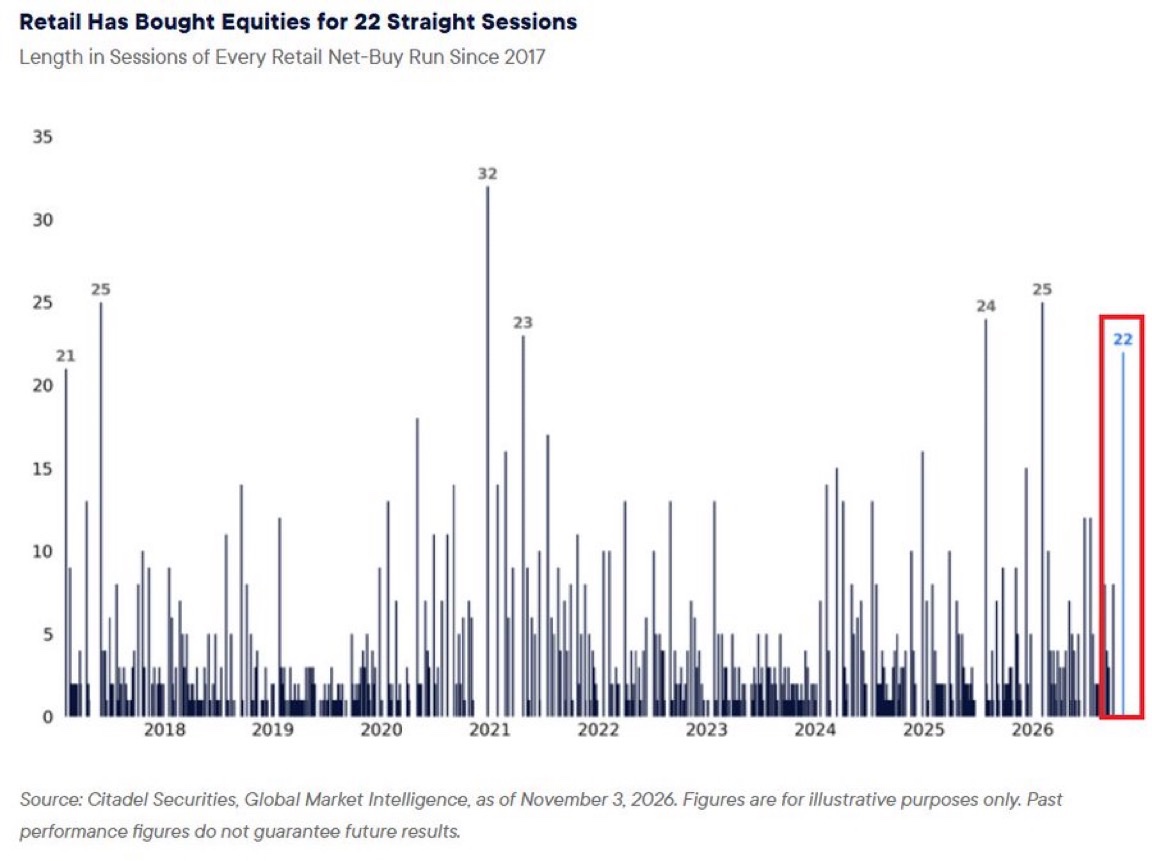
Retail investors were net buyers of US cash equities for 22 straight sessions, according to Citadel Securities. They bought an average of $1.5 billion a day, about $33 billion in total. It is the sixth-longest buying streak since 2017.

Net retail purchases this year have reached $251 billion, topping the full-year 2021 record of $241 billion. Notably, buying picked up on down days.

One caveat: the figures are based on trades observed on Citadel Securities' platform. They are not a complete count of all US retail trading.

In 12 past episodes of 15 or more consecutive days of net buying, the S&P 500 rose in 10. The median gain was 2.2%. That does not mean there is an 83% chance the market rises from here. It is a historical observation that retail buying may cushion declines.

2. A second and third buyer could appear into year-end

Retail investors are not the only possible buyers.

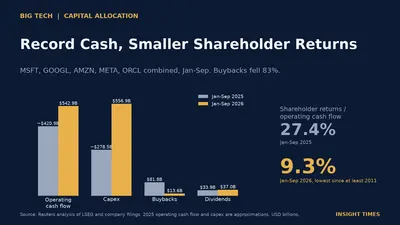
US companies had authorized $1.5 trillion of new buyback programs through Nov. 2 this year. Citadel estimates that around Nov. 9, about 85% of S&P 500 market capitalization will be out of the blackout windows around earnings that restrict repurchases.

But authorized amounts are not always fully executed. Companies adjust the pace based on cash flow, share price and their financial position.

Another variable is CTAs, institutional strategies that trade automatically on price trends. In Citadel's model, their US equity positioning has fallen to -3.3 standard deviations.

If prices rebound and the trend turns, CTAs could cover shorts or rebuild equity exposure. If the downtrend continues, selling pressure remains.

Potential sources of buying

  • Retail investors: steady net buying during declines
  • Public companies: buyback windows widen
  • Trend-following institutions: could turn to buying once a rebound is confirmed
  • Result: extra demand that could support a year-end rise. The three do not necessarily happen at the same time.

3. AI earnings rose, but the stocks got cheaper

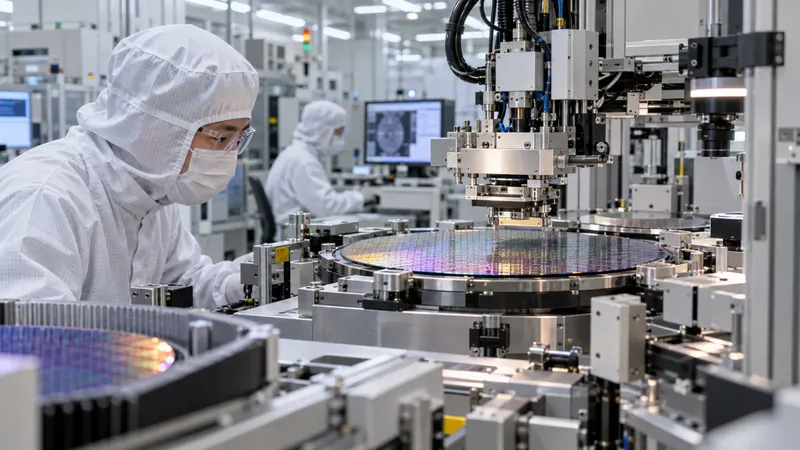
The more interesting shift is in semiconductors and tech.

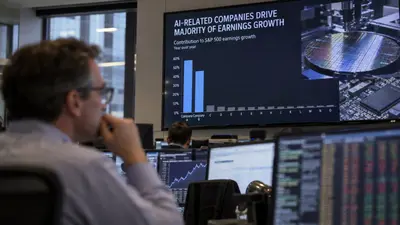
From June 30 to early November, 12-month forward EPS estimates for the semiconductor sector rose 30%, while the forward P/E fell 35%. The Nasdaq 100's forward P/E dropped to 19.1 times.

This suggests that expectations for AI growth have not vanished. Rather, the price investors are willing to pay for that growth has come down.

Still, a lower P/E alone does not make a stock undervalued. If returns on AI capital spending fall short of expectations, future earnings estimates could be cut.

The more important question than whether shares got cheaper is whether current earnings forecasts hold.

Earnings forecasts and valuations moved in opposite directions

Sector / indexForward EPS estimateForward P/E
Memory+32%-50%
AI infrastructure+31%-36%
Semiconductors+30%-35%
Nasdaq 100+14%-19%

Change from June 30 to early November 2026. Earnings estimates rose while P/E multiples fell by more, meaning share prices rose less than earnings, or fell. Source: Citadel Securities / Bloomberg.

4. A market collapse is not the same as a leadership rotation

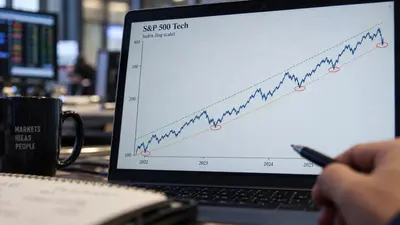
US stocks swung sharply in October, led by tech. But over the 20 sessions through Nov. 2, the equal-weighted S&P 500 gained more than 4%, while the Nasdaq 100 fell almost 10%.

That allows a reading in which investors did not dump US equities across the board. Instead, they moved money out of large-cap tech and into health care, utilities, consumer staples and similar sectors.

Even so, Big Tech's weight in the index remains overwhelming. The top 10 S&P 500 companies make up 37% of the index. Even if the rest of the market rises, a large drop in the megacap tech names could pull the whole index lower.

Retail investors have been net buyers for 22 days straight. Does that make the stock market safe?
  • No. Historical data shows only that this buying can cushion declines. It does not rule out a sharp drop ahead.
Will all of the $1.5 trillion in approved buybacks flow into the market?
  • No. That figure is the size of newly approved programs. It is different from the amount actually carried out and when it is carried out.
Does the semiconductor P/E of 13.8 mean every AI chip stock is cheap?
  • No. It is an aggregate for a specific S&P 500 semiconductor industry group. It should not be confused with the P/E of an individual company such as Nvidia or of semiconductor ETFs as a whole.
Can we trust the statistic that US stocks always rose after midterm elections?
  • Citadel analyzed that the S&P 500 was higher both 6 months and 12 months after every midterm election since 1950. But the sample is limited and economic conditions can differ, so there is no guarantee it will rise this time.
What should retail investors do now?
  • Rather than rushing to chase a year-end rally for fear of missing out, a reasonable approach is to review the earnings outlook of the companies you own. It also makes sense to keep your cash level and staged-buying plan in line with your own risk tolerance.

What to watch

Persistence of retail net buyingCheck whether net buying continues even after stocks rebound.
Actual buyback spendingWhat matters is whether actual execution rises, not the announced approval size.
CTA positioningWatch whether it recovers from -3.3 standard deviations or worsens with further selling.
Semiconductor forward EPSIf upward revisions to earnings estimates hold, the case for a valuation recovery gets stronger.
Market breadth and volatilityCheck together whether the equal-weight index stays strong and whether the VIX stays stable.
Retail buying, buybacks and CTAs could support a rebound, but nothing guarantees all three arrive together.

Insight Times Editorial Desk
More by topic

Starting with this story's topics, then what readers are following now

Investor psychology, decision-making and books on investing

HBM

77 storiesSee all →

Memory stacked next to the GPU.

Memory Is Still Short, but Less Short: Checking for the Peak This Week

Citi trimmed its 2027 DRAM and NAND shortage forecasts together. Server pricing remains strong, while consumer markets show weakness. This week's numbers show where the memory boom may peak.

Investing

The Real ASML Number Isn't the 3% Pop, It's the 30% Capacity Hike

ASML's rally isn't just an AI trade. Customers are already locking in 2027 tool slots, and ASML is raising Low-NA EUV capacity by roughly 30% to keep up.

Investing

A 3x P/E is not a discount. It is a verdict on how long memory profits last

Nomura's buy case on Samsung Electronics and SK Hynix does not stop at higher memory prices. It argues that if AI has turned memory from a cyclical component into strategic infrastructure, the formula the market uses to value both companies has to change too.

Investing

2027 Isn't the End: Citi's Case for a Memory Supercycle Running to 2031

Citi says the memory shortage timeline is stretching again. If AI shifts from "train once" models to continual learning, HBM, server DRAM and enterprise SSDs could all fall short at the same time.

Tech

AI ran out of memory before it ran out of GPUs

The HBM bottleneck is spreading into DRAM prices, server costs and the price of the next laptop or phone.

Tech

Has Memory Peaked? Prices Are Cooling, but the Shortage Looks Set to Run to 2028

Price growth has slowed and consumer demand is already breaking. Server and HBM supply remains short, and Micron says more than 75% of its 2027 volume is already committed to customers.

Tech

AI Chip Peak Check: Demand Still Rising, Risk Building in 2027-2029 Supply and Funding

DRAM and NAND contract prices are still climbing and HBM suppliers hold the edge. Power shortages, AI financing costs and simultaneous memory expansion are the risks for later years.

Investing

A building that houses servers and networking gear and supplies them with powe…

Nvidia and Palantir Put AI Inside the Supply Chain - The Real Shift Is That It's Learning Judgment

A single Vera Rubin rack holds 1.3 million parts. The real breakthrough in Nvidia and Palantir's new supply chain AI isn't automating that complexity, it's capturing the judgment calls that used to live only in planners' heads.

Tech

Is Space Cooler for AI? Why Musk Wants Data Centers in Orbit

The next limit on AI may be power and cooling, not GPUs. Elon Musk is looking to Earth orbit for an answer, but the test is cost per hour of compute.

Tech

Musk Sees the Next Phase of AI Infrastructure: Who Can Switch GPUs On, Fast

If neoclouds struggle under financial pressure, AI demand may not shrink. It may simply favor the few operators with the capital and execution to serve it, a shift that could matter for SpaceX and Tesla.

Tech

White House Swaps AI for "SI." The Real Investment Signal Is Infrastructure, Not the Name

An executive order renames artificial intelligence "Super Intelligence" and six frontier labs sign a voluntary safety accord. What investors should watch is the data center, power, nuclear and chip policy now gathered under one national-competitiveness frame.

Tech

The Cheaper Tokens Get, the Bigger Your AI Bill Gets

As AI shifts from training to inference, the token is becoming an industrial commodity. Falling prices are not cutting demand, because agents and automation consume tokens at a scale no human chat session ever did.

Investing

Marvell's $115 Billion Lumentum Deal: Is AI's Next Bottleneck Light, Not Chips?

Marvell's purchase of Lumentum points to a contest beyond GPU speed, in data transfer and power efficiency. Whether the price is right is not yet confirmed.

Tech

Workers in hard hats beside a communications equipment cabin, with a Starship rocket on its launch tower at dusk in the background

SpaceX Forecast at About $730 Billion in 2028 Revenue: The Bigger Opportunity Musk Sees

Sequoia Capital made a bold forecast, and Elon Musk replied, "I think we can do better." The future SpaceX is looking at is far bigger than the rocket launch business. The plan is to link satellite communications, AI data centers and orbital computing into one giant business.

TechEXPLAIN

NVDA

96 storiesSee all →

Who Hits $1 Trillion Next: Reading AMD and ASML by Different Rules

One company is chasing Nvidia's GPU empire. The other sells the machine that draws the chips for every advanced chipmaker, including Nvidia. Both get floated as 2028 trillion-dollar candidates, but the numbers investors need to watch are entirely different.

Investing

GPU

69 storiesSee all →

A chip built to draw graphics, whose ability to run thousands of identical cal…

The Next AI Chip Race Is About How Chips Connect

Applied Materials will lift its stake in Dutch equipment maker BESI from about 9% to 20%. The bet is less about control than about a new way to link chips.

Tech

Musk Borrowed $40 Billion for GPUs. He Also Warned AI Cloud Firms Could Go Bust

SpaceX's giant financing shows a new dividing line in AI: who borrows matters as much as how much is spent. Firms with other revenue may outlast those that rent out GPUs alone.

Tech

US AI Data Centers Are Headed for 90GW. Gigawatts Now Matter More Than Dollars

Goldman Sachs expects US data center capacity to grow from 64GW at the end of 2026 to 90GW at the end of 2027. The AI race is moving from buying GPUs to building power plants and transmission lines alongside them.

Tech

The AI Bubble Question Has Changed: By Late 2026, It's ROIC Over GPUs

There is no sign yet that AI investment is slowing. If anything, hyperscaler spending forecasts keep climbing. But as the scale of that capital has grown, the market's question has shifted from "is AI growing" to "when, and how much, does this capital come back as cash."

Tech

2027 Investing Needs Alignment, Not Prediction

A new investing book argues the hard part was never picking the next winner. It's staying aligned with where value and bottlenecks are moving while keeping old human weaknesses in check.

Investor Mind

Why Nebius Is Keeping Some 2027 AI Capacity Off the Shelf

Nebius mixes long-term contracts, short-term premiums and auctions. Holding back capacity pays only if the servers stay busy, and it is not yet clear the pricing will last.

Tech

Amazon Goes After Nvidia's Strongest Moat, and It Is Software, Not GPUs

Amazon's open-source TorchNeuron aims to let existing AI code run on its Trainium chips. The contest comes down to the total cost of AI compute and the return on Amazon's $220 billion in annual capital spending.

Tech