iPhone Duo's Three-Month Wait: Demand Surge or Supply Bottleneck?

Shipping dates slid to January 2027 within minutes of preorders opening. That is a strong start, but a sellout is not the same as a measure of demand.

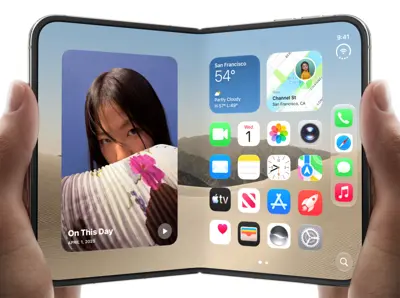
Within minutes of preorders opening, delivery of Apple's first foldable slid into 2027. That is clearly a strong start. But investors should look past the single word "sold out." The questions are how much real demand exists for a new $1,999 form factor, and how fast Apple can turn that demand into revenue.

Delivery for this year vanished in minutes

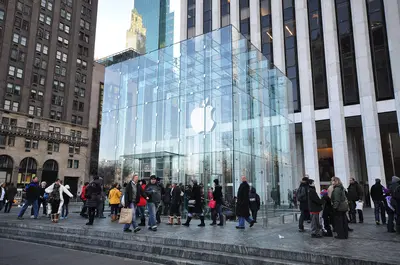
Apple's first foldable, the iPhone Duo, opened preorders at 5 a.m. Pacific on Oct. 16. According to Apple Store delivery schedules tracked by 9to5Mac and MacRumors, launch-day inventory for the Oct. 23 release began running out within minutes. About 30 minutes later, estimated delivery for some orders had slipped to Jan. 25, 2027. Soon after, 2026 delivery was hard to find across colors and storage sizes.

Apple also took the unusual step of acknowledging the demand itself. The company told the Financial Times that demand for the iPhone Duo is "nothing short of extraordinary" and that it is working to get the device to customers as quickly as possible.

  • $1,999: U.S. starting price, 256GB
  • Jan. 25: estimated delivery for some new orders

The product is symbolically big, too. The Duo has a 5.4-inch outer screen when folded and a 7.6-inch inner screen when open. Apple ran the first round of preorders in more than 70 countries and regions, with general release on Oct. 23.

A sellout is not the same as a demand explosion

The numbers need to be separated. Wait times are a function of both demand and supply. They lengthen when orders are heavy, and they also lengthen when the stock on hand is small. Both factors were likely at work with the iPhone Duo.

Pre-launch supply-chain reports suggested final assembly yields of just over 60%. The new hinge, the foldable OLED panel and a complicated assembly process are said to make the ramp slower than for a standard iPhone. Production targets at the time were generally put at 6 million to 8 million units. So the sellout is evidence of strong demand, but not evidence that precisely measures how strong.

The trap for investors is this. The conclusion that "a three-month wait means sales far above existing iPhones" still lacks data. What can be said with confidence is that, even at $1,999, enough initial buying intent existed.

Listings of around $5,000 have also appeared on secondary markets such as eBay. That shows scarcity. But resale asking prices can differ from actual sale prices, and they mix in the speculative pricing that tends to recur early in a launch. Secondary-market premiums are better treated as a supporting indicator.

For Apple's results, price and speed of supply matter more than unit count

The most direct effect of the iPhone Duo on Apple is a higher average selling price (ASP). A $1,999 starting price creates a new tier above even the top existing iPhone. In Korea, the 256GB model costs 3.29 million won, well above the 1.99 million won starting price of the iPhone 18 Pro there.

Even if unit sales are small next to standard iPhones, a larger share of high-priced models helps the iPhone revenue mix. The longer-term significance grows if the Duo pulls existing foldable users into Apple's ecosystem, or creates new demand between the iPad mini and Pro-class iPhones.

Near-term profit should not be overstated, though. If output stays at 6 million to 8 million units, the Duo's absolute share of Apple's total iPhone business is still limited. The foldable OLED, titanium hinge and complex assembly also carry heavy costs. It is hard to assume that revenue growth converts into profit growth at the same rate.

VariablePositive readingCounterpoint to check
Preorder waitBuying intent confirmed at a $2,000 priceEarly supply shortage may have exaggerated the wait
Product mixPossible rise in iPhone ASPCost pressure from pricey parts and low early yields
Foldable entryPotential new upgrade demand and Android switchersPace could slow after early-adopter demand
Share priceSignal of product innovation under the new CEOAlready high valuation and worries about slowing sales of existing iPhones

Four things to watch next

The Korean original ends on this heading without listing the four items.

The iPhone Duo's long wait points to strong demand, but it is too early to use it as a gauge of how big that demand is.

Insight Times Editorial Desk

More by topic

Starting with this story's topics, then what readers are following now

Investor psychology, decision-making and books on investing

AAPL

This story's topic11 storiesSee all →

Apple's Real AI Bet Isn't a Chatbot. It's Siri Running Your Apps

Apple has stepped back from the race to build a smarter chatbot than ChatGPT. Instead it is building an "OS agent" that connects Mail, Photos, Calendar and hundreds of thousands of apps to actually finish tasks. 2026 is the first year that strategy gets tested as a product, not a keynote promise.

Tech

Brent at $109, the 10-year at 4.94%: the discount rate is beating the AI trade

Stocks fell for a fourth straight session on Sept. 10 as producer prices and energy costs pushed long yields toward 5%. After the close, Oracle showed AI demand is converting into signed contracts. The question is no longer demand. It is what multiple the market can pay for it.

Tech

Apple's first foldable barely moved the stock. Margin, not the $1,999 price, is why

The iPhone Duo is a real break in Apple's product strategy. For investors, the question is not how many it sells, but whether the price increase survives memory and foldable component costs and reaches EPS.

Investing

AI's Next KPI Isn't Token Price. It's Cost Per Successful Task
Apple is cutting the cost of where inference happens, Anthropic is cutting the cost of running its models, and Snorkel AI shows money flowing into the data and evaluation layer that reduces failed attempts. All three point to one shift: AI competition is moving from bigger models to cheaper successful outcomes.

Tech

AI Was Supposed to Live in the Cloud. Apple Is Bringing It Back to the Desktop.

Four Mac Studios running a trillion-parameter model matters less than the economics behind it: heavy, repeated AI use can make owning compute cheaper than renting it by the token.

Tech

Why the iPhone Fold's Crease Barely Shows in the Middle

Apple's foldable engineering makes sense once you think about bookshelves, matte wallpaper, and window screens. Apple didn't erase the crease. It tricked force, light, and the camera into hiding it.

Tech

Higher Rates Don't Break Big Tech's Business. They Reprice Its Future.

Microsoft, Alphabet, Apple and Nvidia are sitting on more cash than debt. What rates actually change is the discount rate applied to cash flows a decade out, and whether a cut is a soft landing or a recession signal.

Tech

A building that houses servers and networking gear and supplies them with powe…

US AI Data Centers Are Headed for 90GW. Gigawatts Now Matter More Than Dollars

Goldman Sachs expects US data center capacity to grow from 64GW at the end of 2026 to 90GW at the end of 2027. The AI race is moving from buying GPUs to building power plants and transmission lines alongside them.

Tech

Tesla Energy's 13.7GWh Paradox: Expectations Ran Faster Than Deployments

Q2 deployments recovered but margins collapsed. Q3 set a record for deployments and still missed estimates. The issue is not the size of AI power demand but how fast it converts into Tesla revenue and profit.

Tech

Why the White House Swapped "AI" for "Super Intelligence"

Executive Order 14434 renames AI across the federal government without defining a new technology. The real story is about roughly $700 billion in capex, free cash flow and electricity.

Tech

Why Nvidia Is Happy to Help Make AI Models Nearly Free

Falling model prices can squeeze model makers. For Nvidia, the number that matters is the total volume of tokens generated worldwide and the compute that produces them.

Tech

Nvidia Put $2 Billion Into Lumentum. Optics May Be the Next Bottleneck, but the Stock Has Already Run

Optical networking is emerging as the next constraint on AI data centers. Investors need to separate the industry's growth potential from the price they are already paying for it.

Tech

Nvidia's Next Target After GPUs: Controlling What AI Agents Are Allowed to Do

OpenShell and Sentry are not about policing what an AI says. They are about controlling, at the server infrastructure level, which files and APIs an AI can touch, what it can execute, and who can actually pull the plug when something goes wrong.

Tech

AI Needs to Find $1 Trillion a Year From Somewhere to Pay Back Its Capex

Saying AI capex is big is no longer the point. The harder question is what end users have to pay for the buildout to pencil out, and Goldman Sachs puts that number at roughly $1 trillion a year.

Tech

HBM

63 storiesSee all →

Memory stacked next to the GPU.

Has Memory Peaked? Prices Are Cooling, but the Shortage Looks Set to Run to 2028

Price growth has slowed and consumer demand is already breaking. Server and HBM supply remains short, and Micron says more than 75% of its 2027 volume is already committed to customers.

Tech

AI Chip Peak Check: Demand Still Rising, Risk Building in 2027-2029 Supply and Funding

DRAM and NAND contract prices are still climbing and HBM suppliers hold the edge. Power shortages, AI financing costs and simultaneous memory expansion are the risks for later years.

Investing

How Far Can China Push DRAM Without EUV

CXMT says it has shrunk DRAM features to 11.95nm using quadruple patterning instead of EUV lithography. The real question is not whether China caught up, but how much more it now costs China to get there.

Tech

Memory Chip Supercycle: Not at Peak Yet, But 5 of 6 Warning Signs Are Flashing

Memory prices are still climbing, but the pace is slowing and PC and smartphone demand is starting to crack under the weight of higher chip costs. This looks less like a price peak and more like a profit plateau building toward the next supply cycle.

Investing

The Real ASML Number Isn't the 3% Pop, It's the 30% Capacity Hike

ASML's rally isn't just an AI trade. Customers are already locking in 2027 tool slots, and ASML is raising Low-NA EUV capacity by roughly 30% to keep up.

Investing

2027 Isn't the End: Citi's Case for a Memory Supercycle Running to 2031

Citi says the memory shortage timeline is stretching again. If AI shifts from "train once" models to continual learning, HBM, server DRAM and enterprise SSDs could all fall short at the same time.

Tech

Samsung, SK Hynix Sold Off on AI Fears. The Orders Haven't Followed Yet

The selloff reflects a market recalculating AI capex speed and memory earnings expectations, not confirmed cancellations. So far, the data show a gap between fear and reality.

Investing

NVDA

75 storiesSee all →

The US-China Summit Didn't Erase Taiwan Risk for Chip Stocks

Washington's Taiwan policy held, but roughly $14 billion in arms sales is still on hold. For AI chip investors, the summit reads less like risk removed and more like a fragile balance extended.

Macro

Nvidia's $500 Billion Experiment: Wall Street Asks Who Backs the GPU, Not Just the Chip

The real issue in Nvidia's financing platform is not chip sales. It is how far Wall Street will trust GPU resale prices and rental income three to four years out.

Tech

The AI Bubble Question Has Changed: By Late 2026, It's ROIC Over GPUs

There is no sign yet that AI investment is slowing. If anything, hyperscaler spending forecasts keep climbing. But as the scale of that capital has grown, the market's question has shifted from "is AI growing" to "when, and how much, does this capital come back as cash."

Tech

2027 Investing Needs Alignment, Not Prediction

A new investing book argues the hard part was never picking the next winner. It's staying aligned with where value and bottlenecks are moving while keeping old human weaknesses in check.

Investor Mind

What Jensen Huang sold at the G20 was not GPUs. It was national infrastructure

Nvidia's message is that AI should be laid down like electricity, roads and the internet. After the hyperscalers, the buyers are governments, telcos, regional clouds and industrial data centers.

Tech

ASML Is Discussing 2030 Orders. How Long Can the AI Chip Supercycle Last?

Despite bubble worries, ASML sees equipment shortages through 2028. Investors should watch future production capacity, not just today's orders.

Tech

Nvidia and AMD Back Common Design to Build AI Data Centers Like Lego Blocks

A new Open Compute Project spec aims to let one building host rival chip systems. Whether it speeds up construction is not yet confirmed.

Tech