S&P 500 Rebounds 2.5% as the 10-Year Yield Hits 5.14%

The index snapped a four-week losing streak, but the price of money rose in the same week. Before trusting the bounce, look at the yield first.

The 20-second read

1
The S&P 500 rose about 2.5% for the week through 11/13, ending a four-week losing streak, but it slipped again on Friday.
2
The US 10-year yield rose about 0.28 percentage points in a week to 5.14%, and the pressure can be greater for AI companies with heavy investment spending.
3
Nvidia's earnings next week and the 12/9 rate decision are the key moments, and for now it may help to look at the ability to generate cash rather than at revenue.

1. Stocks rebounded. Why does it feel uneasy?

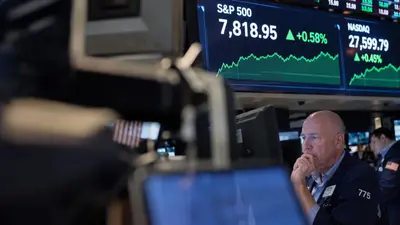
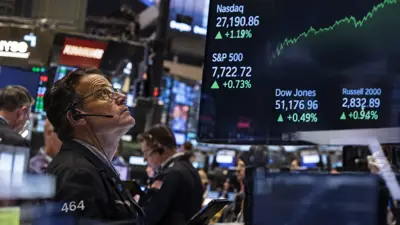
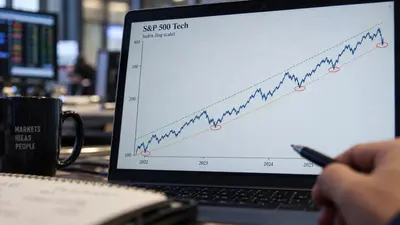
For the week ended Friday, Nov. 13, the S&P 500 rose about 2.5% and the Nasdaq Composite about 2.3%. That ended a four-week losing streak. On Friday alone, though, both indexes slipped again.

The split captures the week. Buyers came back, but the worries that drove the selloff have not gone away. The bounce did not hang on one or two stocks. That does not mean every company can again command its old valuation.

The rebound shows the market is alive. It does not show that the difficult environment is over.

2. Is this a 2022-style breakdown?

To understand the risk, look at the price of money before looking at stocks. The 10-year Treasury yield climbed to 5.14%, up about 0.28 percentage point on the week. Borrowing for the long term has become more expensive.

Higher yields tend to push down the value the market places on profits not yet earned. Companies that must spend heavily for years ahead feel it most. Good technology and fast revenue growth no longer explain a rising stock price on their own.

Still, there is too little evidence to say a long bear market like early 2022 has begun. What resembles that period is the pressure from rates, not a simultaneous collapse in growth prospects across all companies. For now, differences in company strength look more important than a collapse of whole industries.

The same rate shock produces different results for a company that earns cash and one that must keep borrowing.

3. The real risk is not AI. It is the money going into AI.

October consumer prices, released this week, rose 0.4% from the prior month. Core prices, which exclude food and energy, rose 0.3%. With inflation not easing readily, the rate burden could last.

AI companies must buy chips, build data centers and secure power. Growing customer demand is good news. But if the cost of building and maintaining that capacity grows faster than revenue, the cash left for shareholders can shrink.

The question for investors is simple. Not "How much AI is being used?" but "How much is left after the AI investment?" Companies with eye-catching revenue and companies that actually build up cash are likely to be valued differently going forward.

Believing in the growth of the AI industry is a different judgment from buying every AI stock at a good price.

4. Can the rebound last?

It could. This time, though, good earnings alone may not be enough. Even if companies earn more than expected, stocks can tread water if long-term yields keep rising. If yields calm and the investment burden on companies eases, the rebound could firm up.

Next week, Nvidia's earnings on Tuesday, Nov. 17 are a key hurdle. The market will want to hear not only about sales but also about future demand and costs.

On Thursday, Nov. 19, AI company Anthropic is scheduled to list on the Nasdaq. The expected ticker is ANT, the targeted offering price is $70 to $78, and the deal would raise about $64.4 billion at the top of the range. A more interesting question than whether the listing succeeds is whether this is a market where investors have to sell existing AI stocks to buy a new one.

Rather than how far a stock rises on good news, it is time to ask how much that news changes the company's future cash.

5. Separating exaggerated fear from real risk

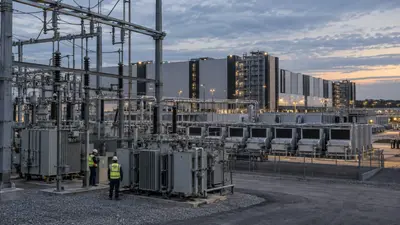
The idea that AI investment could stop overnight and bring down the whole growth sector is too simple. The U.S. Energy Information Administration expects U.S. electricity consumption to hit record highs in 2026 and 2027, helped by data center expansion. A single headline cannot erase changes already visible on the ground, such as power demand.

Nor should anyone assume that any company will profit simply because demand is strong. If grid connections run late or data center permits are delayed, orders can exist while revenue arrives later. Even in a growing market, some companies will fail at investing.

The Federal Reserve's rate decision on Wednesday, Dec. 9 also lies ahead. As of Friday, Nov. 13, the market had priced in a 0.25-percentage-point hike as the base case, with some weight on 0.50 point. That is market expectation, not a confirmed decision.

A more practical question than a vague AI-collapse story is who can hold up if high rates last a long time.

6. Long-term investors should trust their own pace

A weekly rebound is no reason to rush all cash into the market. Nor is Friday's drop a reason to overturn a long-term plan. The market attaches great meaning to a day's news, but a long-term investor's return is set by years of corporate earnings and the price paid, not one day's mood.

For someone investing a fixed amount on a schedule, keeping that plan is the starting point. For someone using spare cash to buy in stages, comparing each company's cash generation and debt load can help space out purchases. Holders of several chip, cloud and power stocks may also want to check whether they are overly concentrated in the same AI investment trend.

The market did rebound this week. But the companies that lead the next advance are more likely to be those that keep cash from their business after paying a high price for money, not those that tell the biggest story.

This is not a call to ignore fear. It is a call not to let a frightening headline make the investment decision.

Why did the market feel uneasy in a week when the S&P 500 rose?
  • For the week through Friday, 11/13, the S&P 500 rose about 2.5% and ended its four-week losing streak.
  • But the US 10-year yield climbed to 5.14%, and on Friday both indexes fell.
  • The rebound is confirmed, but the interest rate worry the market had remains.
Why do higher interest rates make stocks shakier?
  • When rates rise, future profits that haven't been earned yet tend to be valued lower.
  • The burden is greater for companies that have to invest large sums going forward.
  • However, the outcome can differ depending on why rates rose and on how strong a company's cash position is.
Is this the start of a long bear market like 2022?
  • There isn't enough evidence to say so.
  • What resembles early 2022 is the pressure from interest rates. Growth prospects have not collapsed for every company at the same time.
  • For now, differences in strength between companies look more important than the industry as a whole.
What should I check when looking at AI stocks?
  • It may be worth looking at how much a company keeps after investing, rather than how much it uses AI.
  • If spending on data centers and chips grows faster than revenue, shareholders' share can shrink.
  • One approach is to compare cash generation and debt burden together.
What events should I watch next week?
  • Nvidia reports earnings on Tuesday, 11/17.
  • Anthropic is scheduled to list on the Nasdaq on Thursday, 11/19. The expected ticker is ANT.
  • The US central bank holds its rate decision meeting on Wednesday, 12/9.

What to watch

US 10-year at 5.14%Whether the yield rises further from this level or comes back down could determine the pressure on stock prices.
Nvidia earnings on 11/17Along with its sales results, watch how it explains future demand and costs.
Anthropic listing on 11/19While money is raised at the hoped-for offering price of $70 to $78, watch whether existing AI stocks get sold.
12/9 rate decisionCheck whether the actual decision matches the 0.25 percentage point hike the market has priced in.
The rebound is real, but the rate burden remains, so companies that keep cash after paying a high price for money may matter more.

Insight Times Editorial Desk
More by topic

Starting with this story's topics, then what readers are following now

Investor psychology, decision-making and books on investing

Fed

This story's topic25 storiesSee all →

The central bank of the United States, carrying a dual mandate — stable prices…

Weekly Check: The AI Bull Market Isn't Over, It's Just Gotten Harder

A 5% 10-year yield, 470 gigawatts stacked up in Texas, Chinese DRAM, and whether data centers actually get switched on are starting to decide who wins the AI trade through 2027.

Tech

Stocks Bounce, but the AI Selloff May Not Be Over: A Two-Week Playbook

The Dow rose more than 1% while the Nasdaq barely moved and semiconductors kept falling. A W-shaped retest looks more likely than a V, and the task now is surviving the next drop.

Investing

Why a Wobbly Yen Carry Trade Hits US AI Stocks First

It is not just dollar-yen at 160. Watch the US-Japan rate gap, yen direction, volatility, and US long-term rates together, because AI and high-valuation growth stocks get squeezed first when all four move at once.

Macro

Rates Hit 5% Again, But AI Held - Now Wall Street Wants Cash Flow, Not Just GPUs

The Fed raised rates and the 10-year yield broke back above 5%, yet the Nasdaq did not crack. This week's real story is not the end of the AI rally but a change in what the market is grading.

Investing

Who Buys the T-Bill Behind Your $1 Stablecoin

Stablecoins aren't a crypto asset class so much as new plumbing for moving dollars online, and every new dollar that flows in gets tied to short-term Treasuries.

Macro

Is the 'Face Ripper' Rally Here? Watch the Conditions, Not the Call

Tom Lee called last week's rate and oil shock "max pain" and floated a sharp month-end rebound. With the 10-year yield back above 5% and oil still shaky, investors need to watch what actually enables a rebound, not the prediction.

Tech

It's Not Just Hormuz: Why the Middle East War Is Becoming a Fed Problem Again

The US-Iran ceasefire has already collapsed, and the risk no longer sits in the Gulf alone. With the Red Sea and Saudi Arabia's bypass pipeline now under threat too, an energy shock is spreading into prices, the Fed, and growth-stock valuations.

Macro

A building that houses servers and networking gear and supplies them with powe…

Why Nebius Is Keeping Some 2027 AI Capacity Off the Shelf

Nebius mixes long-term contracts, short-term premiums and auctions. Holding back capacity pays only if the servers stay busy, and it is not yet clear the pricing will last.

Tech

AI ran out of memory before it ran out of GPUs

The HBM bottleneck is spreading into DRAM prices, server costs and the price of the next laptop or phone.

Tech

Is Space Cooler for AI? Why Musk Wants Data Centers in Orbit

The next limit on AI may be power and cooling, not GPUs. Elon Musk is looking to Earth orbit for an answer, but the test is cost per hour of compute.

Tech

White House Swaps AI for "SI." The Real Investment Signal Is Infrastructure, Not the Name

An executive order renames artificial intelligence "Super Intelligence" and six frontier labs sign a voluntary safety accord. What investors should watch is the data center, power, nuclear and chip policy now gathered under one national-competitiveness frame.

Tech

Musk Sees the Next Phase of AI Infrastructure: Who Can Switch GPUs On, Fast

If neoclouds struggle under financial pressure, AI demand may not shrink. It may simply favor the few operators with the capital and execution to serve it, a shift that could matter for SpaceX and Tesla.

Tech

Is Memory Peaking? In the AI Era, Watch the Bottleneck, Not the Demand

Demand still outruns supply. But memory stocks can peak before demand does. The real question is how long HBM4, server DRAM, CXL and Big Tech capex keep the cash flowing.

Tech

Marvell's $115 Billion Lumentum Deal: Is AI's Next Bottleneck Light, Not Chips?

Marvell's purchase of Lumentum points to a contest beyond GPU speed, in data transfer and power efficiency. Whether the price is right is not yet confirmed.

Tech

NVDA

101 storiesSee all →

Who Hits $1 Trillion Next: Reading AMD and ASML by Different Rules

One company is chasing Nvidia's GPU empire. The other sells the machine that draws the chips for every advanced chipmaker, including Nvidia. Both get floated as 2028 trillion-dollar candidates, but the numbers investors need to watch are entirely different.

Investing

Box Shows AI Its Manuals, and the AI Starts Redesigning the Workflow

Box Architect, built with NVIDIA, moves AI from reading documents to designing how work gets done. It has not yet reached beta, so the real-world payoff remains to be seen.

Tech

Tech Selloff: Is the Bull Market Over? Wall Street's Four-Year Chart Says Not Yet

The uptrend has survived five double-digit pullbacks in four years. This time, AI companies' debt and cash flow are the new variables.

Investing

Nvidia and Palantir Put AI Inside the Supply Chain - The Real Shift Is That It's Learning Judgment

A single Vera Rubin rack holds 1.3 million parts. The real breakthrough in Nvidia and Palantir's new supply chain AI isn't automating that complexity, it's capturing the judgment calls that used to live only in planners' heads.

Tech

If You Only Watch Tesla, You May Be Missing Half the AI Story

Nvidia builds the AI brain. Who supplies the electricity to run it? Six power companies Tesla investors should know, and why Tesla's storage business is just one link in the chain.

Investing

Nvidia Moves From GPUs to CPUs as AI Agents Reshape a $200 Billion Chip Market

A customer's early test found Nvidia's Vera CPU handled about twice the AI agent workload of its existing chips. The bigger story is where the money in semiconductors is heading as AI shifts from answering questions to doing work.

Tech

Nvidia's $500 Billion Experiment: Wall Street Asks Who Backs the GPU, Not Just the Chip

The real issue in Nvidia's financing platform is not chip sales. It is how far Wall Street will trust GPU resale prices and rental income three to four years out.

Tech

GPU

73 storiesSee all →

A chip built to draw graphics, whose ability to run thousands of identical cal…

The Next AI Chip Race Is About How Chips Connect

Applied Materials will lift its stake in Dutch equipment maker BESI from about 9% to 20%. The bet is less about control than about a new way to link chips.

Tech

US AI Data Centers Are Headed for 90GW. Gigawatts Now Matter More Than Dollars

Goldman Sachs expects US data center capacity to grow from 64GW at the end of 2026 to 90GW at the end of 2027. The AI race is moving from buying GPUs to building power plants and transmission lines alongside them.

Tech

The Cheaper Tokens Get, the Bigger Your AI Bill Gets

As AI shifts from training to inference, the token is becoming an industrial commodity. Falling prices are not cutting demand, because agents and automation consume tokens at a scale no human chat session ever did.

Investing

Dark navy cover. Flow diagram: Nvidia to Nscale (credit guarantee, in talks) to Anthropic (~$45B compute lease signed in August plus a separate ~$45B, ~460MW deal in talks). Title: Why Would Nvidia Back a Customer's Loan?

Why Would Nvidia Guarantee Its Customers' Data Center Loans?

Nvidia is reportedly in talks to back financing for Nscale's West Virginia data center. Nothing is signed, and the terms are not public.

Tech

Two Companies Drive 34% of S&P 500 Earnings Growth as AI Pays Sellers First

Nvidia and Micron generate a third of expected earnings growth in US large caps. Apollo says the financial effect of AI is not yet visible in the S&P 493.

Investing

Amazon Goes After Nvidia's Strongest Moat, and It Is Software, Not GPUs

Amazon's open-source TorchNeuron aims to let existing AI code run on its Trainium chips. The contest comes down to the total cost of AI compute and the return on Amazon's $220 billion in annual capital spending.

Tech

AI's Next Bottleneck Is Power, Not GPUs

Jensen Huang and Elon Musk sent the same warning in Washington. The AI race is widening from building better models to supplying power and chips at industrial scale.

Tech