When AI Stocks Wobble, What Should Long-Term Investors Buy and Watch?
Five holdings may not mean five bets. Overlap across Tesla, Nvidia, VOO, QQQ and SMH can concentrate a portfolio more than it looks.

An investor who holds Tesla, Nvidia, VOO, QQQ and SMH may feel diversified. Five different securities, after all. Look inside the ETFs, and the picture changes.
1. Five holdings can add up to one big bet
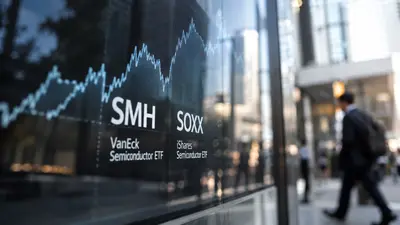
VOO holds Nvidia and Tesla. So does QQQ. In SMH, Nvidia takes a large share.
Nvidia's weight was about 8.39% in VOO at the end of September 2026, 8.15% in QQQ in mid-October, and 19.62% in SMH on October 29.
The issue is not how many ETFs you own. It is which companies sit inside them, and how much.
Effective Nvidia exposure: about 28.9%
Nvidia shares 20% + VOO 40% × 8.39% + QQQ 20% × 8.15% + SMH 20% × 19.62% = 28.91%
Illustrative portfolio. ETF weights come from different reference dates and change often. This is a calculation of holdings, not a forecast of gains or losses or a beta analysis.
When the stock swings, the hit comes not only from shares held directly but also through several ETFs. Concentration is not a mistake in itself. What matters is whether you know about it and chose it.
2. Believing in AI growth is not the same as a buy decision
For Nvidia, the things to check are AI compute demand, product competitiveness and gross margin. For Microsoft and Alphabet, the question is whether AI turns into cloud revenue and cash flow. For Tesla, the profitability of the EV business should be judged separately from progress in commercializing autonomous driving and robotics.
Even when an industry grows, not every company's earnings grow at the same pace. After a sharp drop, the cause matters.
| Reason for the decline | Question for the investor |
|---|---|
| Higher rates and a lower valuation multiple | Has long-term earning power also been damaged? |
| Weak near-term results and rising investment spending | Has something changed structurally in the company's competitiveness? |
| Falling market share and weaker finances | Does the original investment thesis still hold? |
A falling price is not, by itself, a reason to buy. A reason to look closer appears when the gap between business value and market price widens.
3. When does dollar-cost averaging help?
For someone investing part of each paycheck, dollar-cost averaging is natural. A fixed amount goes in whenever income arrives, with no need to predict short-term direction.
A lump sum already available is a different case. A 2023 Vanguard study found that investing immediately outperformed spreading purchases over a set period in roughly two-thirds of historical cases. In rising markets, waiting in cash carries an opportunity cost.
That does not make full, immediate investment right for everyone. If a large drop might push an investor to abandon the plan, staged buying can ease the psychological burden.
4. Long-term investing is not the same as enduring losses
Holding a stock indefinitely after buying it is not long-term investing. It is closer to a strategy of letting time work for the investor while the company's competitiveness and earning power hold up.
If the original reason for owning a stock is gone and the investor waits only to get back to the purchase price, that may be fixation on a past price.
- Do revenue and profit fit the investment thesis?
- Are rivals' technology gains and share shifts eroding the company's edge?
- How do capital spending, borrowing and share issuance affect existing shareholders?
- Does the current price already assume an overly optimistic future?
Rather than react to every price move, revisit the decision when the answers to these questions change.
5. Design the portfolio in calm times, not on the day of the crash
After a sharp selloff, sticking to normal principles is hard. Risk tolerance and cash needs are better settled when markets are quiet.
Living and emergency funds. Money for living costs and near-term spending. The basic rule is to keep it out of stock market volatility.
Long-term core assets. Diversified equity ETFs and, as needed, bonds. Built to match the time horizon and risk tolerance.
Concentrated growth assets. Tesla, Nvidia, semiconductors and other volatile holdings. Calculate the overlap with the core assets.
No single weighting is right for everyone. Someone drawing down assets ahead of retirement and someone who can keep contributing for 20 years or more experience the same percentage loss as different risks.
Rebalancing can be checked every six months or a year, or done when weights drift far from target. Taxes and trading costs matter. The aim is not to predict the next winner but to return to the level of risk you planned for.
Insight Times Editorial Desk